
Avoid chafing on feet
Forget about sores with these tips to avoid chafing on your feet. What to do when you have blisters, and how to use anti-chafing sticks.

Why do we get chafing on our feet and why do new shoes rub
Blisters usually appear on our feet due to a combination of rubbing, heat and damp, that irritate our skin. This happens because of the heat caused by friction, and lifts up the outer layer of skin which fills with fluid to make a small bubble between skin layers.
Chafing is very common when the warmer weather arrives and we “uncover” our feet, no longer using socks or tights, which leaves our feet in the open air and in direct contact with our sandals, shoes or flip flops. Sweat softens the skin, making it more susceptible to rubbing and this makes our feet slide inside our footwear.
It also happens when we do sport and use thick cotton socks or socks with rough seams, because they retain moisture and increase friction.
To prevent this type of discomfort we can apply anti-friction barriers (such as Vaseline or specific anti-chafing products) on the areas susceptible to chafing, and choose seamless, technical fibre socks that absorb sweat.
How to use anti-chafing sticks with new footwear
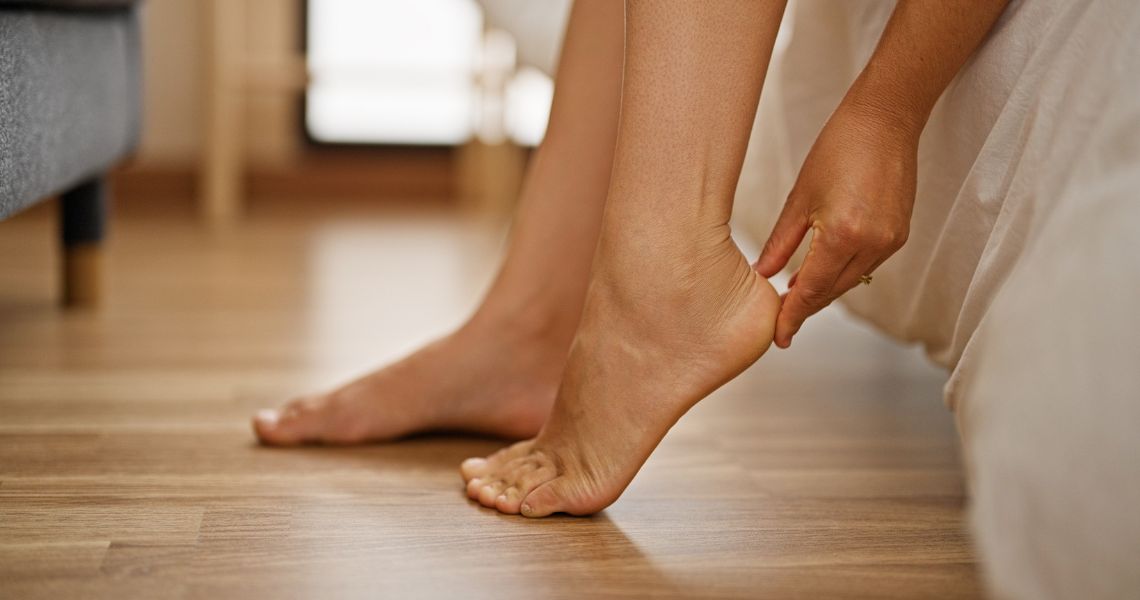
Anti-chafing sticks are a must for the summer months. They are sticks, similar to lipstick, which avoid rubbing against our shoes. Because of their size, they are ideal to keep in our pockets and use at any time.
Another of their strong points is that they are invisible, and are therefore ideal for using with sandals or open shoes, since they are not at all noticeable and do not stain.
Furthermore, it is very easy to apply. The product is applied to clean feet in the areas where shoes or sandals are known to rub: tops of the toes, where bunions form, back of the heel, sides, etc.
The product forms a very fine, invisible layer. Allow it to dry for a couple of minutes before putting your shoes on. You can repeat the process at any time when you need more of the product.
Applying it when wearing sports shoes is also very useful to avoid rubbing against seams on the shoes or socks. Moreover, it can be used on any part of the body to prevent chafing. Beware though, if you already have a blister or sore, do not use it, since it is not designed for those cases.
I have a blister on my foot: what should I do to heal it quickly?
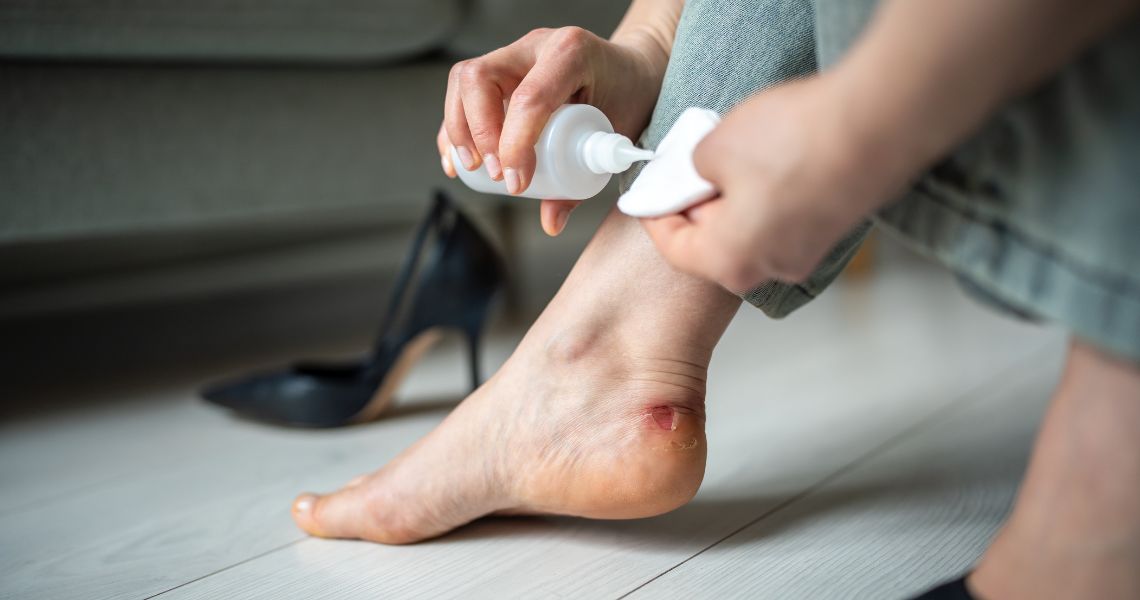
Once blisters have appeared, treating them is important in order to avoid any further complications.
- Wash your hands with soap and warm water before touching the blister.
- Clean the area where the blister is with soap and warm water.
- If the blister is not infected and is not particularly painful, it is best not to burst it. The skin covering the blister acts as a protective barrier and will help the blister to heal.
- If the blister does cause pain or discomfort, you can consider draining off the liquid as follows:
- Clean the area where the blister is with soap and warm water again.
- Disinfect a clean needle using alcohol or hydrogen peroxide.
- Carefully prick the edge of the blister to allow the fluid to drain out. Do not peel off the skin covering the blister, as it helps to protect the area and avoid infections.
- Once you have drained the blister, wash it again with soap and warm water before applying some antibiotic cream or Vaseline.
- Dress the blister with a sterile gauze to protect it from friction and prevent secondary infections.
- We should keep the dressing clean and dry, changing it regularly to prevent infection and speed up healing.
However, since prevention is always the best cure...
- Wear suitable footwear.
- Break in new shoes/sandals gradually at home: wear them for short periods at first and then increase how long you wear them to allow your feet to adapt to them.
- Wear the right socks.
- Avoid friction, long walks or sport.
- Look after your feet by avoiding moisture.
- Use foot protectors.
Household remedies to widen tight shoes
There are different household remedies to widen shoes to make them adapt better to our feet.
- Freezing shoes: we fill a watertight bag with water and then place it inside the shoe and then put each shoe inside another bag (without water). We then put everything in the freezer until the water inside the first bag freezes. Water expands when it freezes and this will stretch the shoes. We can remove the shoes from the freezer once the water has frozen and then leave them to allow the water to thaw for about 20 minutes. We should then try them on again. We can repeat the process until they fit better. This remedy only works on shoes that are not made from leather.
- Using heat: we can apply heat to our shoes using a hairdryer, taking care to keep it at a prudent distance to avoid damaging the shoes. We should heat up the areas we want to widen for about 25 seconds. We then put the shoes on while wearing thick socks, the thicker the better, to make the shoes adapt better to our feet.
- Wet newspaper: take several pages of newspaper, dampen them and then stuff them inside the shoes. Leave it in overnight to “shape” the shoes, and in the morning you will notice that they have widened.
- Moisturising cream: this household remedy does not widen the shoes very much, but it can be useful when we only need a slight increase in width, because the shoes are tight and hard to put on. We should apply a little moisturising cream to the inside of the shoe and a little on our feet. This will help our feet slide into the shoes much easier. Moreover, the shoe will adapt better to our feet.
What do you think about?
Share comments, opinions and tricks with the Community