

Which foods are good for your vision
Do you know which foods are good for your vision? Discover the list of foods rich in vitamin A and essential nutrients for taking care of your eyes.

How often have you heard “eat carrots, they are great for eyesight”? I’m sure, many times! Although popular wisdom is rarely wrong, our eye health goes beyond this orange vegetable. In the twenty first century, with screens devouring our free time and blue light doing its thing, a smart menu can be the best shield for our eyes.
Are you wondering how? Keep reading!
The myth about carrots: do they really improve vision in the dark?
Let’s go back in time. The idea that carrots afford a kind of night vision became popular because of a British propaganda campaign in the Second World War. This helped to divert attention from the use of radar and to protect certain details of their military operations. However, some historians point out that it had another, more practical objective: encourage consumption of the more abundant foods during rationing. As you can see, myths usually have a basis in reality.
The fact of the matter is, yes, the carrot is unquestionably part of the list of foods rich in vitamin A and beta carotenes. The Spanish Society of Ophthalmology (SEO) reminds us that extreme deficiency of this vitamin can cause night blindness, so consuming it helps maintain the proper functioning of the retina. However, eating three kilos of carrots will not give you superpowers in dim light if your eyes health is normal. Of course it belongs to a group of good foods for vision, but none is miraculous on its own.

Oily fish and Omega-3: key allies against dry eye syndrome
If you spend hours in front of your computer or in an air-conditioned environment, you have very likely felt that annoying sensation of having grit, stinging or dryness in your eyes. It is dry eye syndrome; a condition related to poor quality or quantity of tear film.
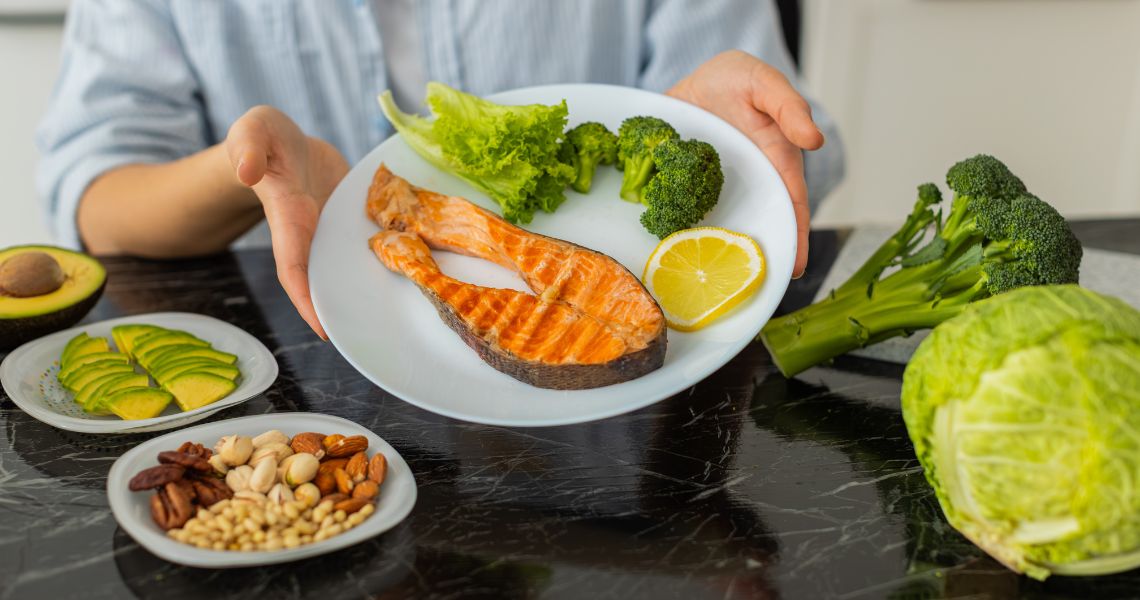
Among the factors that affect eye health, food can play a supporting role, although it does not replace medical treatments when they are necessary. In this context, oily fish (like salmon, sardines, anchovies or mackerel) stand out for their content in omega-3 fatty acids, especially EPA and DHA, nutrients that are part of cell membranes and have anti-inflammatory effects on the body.
Among the foods that we can eat to take care of our eyesight is oily fish. In fact, eating it twice a week is a good habit for a balanced diet. Even so, it should not be considered a specific treatment or direct solution for dry eye. Eye health depends on many factors and its care goes far beyond a single food.
Daily habits in the kitchen to preserve the nutrients in these foods
There is no point in filling your trolley with the best foods to help vision if you do not take care with their preparation in the kitchen. Many vitamins and antioxidants are sensitive to heat, light and water. To pamper the nutrients that contribute to eye care, take note of these three practical tips:
- Steam and short cooking times. When cooking vegetables such as spinach or broccoli (rich in lutein and zeaxanthin), steaming is often a better choice than prolonged cooking in water. If you boil them, it is preferable to do so for a short time and, if possible, use the broth for soups, as it still has many vitamins.
- The healthy fat touch. The beta carotenes of pumpkin or carrots are fat-soluble. This means that your body absorbs them much better when consumed together with some fat, such as a drizzle of extra virgin olive oil.
- Freshness and proximity. Prioritizing seasonal and local produce can help to better preserve certain time-sensitive nutrients, such as vitamin C, although the impact depends on the food and how it has been preserved or transported. In some cases, even frozen products maintain their nutritional value very well.

Enemies of your eye health: the foods you should reduce in your diet
To maintain good vision, it is just as important to include foods that are optimal for eye health as it is to avoid the regular consumption of products which, in the long term, can contribute to metabolic problems that also affect your eyes. They may not have immediate effects but are risks that accumulate over time within your body’s overall health.
For example, it is advisable to moderate the added sugars and trans fats present in some ultra-processed foods and industrial pastries, since their high consumption is associated with a greater risk of cardiovascular and metabolic diseases, such as type 2 diabetes. In this context, it is worth mentioning that diabetes is one of the main risk factors for eye complications such as diabetic retinopathy, which affects the blood vessels of the retina. In any case, rather than speaking about “enemy foods”, current scientific evidence supports the idea that a balanced diet is part of a lifestyle that promotes long-term eye health.
As you can see, the recipe for a sharp eye is no secret: it boils down to eating a varied, diet, cooking with care and remembering that your eyes also “eat”. Don’t forget that!
What do you think about?
Share comments, opinions and tricks with the Community