

Correct use of dental floss for a dazzling smile
Discover the benefits of dental floss, the different types and how to use it properly step by step for a clean, healthy smile.

Who has never felt the discomfort of bits of food between their teeth after a hearty meal? It can be rather uncomfortable, and if we are not at home and without a toothbrush at hand, we tend to resort to a toothpick. However, experts warn that this habit can damage our gums and dental enamel. Instead of toothpicks, dental floss is the best solution, becoming an important complement to our toothbrush and toothpaste, providing that we use it on a daily basis... and properly!
What is dental floss and what different types are there?
To understand what dental floss is for we need to understand that it is specially designed to clean the spaces between our teeth, where our toothbrushes are unable to reach. Dental floss consists of thin filaments (plastic or nylon) that are specifically treated to remove food remains, and above all, bacterial plaque which builds up in interdental spaces.
When buying dental floss it is only normal to be overwhelmed by the available choice. There is no universal best dental floss, as the one we should choose will depend on the anatomy of our mouth and our particular needs.
In any event, the following are the main types of dental floss that we will be able to find:
- Nylon or multi-filament dental floss. This is the most common type. It consists of several threads, meaning that it can sometimes fray. It is available with or without flavour and is divided into two main sub-groups:
- Dental floss with wax. This is ideal for people whose teeth are very close together, since the wax coating makes it slide smoothly without breaking.
- Dental floss without wax. This is recommended for normally spaced teeth. It helps to effectively drag out plaque due to its texture.
- PTFE or single-filament dental floss. This type consists of a single thread made from a very strong premium material. It slides very easily between our teeth, even in narrow gaps and fraying is practically impossible.
- Dental floss for orthodontics (or superfloss). If you wear braces or retainers, this is the floss for you. It has one rigid end that works as a type of needle to thread the floss under the orthodontic device, a spongy part to clean the wider areas and a standard thread section.

Main benefits of dental floss for our health
Including dental floss in our daily routine is not an aesthetic whim, but rather a practice that is highly recommended by dental hygienists and dentists to complement brushing. In fact, the benefits go far beyond avoiding the discomfort of trapped food:
- It prevents the risk of infection. By removing plaque where bacteria build up, it can contribute to preventing caries between our teeth and other periodontal diseases such as gingivitis.
- It helps to make our smile look better and confers a greater feeling of cleanliness in our mouth.
- It contributes to preventing bad breath. Decomposition of invisible food remains in our mouth is one of the main causes of bad breath, and therefore eliminating it helps us to keep fresh breath.
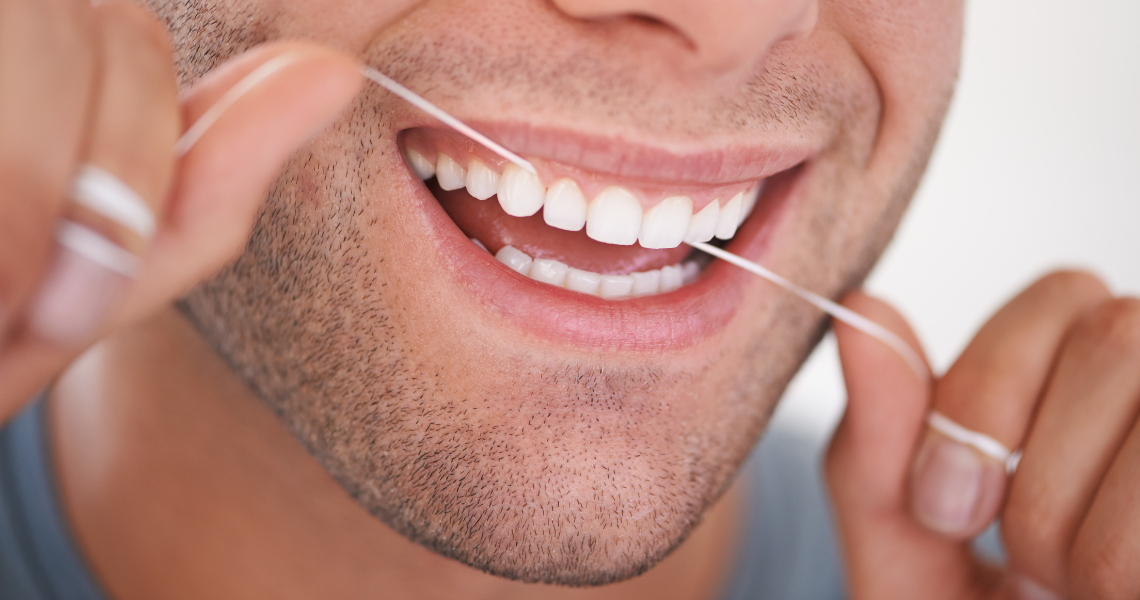
Step by step guide: correct use of dental floss
There is no point having the best tools if we are unable to use them properly. To avoid damaging our gums and ensuring proper cleaning, follow this guide for the right directions as recommended by professionals:
- Foreword. Brush your teeth with the right toothbrush for you.
- The right amount. Cut off approximately 46 centimetres of dental floss and roll most of it around one of your middle fingers.
- Securing. Roll the rest of the floss around the same finger on your other hand. This finger will be used to wind in the floss as you use it.
- Tightness and introduction. Hold the floss tight (without any slack parts) between both of your hands, leaving about three centimetres of floss between them. Guide the floss between your teeth using a gentle sawing movement, avoiding forcing it in suddenly as this could cut your gums.
- The “C” technique. When the floss reaches your gums, make a “C” shape with the floss against the side of your teeth. Slide it gently into the space between your tooth and gum until you feel it go slightly tight.
- Dragging. Hold the floss firmly against your teeth and gently scrape the side, moving the dental floss upwards (away from your gums) to force any dirt out.
- Total cleaning. Repeat this process on all your teeth using a clean part of the floss for each tooth, and pay special attention to your back molars.
As an extra tip, when you finish the process, it is a good idea to use a mouth wash to complete your hygiene and help reduce bacteria and remains.

How often should you use dental floss?
You can use it after meals, although the general recommendation is at least once a day.
In short, dental floss can be a wonderful complement to clean between your teeth and help keep your teeth and gums healthy. So what are you waiting for to try it?
What do you think about?
Share comments, opinions and tricks with the Community