

Men’s skincare: how to start an effective routine
Discover how to start your men’s skincare routine with simple steps and appropriate products for every type of skin. Practical and easy-to-follow guide.

Basic steps in a men’s skincare routine
Do you want to have healthy skin and to look better? Then it’s time to implement a facial routine designed for men. Male skin has its own characteristics compared to female skin, so it requires specific care and products. Men should choose formulas with powerful and fast-absorbing active ingredients, ideal for oily skin and designed to penetrate well into the skin. We’ll give you three essential steps that will transform your routine and help you feel better every day:
1. Morning and evening cleansing: start the day with a facial cleanser to remove traces of products and sweat, and repeat in the evening to prepare the skin for rest. Your face will thank you for it.
2. Exfoliation twice a week: removes dead cells and achieves a brighter, smoother and firmer complexion. Do it at night, after cleansing and before moisturising, so that your skin recovers while you sleep.
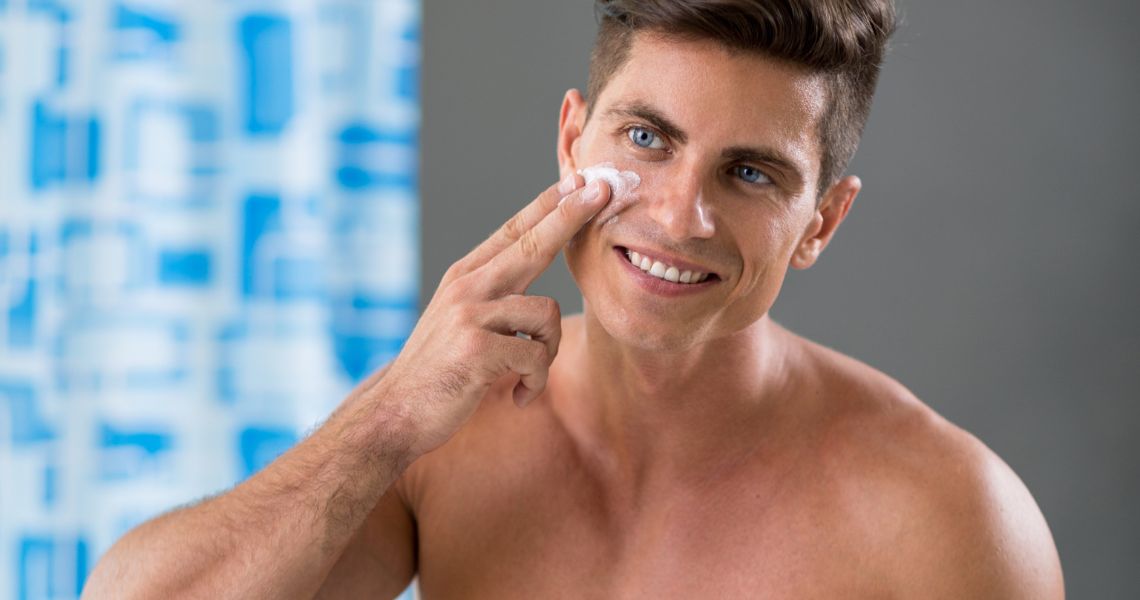
3. Daily hydration: apply moisturising cream morning and night. In the morning, choose one with sun protection (SPF) to protect yourself from UV rays and prevent premature ageing.
How to choose skincare products based on your skin type
If your skin tends to be oily, which is very common in men because of testosterone, you should look for cleansers in gel format that contain active ingredients such as salicylic acid, as this has the ability to penetrate into the hair follicle and dissolve fat. In terms of hydration, the most common mistake is to avoid it for fear of shine; however, dehydrated oily skin will produce more oil to compensate. The solution is to opt for fluid textures or water-based gels that include niacinamide, an ingredient that helps minimise the size of the pores and soothe the inflammation from the shave itself.
However, if your skin tends to be dry, you should avoid the foaming gels that remove moisture and opt for cleansing milks or balms. Your ideal moisturiser should be dense and rich in ceramides or fatty acids, which act as a “cement” to seal moisture. Hyaluronic acid is also a powerful ally here as it acts as a sponge that retains water in the deep layers of the dermis.
For those with combination skin, the challenge is addressing two opposing needs simultaneously: normally, the forehead and nose area requires mattifying actives, while the cheeks need more intense nutrition. The best ideal is to use of balancing products with light textures that moisturise without saturating. Here, sunscreen is the most critical step, as it must be “dry touch” so as not to grease the T-zone, but moisturising enough not to dry out the rest of the face.

What do you think about?
Share comments, opinions and tricks with the Community