
How to care for children’s oral hygiene
Learn how to care for children’s oral hygiene step by step. Practical tips on brushing, daily habits and preventing cavities from an early age.

Why is oral hygiene important for children
A healthy mouth is crucial for a child’s overall well-being and can help prevent dental problems such as cavities. It’s therefore essential to teach children the importance of maintaining good oral hygiene from an early age and establishing a daily brushing routine.
Brushing with toothpaste, especially fluoride toothpaste, helps to:
- Remove dental plaque
- Prevent cavities
- Promote remineralisation (strengthening enamel attacked by acids)
- Clean and polish the teeth
- Remove stains from teeth
- Freshen breath
Tips for keeping your child’s teeth healthy
It’s important for children to learn how to brush their teeth properly. When they’re young, brushing should be encouraged as a fun and positive activity:
- Use music: Play children’s songs about brushing or music that lasts two minutes, the recommended brushing time. You can also give them an hourglass so they can time themselves.
- Lead by example: Brush your own teeth and let them imitate you so they can see how it’s done.
- Choose the right brush and toothpaste: Pick ones featuring their favourite characters to motivate them.
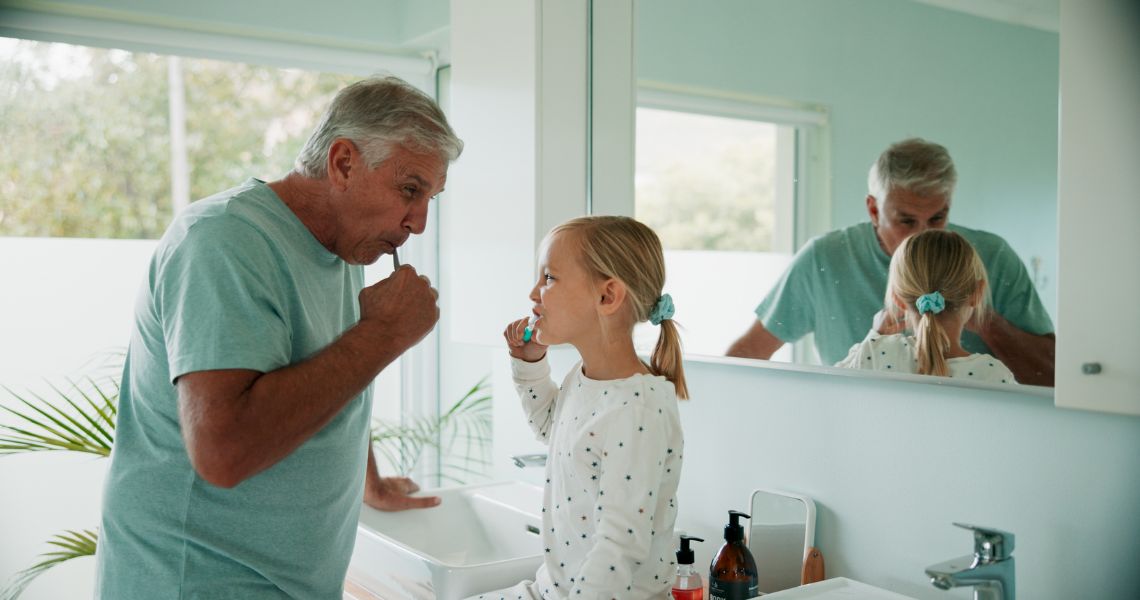
Tips for children under 3 years
- Position the child facing away from you, with their head resting on your chest.
- Brush at a 45° angle, cleaning the inside, outside and chewing surfaces of each tooth using circular or sweeping motions.
- Don’t forget the tongue.
- After two minutes, have the child spit out the excess toothpaste and rinse with water.
When to start with children’s oral hygiene
Children under 3 years
- Before teeth appear: Clean the gums with a damp gauze after feeds.
- First teeth: Gently brush with a child’s toothbrush and water, or toothpaste with 1,000 ppm fluoride (the size of a grain of rice). Spit out, don’t rinse.
- Brushing frequency: At least twice a day, supervised by parents.
Young children (3 to 6 years)
- Toothpaste: 1,000 ppm fluoride, pea-sized amount.
- Technique: Brush all surfaces (inside, outside, and chewing surfaces) and the tongue using gentle circular motions for at least two minutes.
Older children (6 years up)
- Toothpaste: Can use adult toothpaste (1,450 ppm fluoride), pea-sized amount.
- Mouthwash: Can start using alcohol-free rinse.
- Toothbrush: R0eplace every three months.
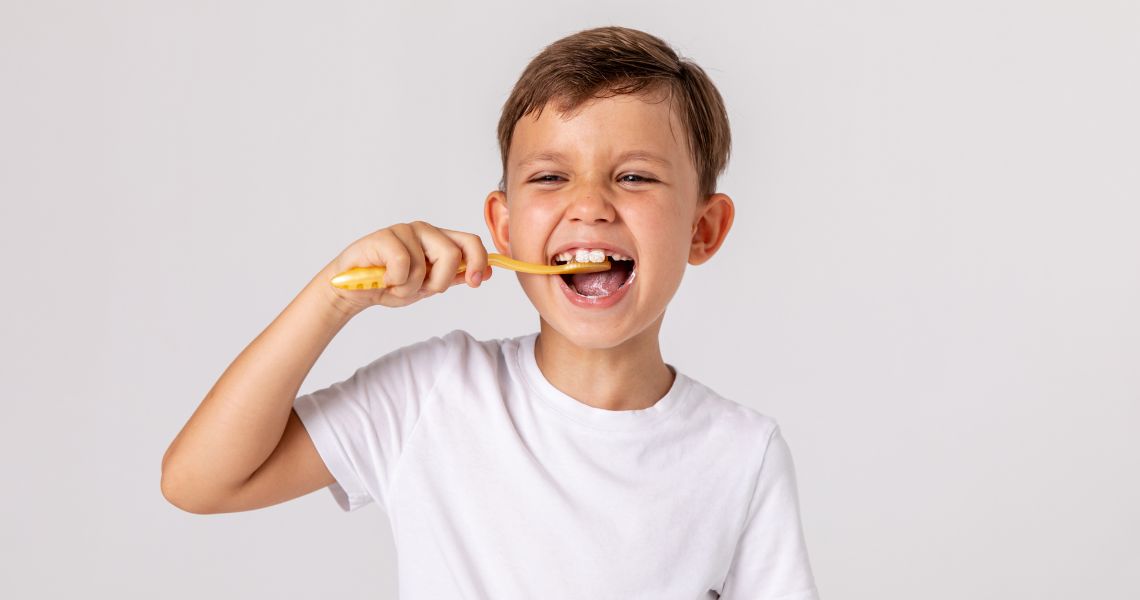
The right toothpaste and brush for each age
Toothbrush:
- Bristles: Always soft or extra-soft to protect gums and enamel.
- Head: Small to reach all areas.
- Replacement: Every three to four months.
- Handle: Suitable for a firm grip.
- < 3 years: handle for adult use (manual)
- 3–6 years: ergonomic handle they can manage (manual or adapted electric)
- > 6 years: handle suited to their hand to encourage independence
Toothpaste:
- With fluoride: Effective for fighting plaque and cavities, as well as cleaning and polishing enamel.
- Without fluoride: Increasingly popular option. Equally effective at cleaning, but does not prevent cavities. Examples include neem and pomegranate toothpaste, aloe vera toothpaste and organic toothpaste.
Daily habits for healthy teeth
Frequency: Teeth should be brushed at least three times a day, or after every meal, including lunch and snacks.
Duration: Brush for at least two minutes, and use mouthwash according to the child’s age.
Creating the habit: Allow children to practice on their own, giving them the opportunity to try, but with supervision and encouragement.
Supervision: Especially important until they are seven or eight years old, ensure they are brushing correctly.
In addition to hygiene, diet is very important for healthy teeth. Consumption of sugars and processed snacks should be limited, while fruit, vegetables, water, and milk should be encouraged. Children should also visit the dentist regularly to ensure everything is in good order.

What do you think about?
Share comments, opinions and tricks with the Community