

Easter longaniza and its regional variations
Discover the different types of Easter longaniza in each region. Learn about their ingredients, flavours and local traditions.

How do you eat Easter sausage?
Traditionally, Easter sausage was the accompaniment to the "mona" in the Valencian Community, a round bread dough, like a sponge cake but a little more consistent and with a medium sweetness, which is usually baked with a boiled egg in the middle. But nowadays many people take it simply to "snack" or to accompany a very fresh beer.
The typical Easter sausage
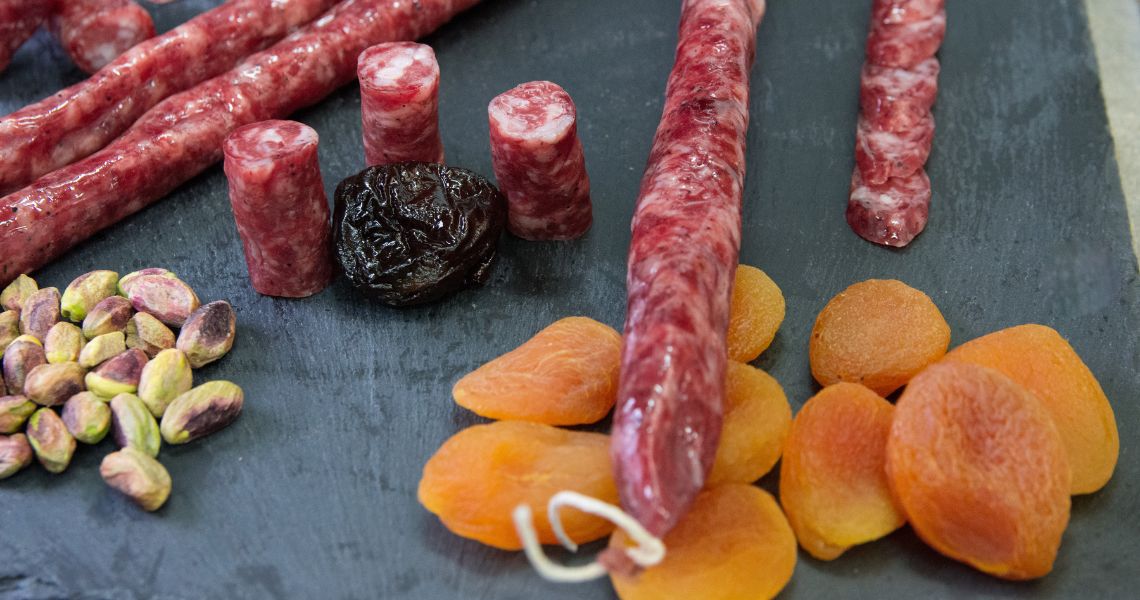
At Easter time it is very typical in the Valencian Community to buy and, of course, eat Easter sausage. It is a type of cured sausage made with lean pork and bacon, all very chopped and mixed with spices.
It is stuffed into a narrow intestine and its length usually reaches 18-20 centimetres. It also has the CV quality seal.
The pieces are usually presented after drying for about 15 days, making them more tender than other types of cured sausages. Still, its consistency is firm and fleshy. It is pinkish in colour and its flavour is quite natural, with a clear distinction between spicy touches.
Although it is true that this sausage is typical of Easter, today we can find it throughout the year, even sold in vacuum to hold better.
Valencian Easter sausage: the taste of tradition
In Valencia, the Easter longaniza is known fot its air-cures process and mild flavour. for its air-cured process and mild flavour. It’s made with lean meat and pork belly, seasoned with salt and pepper, and left to dry until it reaches a firm texture. It’s the perfect companion to the mona cake and snacks enjoyed outdoors
Easter sausage from Aragon: quality and tradition
The Aragonese recipe balances lean meat and fat, with a touch of sweet paprika for colour and aroma. Its longer curing process produces a sausage with deep, rich flavour, ideal for those who enjoy intensity.
Catalan Easter sausage: authentic flavor
In Catalonia, Easter longaniza is typically cured a little longer, giving it a more pronounced flavour. Some versions include garlic and spices for added character. It’s enjoyed during the holidays alongside coca de llardons (pork crackling pastry) or at typical family gatherings.
What do you think about?
Share comments, opinions and tricks with the Community