

Ice-creams
The ice cream is presented as the favorite snack of the Spanish during the summer months.

The origin of ice cream is uncertain, although there are references to frozen or chilled drinks with snow or ice before the Christian era. The elaboration of this type of product has evolved a lot in the last years, revolutionising the sector and establishing differences according to the type of ingredients in the product.
Types of ice-cream
• Creamy ice cream: this is of milk origin. Contains at least 8% fat and 2.5% protein.
• Milk ice cream: it contains at least 2.5% fat exclusively of milk origin and at least 6% milk dry extract (the product obtained after the drying process).
•Ice cream: this denomination is reserved for a product with 5% fat and its proteins are exclusively of milk origin.
• Soft ice cream: ice-cream, milk ice-cream or ice-cream that also has at least 4% egg yolk.
• Water ice: contains at least 12% dry extract.
• Sorbet: it has at least 15% fruit and 20% dry extract.
• Slush: These are sorbets or water ice in semi-solid state.
• Ice cream dessert: any of the above ice-cream when processed and decorated with other foodstuffs.
Different ways to serve ice-cream
• Cone: one or several balls of cream ice-cream that are presented inside a wafer cone or tulip.
• Cut of ice-cream: of a single flavour, with two, or with three flavours combined. It can be accompanied by a wafer or not.
• Stick: The ice cream is presented on a stick made of wood or plastic to consume it more easily. They can be cream or ice.
• Ice-pop: an ice, usually made of fruit, presented in a plastic container.
Countries that consume the most
According to the latest data from the International Dairy Association, the ranking of worldwide ice cream consumption is led by New Zealand, with an average of 26.3 litres per year per capita, followed by the United States (24.5 litres) and Australia (17.8). The fourth place is for Switzerland (14.4) followed by Sweden (14.2) and Finland at 13.9 litres per year and inhabitant.
Ice-cream in Winter?
The success of ice cream in the Nordic countries and in America is due to the inclusion of this product in their regular diet all year round, regardless of the weather.
In Spain, despite our good temperatures, consumption is around 6.5 litres per inhabitant per year, far from the large numbers of our European neighbours. The Spanish consumer associates the consumption of ice cream with the summer period, although, gradually, this product is slowly being added to the shopping basket during the rest of the year.
The most popular flavour
All over the world, the most frequently ordered ice-cream is vanilla flavour, and the time of year when most ice-creams are made is in June.
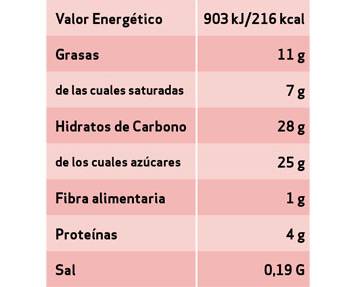
Nutritional value
Although it can vary depending on the type of ice-cream, on average, 100 grams of ice-cream contains the following:
What do you think about?
Share comments, opinions and tricks with the Community