

What are wine dregs and why do they appear?
Find out what wine dregs are, why they appear and if it is safe to drink the wine. Learn how to identify them and what they tell us about the wine.

It's a classic: you uncork a bottle you’ve been saving for a special occasion, you pour out the last glass, and you suddenly notice some small dark dregs in the bottom. Before you panic or think you have a defective bottle, you should know that finding some dregs in wine is absolutely normal in the vast majority of cases.
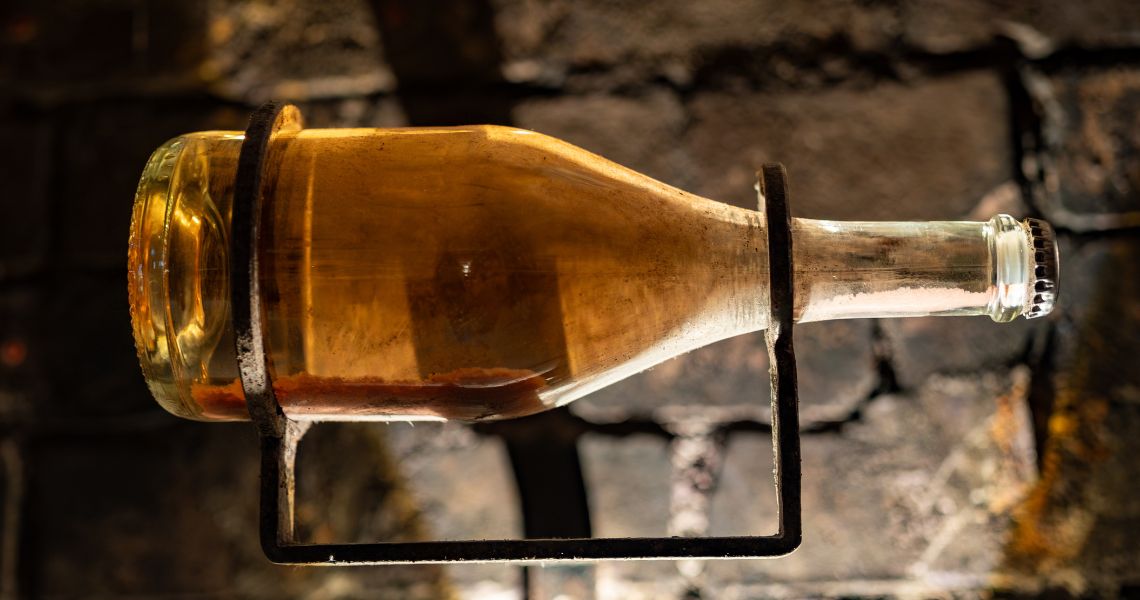
So, what exactly are wine dregs? They are essentially the natural sediment that separates out of the liquid during the wine-making or ageing process. To understand the technical term used to describe wine dregs, we should first discuss sediments, lees and bitartrates, which are terms that wine-makers use to describe those substances, which, although visually striking, are not actually a health risk.
Why are wine dregs more and more common
If you get the feeling that it is now more common to find dregs in wine than it was a couple of decades ago, you are not wrong. It is a wine-making trend. Traditionally, industrial wineries employed more aggressive clarifying and filtering processes to guarantee more crystal clear wine.
Nevertheless, today’s market has taken a turn more towards authenticity. A lot of wine-makers have decided on minimal or zero filtering to conserve the flavour, structure and complexity of the land. By avoiding mechanical processes, some sediment in the wine is much more likely to appear in the bottle. Nevertheless, in the world of natural wine with minimum intervention, sediment in the wine has practically become a hallmark that guarantees that the product has not been “stripped” of its organoleptic properties.
How to identify the different types of sediment in wine
Not all wine dregs are caused in the same way. Being able to identify them will help you better understand how the bottle you have before you has evolved:
- Bitartrate crystals. These crystals are mineral salts (potassium and calcium) that are naturally present in grapes. When wine is taken down to low temperatures, those salts solidify to create transparent or reddish crystals. They are affectionately known as “wine diamonds”.
- Colourant matter (polymers). These are common in aged wines (Reserva and Gran Reserva). Over the years, the tannin and the anthocyanin (the colour) bond together and weigh enough to sink to the bottom.
- Yeast remains (lees). Yeast is responsible for fermentation. If the wine has not been strongly filtered, those particles remain suspended to confer smoothness and volume in the mouth.

What do wine dregs tell us about the quality of the wine
There is a false belief that wine containing dregs is an old wine in poor condition. The truth of the matter is quite the opposite in fact: the presence of sediment is usually a sign of a respectful wine-making process and good evolution in the bottle.
We need to bear in mind that dregs do not negatively affect the taste of the wine, although they do confer a slightly gritty texture if drunk directly. The presence of dregs is a sign that the wine has kept its original tannin and flavour.
In wine from regions such as Porto or wine that has been aged for a long time, sediment is to be expected and is almost mandatory. If you see a warning on the label saying “this wine has not been subjected to stabilising processes, and therefore precipitate could appear”, it is a statement of intention by wine-makers indicating craft quality.
How to avoid sediment in wine when pouring it
Although sediment is harmless, it is understandable that we do not really want that texture in our glass. To enjoy wine dregs without them spoiling your glass of wine, take note of the following expert tips:
- Stand the bottle up. If you know that the bottle is years old or that the wine has not been filtered, stand it vertically 24 hours before opening it so that the sediment settles at the bottom.
- The art of decanting. Pour the wine slowly into a decanter. An expert tip is to place a candle or torch under the neck of the bottle while pouring the wine. As soon as you see sediment approaching the neck of the bottle, stop pouring it.
- Emergency filtering. If the sediment is fine, you can use a funnel with a fine mesh metal filter or even a clean muslin cloth to catch the particles as the wine passes through into the glass or jug.
In short, finding dregs in wine is not a mistake, quite the opposite in fact. Sediment is the footprint of time and the vineyard, and far from being a defect, it invites us to enjoy a much calmer serving ritual making us more aware of what we are going to drink, and heralds a product that has reached our table without going through any artificial processes.

What do you think about?
Share comments, opinions and tricks with the Community



Muy interesante el saber identificar los tipos de posos en el vino
Muy interesante el saber identificar los tipos de posos en el vino