

What is beer froth called?
Do you know what beer froth is called? Discover its other names, why it forms and what to bear in mind when pouring it.

There is something almost hypnotic about looking at a freshly drawn beer: the bubbles rising, the creamy layer that forms on the surface and that trace of froth left clinging to the glass after every sip. But beyond its appearance, do you know what beer froth is called? Let’s find out!
Head: the real name of beer froth
The truth of the matter is that the official terms are the “head” or “collar”. These words are used by brewers to refer to the froth produced by beer when it comes into contact with the glass. The importance of the head should not be overlooked. The head affects the release of the beer's flavours and bouquet and is the result of the interaction between carbon dioxide, proteins and other compounds from the malt and hops, along with factors such as temperature, the glass and how the beer is poured.
If you have ever wondered why beer froth has a name or what the most suitable name for beer froth would be… now you know the answer! Expressions such as “head” are commonly used in the brewing world, and “collar” to a lesser extent.
Why does beer form a head? The science of bubbles and CO2
It may seem rather magical, but nothing could be further from the truth: beer froth is the result of several physical and chemical processes.
Carbon dioxide (CO2) is fundamental to this process. During fermentation, the yeast converts the sugars in the malt into alcohol and CO2. Some of this gas remains dissolved in the beer and, once poured, it starts to be released as bubbles that rise to the surface. However, CO2 alone is not enough for the head to hold. Proteins from the malt and acids from the hops form structures that “trap” the carbon dioxide. This is how that recognisable and appetising foamy layer forms.
The way beer is poured also completes the process: shaking the beer releases the dissolved CO2 more readily and increases head formation. That is why how the beer is drawn, the temperature and even the type of glass can make the difference between an abundant head and one that dissipates quickly.
Amount, duration and colour of the head
Not all beers produce the same head, and different heads react in different ways. Among other factors, the quantity and consistency depend on the composition of the drink. Proteins and polypeptides from the malt play an important role, while compounds derived from hops and certain polysaccharides can also affect the stability of the head.
As for colour, the head is usually white, although shades can vary slightly depending on the type of beer. Even in dark-coloured beers, the foam can retain that white, creamy appearance.
In addition to how long it lasts and its colour, the characteristics of the head, such as bubble size, structure or the way it clings to the sides of the glass can also be described. The latter is known as lacing and, interestingly, there are specific methods for measuring it when analysing beer heads.

The 3 vital functions of the head: bouquet, temperature and oxidation
The head is not present in beer purely to make it more visually appetising. It plays an important role in the drinking experience and acts as a barrier between the beer and the air, helping to reduce oxidation. In addition, the bubbles help release all the delicious bouquet and flavour of the beer.
The head also helps retain CO2. By covering the surface of the beer, it makes it harder for the gas to escape quickly and helps maintain its carbonation and fizz for longer. That is one of the reasons why the type of head and its duration matter when serving beer.
So, what about temperature? Rather than a function of the head, it is a factor that conditions how it reacts. The temperature at which the beer is served affects the formation and persistence of the head, so it is something that should be taken into account.
How much head should a perfectly poured beer have?
It is worth not getting too entangled with a hard and fast rule here, as there is no universal amount of head that is suitable for each type of beer. The style, the level of carbonation, the glass and the pouring system all affect the result. As a practical reference, a layer of approximately 2-3 centimetres of head is common in many beers, but it is important to stress that this should not be taken as an absolute rule.
More important than measuring with a ruler is achieving a well-proportioned, stable head that is suited to the beer. A glass overflowing with froth does not necessarily mean a good pour, and a beer with hardly any head is not automatically defective either.
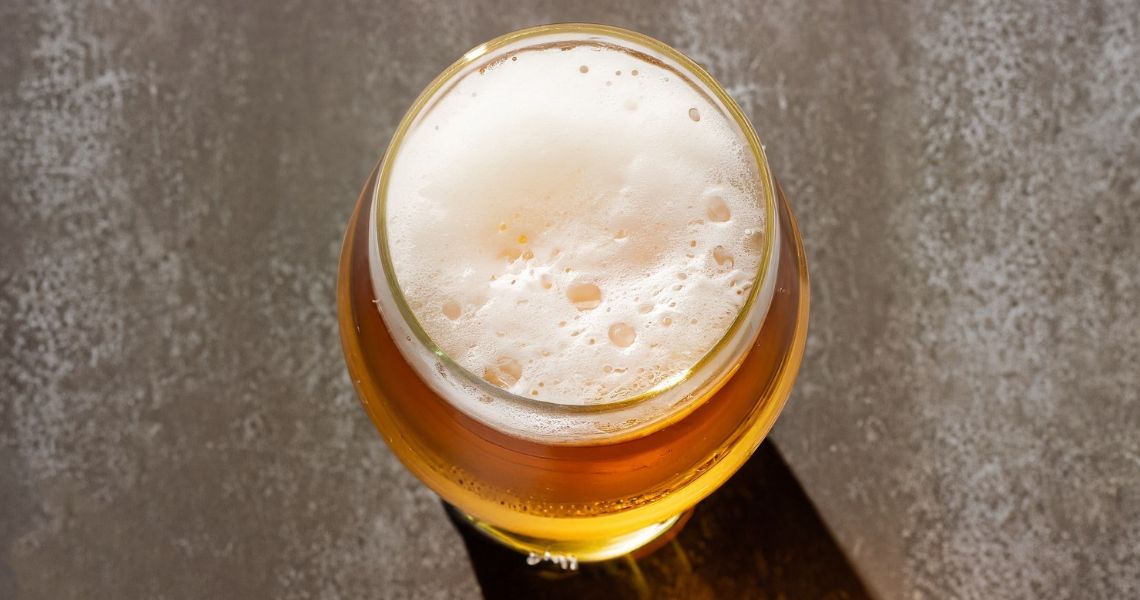
How the type of glass affects the duration of the head
A glass is much more than just a container for the beer. Its shape changes the surface area in contact with the air, how fast CO2 is lost and the way the bouquet and flavour are concentrated.
Tall, relatively narrow glasses can help retain the head and reduce the surface area exposed to the air. That is why they are common for brewing styles such as lager or some pilsner beers. Other designs, such as tulip-shaped glasses, aim to concentrate the aromatic compounds close to the nose.
Using a properly clean glass is also important. Traces of grease, soap or detergent can severely impair the formation and duration of the head. For decades, brewing literature has pointed to the cleanliness of the glass as one of the essential factors in achieving a good head.
So now you know the proper name of beer froth, the head, but that is not everything; you now also know how its quantity, stability and reaction depend on various factors and affect the experience of enjoying a beer. Next time you have one, you are sure to take a closer look at its “head” in a whole new light.
What do you think about?
Share comments, opinions and tricks with the Community