

Types of toothbrushes: which one is ideal for you?
Do you not know which toothbrush to choose? Discover all the different types of toothbrushes according to their bristle hardness, use or mechanism, and avoid damaging your gums.

Choosing a toothbrush may seem like a fairly unimportant decision, but not all models confer the same benefits, nor are they designed for the same needs. The shape of the head, the type of bristles or the cleaning system can make the difference between effective oral hygiene and one that ends up causing problems over time.
The good news is that there are currently different types of toothbrushes designed to suit each person and their needs, so you only need to find the one that works best for you. From traditional manual brushes to electric ones, as well as specific models for orthodontics, implants or sensitive gums, knowing their features and what they offer is key to looking after oral health and preventing conditions such as gingivitis or tooth decay.
The importance of choosing a good toothbrush
Brushing remains the main tool for removing plaque, an invisible film that builds up on our teeth, and which if not removed correctly, contributes to tooth decay and periodontal disease. The Spanish Periodontology Society (SEPA) and the General Council of Dentists of Spain agree, however, that there is no single perfect toothbrush for everyone. The choice should be adapted to the condition of the mouth, brushing technique and the dentist's specific recommendations.
Among other things, using the right toothbrush helps to:
- Remove plaque more effectively.
- Protect tooth enamel.
- Prevent damage to the gums.
- Reach hard-to-clean areas more easily.
- Improve hygiene around implants, dentures and orthodontic appliances.
Ultimately, choosing between the different types of toothbrushes is not just a matter of comfort, but also of health. If you are wondering what you should pay particular attention to, keep reading!

Parts of a toothbrush: What should you look at?
Although they all appear similar at first glance, there are several factors that determine their effectiveness.
The head
Dentists tend to recommend small or medium heads, as they make it easier to reach the molars and other hard-to-access areas.
The bristles
Most specialists recommend choosing synthetic filaments (such as nylon or polyester) with rounded tips, to minimise the risk of damaging the enamel or irritating the gums.
The handle
It should be comfortable and offer a good grip to control movement while brushing. Some feature non-slip materials that make them easier to use.
The neck
A slightly flexible neck can help reduce the pressure applied to the teeth and gums while brushing.
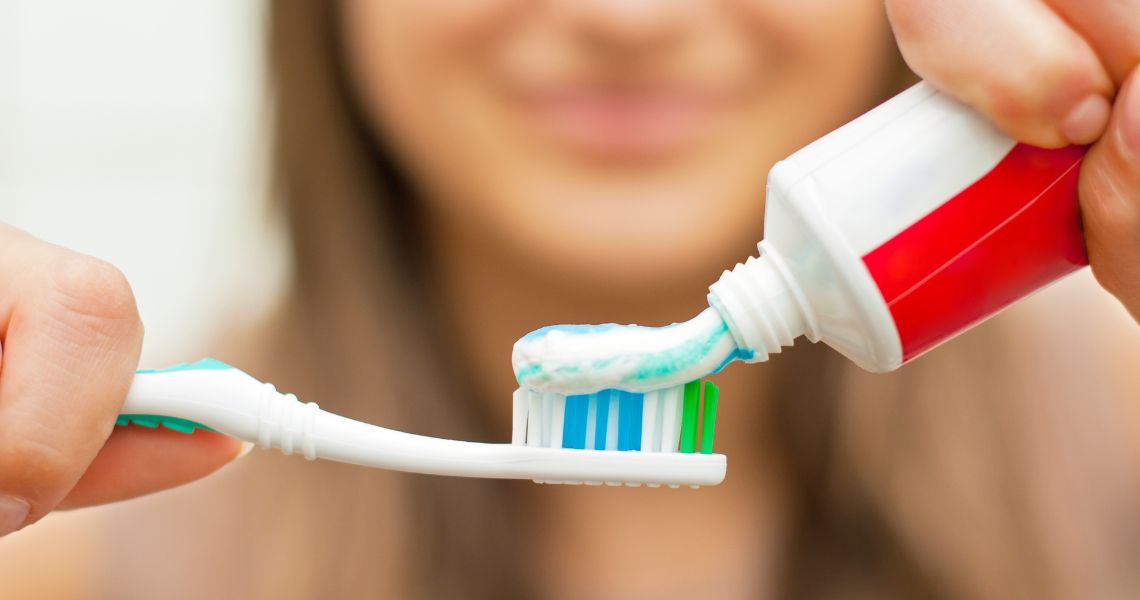
Types of toothbrushes according to how they work: manual or electric
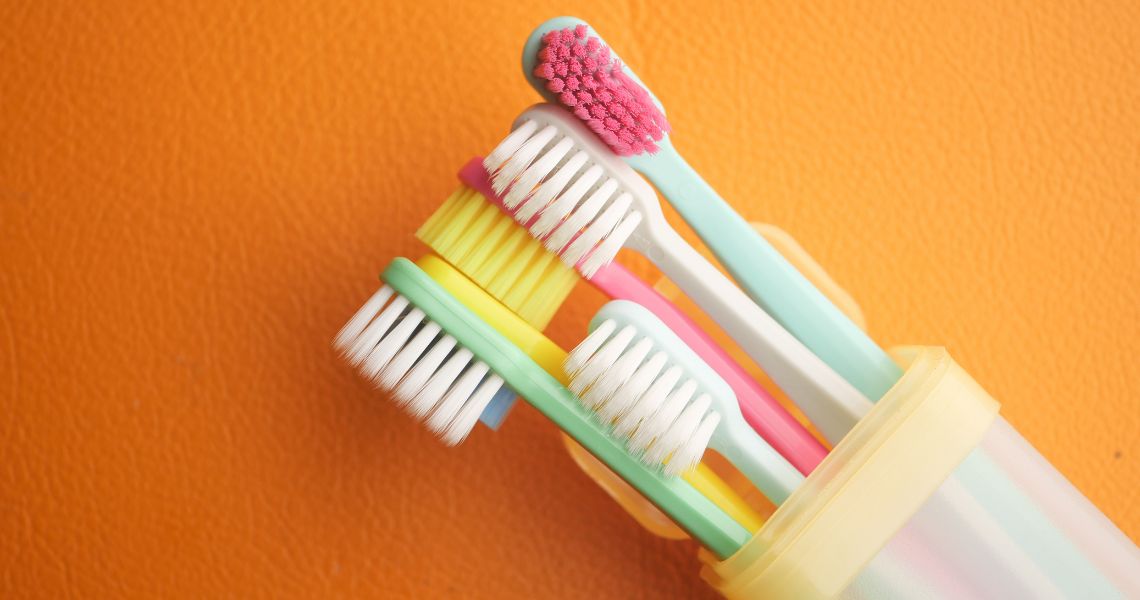
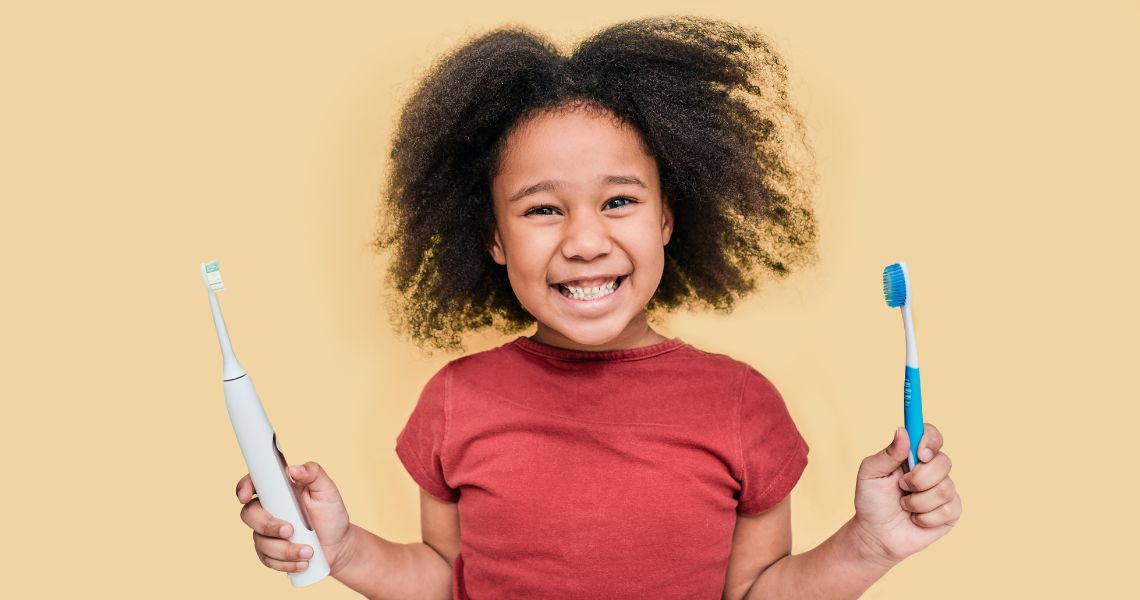
One of the most common criteria for classifying types of toothbrushes is how they work. There are currently two main options available on the market.
Manual toothbrush
This is the traditional model, and it remains a perfectly valid option when used with the correct technique and for the recommended amount of time, at least two minutes.
Its main advantages are as follows:
- More affordable price.
- Easy to carry.
- It does not need a battery or charging.
- A wide variety of models.
That said, its effectiveness depends entirely on the technique used by each person and on keeping to the recommended brushing time.
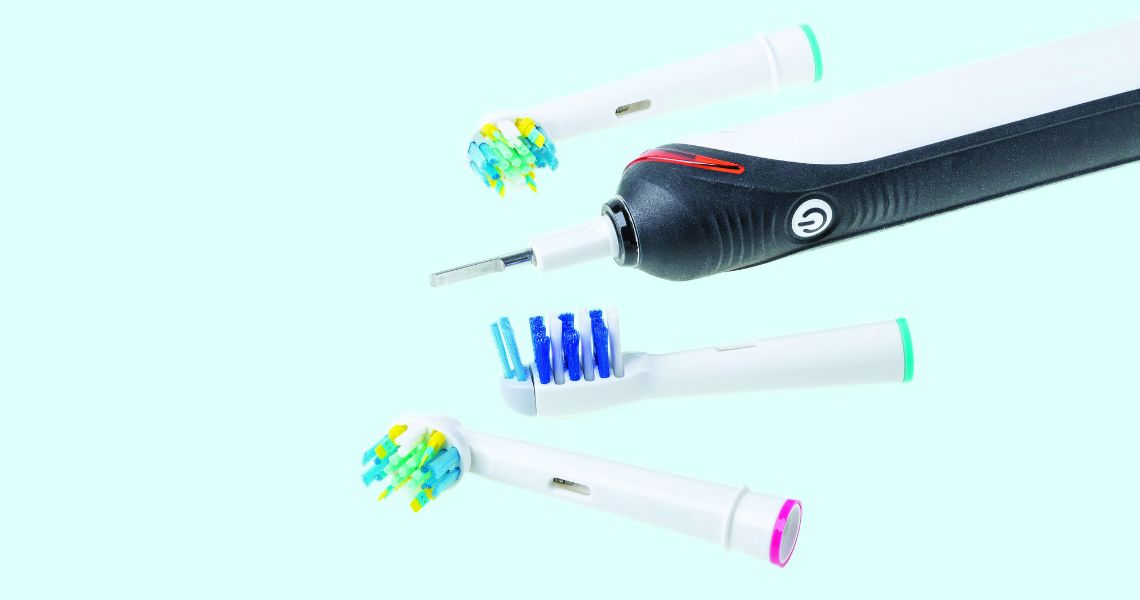
Electric toothbrush
Electric toothbrushes automatically perform oscillating, rotating, sonic or vibrating movements, thereby making it easier to remove plaque, even when the brushing technique is not perfect.
Several scientific reviews, such as those carried out by the Cochrane Collaboration, conclude that oscillating-rotating electric toothbrushes reduce plaque and gingivitis slightly more than manual toothbrushes after several months of use.
In addition, many include features such as:
- A two-minute timer.
- A pressure sensor to prevent brushing too hard.
- Different modes for sensitive teeth or deep cleaning.
However, experts point out that no toothbrush can replace good technique or thorough oral hygiene.
Types of toothbrushes according to bristle hardness (soft, medium and hard)
Another fundamental aspect is the stiffness of the bristles.
Soft toothbrushes
These are the most recommended by dentists for most people. They remove plaque without being overly harsh on the gums or enamel, which makes them particularly suitable for people with sensitive teeth or whose gums tend to suffer from inflammation.
Medium toothbrushes
These offer a balance between firmness and softness. Although they are still readily available, many professionals prefer to directly recommend soft-bristled brushes, as they offer effective cleaning with a lower risk of damage.
Hard toothbrushes
Their use is now becoming less common. Although they were widely used for years, many specialists advise against using them routinely, as, combined with aggressive brushing, they can contribute to enamel wear and even gum recession. Ultimately, we need to bear in mind that what matters is not brushing harder, but brushing better.
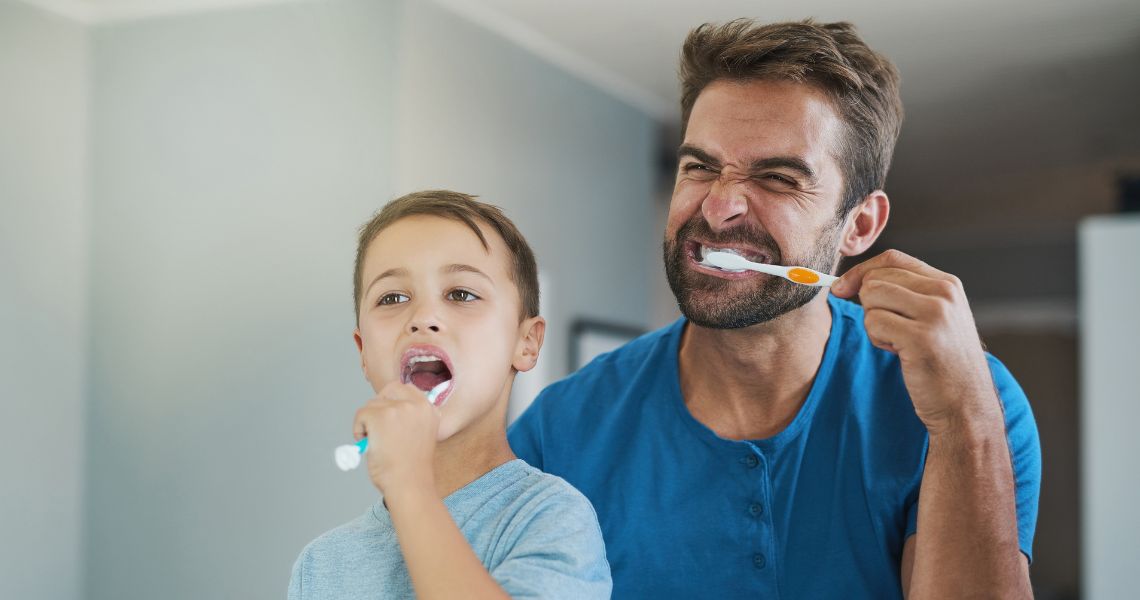
Types of toothbrushes according to their purpose or specific use
In addition to conventional models, there are different types of toothbrushes designed for specific situations. For example:
Children's toothbrushes
These have smaller heads and handles adapted to children's hands, and soft bristles that are gentle on the gums while children are learning to brush their teeth.
Orthodontic toothbrushes
These are specifically designed to clean around braces and wires. Many feature a shorter central row of bristles that makes it easier to reach those areas.
Interdental brushes
Although they do not replace a conventional toothbrush, they do complement daily hygiene by cleaning the spaces between the teeth that a regular toothbrush cannot reach. It is worth noting that different diameters are available to suit each interdental space.
Denture brushes
These are used to clean removable dentures outside the mouth, and they usually combine bristles arranged in different ways to remove food residue more effectively.
Post-surgical toothbrushes
Following certain dental procedures, dentists may recommend toothbrushes with extremely soft bristles to protect the tissue while it heals.
Toothbrushes for people with periodontal disease
These brushes are designed for patients with delicate or inflamed gums, and they usually feature very fine filaments that allow for gentler cleaning.

How to choose the right toothbrush for you
As we have seen so far, there is no single answer that applies to everyone. Therefore, to make the right choice, it is worth taking several factors into account:
- The condition of your gums.
- Whether you suffer from sensitive teeth.
- Whether you have orthodontic appliances, implants or dentures.
- Your skill while brushing.
- Your dentist's recommendations.
As a general rule, many dentists recommend a toothbrush with a small head and soft bristles, as it provides effective cleaning with a lower risk of causing damage. It is also important to replace the toothbrush (or the head, in the case of electric toothbrushes) approximately every three months, or even sooner if the bristles are splayed or have lost their shape.
Negative effects and consequences of using your toothbrush incorrectly
Using the toothbrush correctly is just as important as choosing the right one. Brushing too hard or using a worn toothbrush can have disastrous consequences for oral health.
Among the most common problems are:
- Gum recession. Applying too much pressure can cause the gums to gradually recede, exposing part of the tooth root and increasing sensitivity.
- Enamel wear. The continued use of overly hard toothbrushes or an aggressive technique can contribute to the abrasion of tooth enamel.
- Reduced cleaning effectiveness. When the bristles are splayed or have lost their shape, they lose their ability to remove plaque.
- Build-up of micro-organisms. Over time, toothbrushes accumulate bacteria and become less effective. Consequently, specialists recommend replacing them approximately every three months and allowing them to dry naturally between uses.
The wide variety of types of toothbrushes available allows each person to find the one that best suits their needs. Beyond choosing between a manual or electric model, it is worth considering the hardness of the bristles, the size of the head and whether any specific conditions should be taken into account, such as orthodontics, implants or periodontal disease.
In any event, the best toothbrush will always be the one you can use correctly, with the right technique, for the recommended amount of time and following your dentist's instructions. Do not forget that making a good choice today can help you prevent many oral health problems in the future!
What do you think about?
Share comments, opinions and tricks with the Community