

Benefits and properties of seeds
Seeds are in fashion and their consumption is becoming more and more widespread. But what is so special about them? They provide style, texture, colour, flavour and many important nutrients for the body. Discover the main properties of seeds, the different types that exist and what their benefits and nutritional contributions are.

Variety of seeds
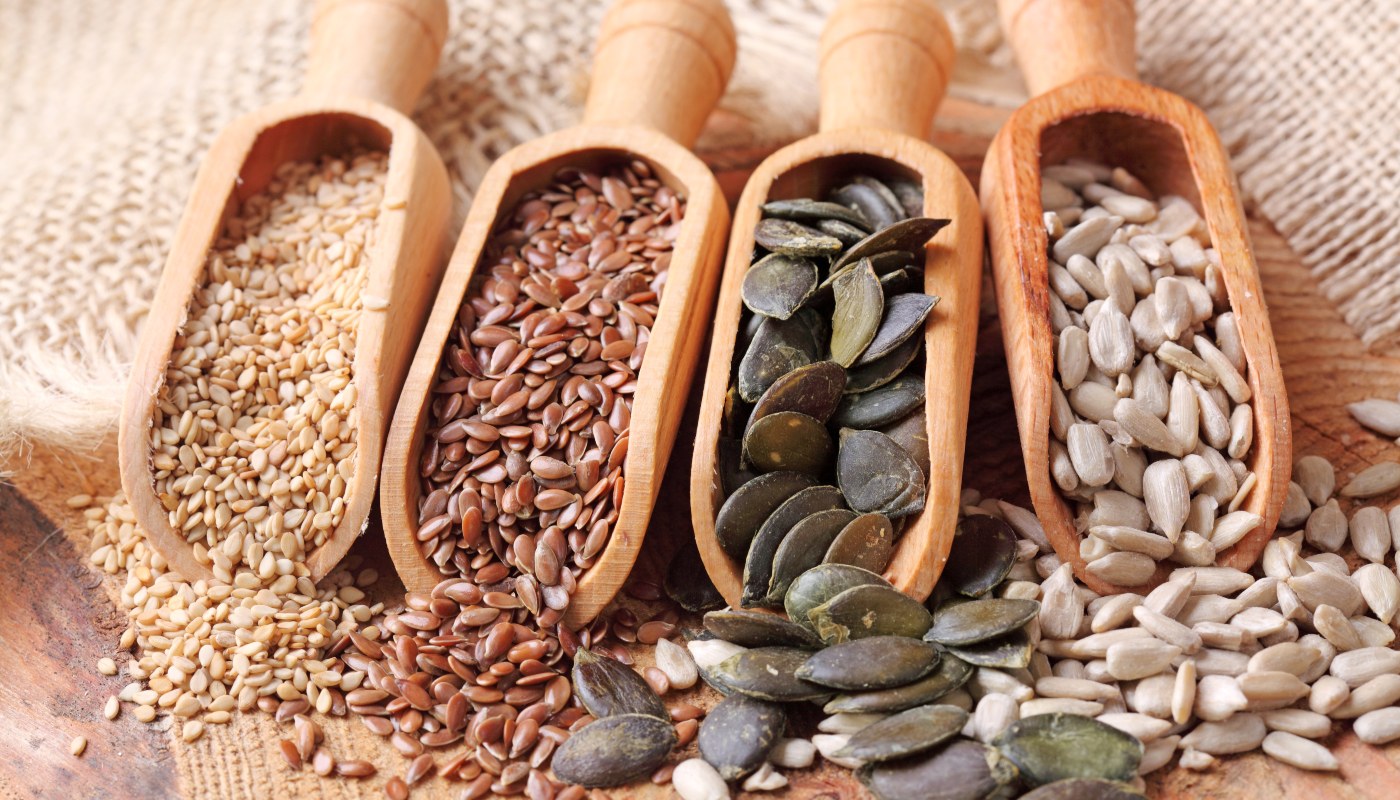
Within the seed family, there are countless varieties, but the most common in our diet are sunflower or pumpkin seeds. Sesame, chia and flax have recently been added to these. Perhaps the latter are the ones that have become more popular in recent times, due to the large amount of content created on them on channels and social networks.
What are the most well-known and beneficial seeds for health??
- Flax seeds: like other seeds, flax seeds are also a source of essential fatty acids and have a high protein content. In addition, they provide soluble fibre, creating a gel if they come into contact with any liquid, so they can be used as a natural thickener.
- Sesame seeds: also known as ajonjoli in Spanish, sesame seeds are one of the most often used in bakery products. Rich in unsaturated fats and with a large amount of plant-based proteins and rich in fibre, these seeds also offer vitamins E and B, contributing to the proper functioning of the central nervous system.
- Poppy seeds: their small size is no obstacle to their being one of the seeds that have the most calcium (1400 mg for every 100 g). They also contain vitamin A, with an antioxidant and protective effect on the skin and hair. Their iron content is also remarkable.
- Chia seeds: Like flax, chia is a natural thickener and is used in many dishes to avoid using refined flours or sugar. It is rich in omega 3 fatty acids and has a high fibre content, helping intestinal transit.
- Fennel seeds: In this case, we can use them as a condiment or dressing for different dishes or add them to different bread recipes. They help slow or heavy digestion, to combat cramps and spasms
- Sunflower seeds: rich in mono and polyunsaturated fatty acids, which help reduce bad cholesterol and raise good cholesterol in the blood. They are also rich in fibre, potassium, phosphorus, iron, magnesium, as well as B vitamins, vitamin E and folic acid.
- Pumpkin seeds: They also stand out for their protein content (24 grams per 100) In addition to being used as a complement to any salad, many people choose them as a healthy snack at any time of the day.
How to use seeds in your dishes
One of the advantages of using seeds in the kitchen is their versatility: you can have them natural, roasted, baked, boiled, as an infusion, as flour and, in some cases, even sprouted. Thus, we can eat them as they are purchased while also enjoying them by mixing them with milk or yoghourt, for example, or also use them in a multitude of dishes and preparations, to avail of their thickening properties.
You can prepare all kinds of recipes with them, both sweet and savoury, appetizers as well as main dishes, side dishes or desserts. For example, you can add tasty pumpkin or sunflower seeds, both roasted and natural, to vegetable cream soups such as cauliflower, red cabbage cream soup or Vichyssoise. Chia seeds, on the other hand, are perfect for use in pastry making and baking, and sesame seeds (always toasted, of course), a good ingredient to add to pasta and rice dishes.
Be sure to take advantage of these small and powerful ingredients in your recipes as they are highly beneficial for a healthy body as well as affording a different touch to your dishes.
What do you think about?
Share comments, opinions and tricks with the Community