

Main benefits of almonds
Discover the properties of almonds, their health benefits, their nutritional value and how to easily include them in a balanced diet.

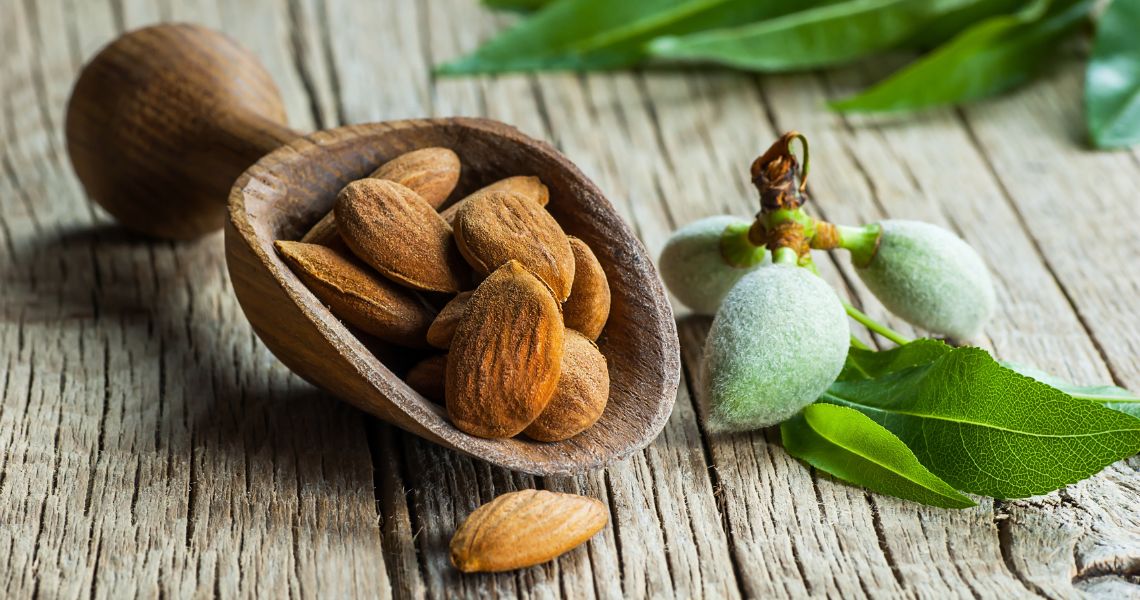
Some foods, despite their small size, contain a large amount of nutrients. This is the case with almonds. Present for centuries in the Mediterranean diet, this fruit stands out for its versatility in the kitchen and for its numerous health benefits. As a snack between meals, or in salads, cream soups or desserts, adding them to your daily diet is a simple way to provide the body with vegetable proteins, healthy fats, fibre, vitamins and minerals.
But why exactly are almonds considered such a complete food? Is it true that they cause weight gain? We provide answers to these and other doubts to find out why almonds are still one of the most recommended nuts. Let’s get to it!
Properties of raw and natural almonds
When we talk of the properties of almonds, we should differentiate between raw or natural ones and fried and highly processed ones. The former retain their nutritional profile intact and do not have any added ingredients like salt, sugars or fats.
In practice, raw almonds and natural almonds refer to the same product: an almond that has not been roasted or fried. The difference is mainly found in the terms used. While raw almonds are the most technically accurate name, natural almonds is a term widely used commercially to distinguish them from roasted, fried or salted versions. In some cases, the natural almond may have been blanched to remove the skin, a process that does not equate to roasting or significantly alter its nutritional characteristics.
So, both the properties of raw almonds and the properties of natural almonds are practically the same from the nutritional point of view. Both stand out for their content in unsaturated fats, vegetable proteins, fibre, vitamin E and minerals such as magnesium, calcium or phosphorous. On the other hand, when almonds are subjected to processes such as roasting, there may be slight variations in the content of some antioxidants and heat-sensitive vitamins, although the impact is usually reduced if the treatment is mild.
In general, both raw and natural almonds are healthy choices. The choice between one or the other will depend, above all, on the name used by the manufacturer and the culinary use to be given to them.
Nutritional value of almonds
Almonds are a highly nutritious food. According to official sources, for every 100 grams they provide approximately 575 kcal, 21 g of vegetable proteins, 49 g of fats and 12 g of fibre. What’s more, as we have just seen, they are an excellent source of vitamin E, calcium, phosphorous and magnesium.
How many almonds are you recommended to eat a day?
There is no mandatory amount, but most health organizations and nutrition experts agree in recommending a serving of about 30 grams a day, which is roughly equivalent to a handful or 20 to 30 almonds, depending on their size. This amount allows you to enjoy their nutritional benefits within a balanced diet.
A good idea is to spread them throughout the day, for example:
- As a snack between meals.
- Added to yoghourt or kefir.
- At breakfast with fruit.
- Chopped over a salad.
- Added to vegetable cream soups or sautéed.
Are almonds fattening? Myths and realities
One of the most widespread myths about nuts is that, because they are high in calories, they promote weight gain. However, scientific evidence says otherwise, while they are energetic, consumed in moderation, they do not make you fat.
There are several reasons for this:
- Their combination of fibre, protein and healthy fats, along with the chewing required when eating them, makes almonds more satiating and helps control appetite between meals.
- Although they do contain fat, the body does not absorb it completely. So the calories that the body actually avails of are lower than you would expect.
- When eaten as a snack, they often replace other snacks with a less healthy nutritional profile.

Almond recipe ideas for each day
Almonds are so versatile that they can be added to both sweet and savoury recipes. Below are some simple proposals to include in the weekly menu, take note!
Oatmeal with yoghourt, fruit and almonds
A complete breakfast that combines protein, fibre, and healthy fats. Just add a few chopped almonds to add a crunchy touch.
Mediterranean salad
Mix green leaves, tomato, fresh cheese, orange and a handful of sliced almonds. The contrast of flavours is addictive, you’ll see!
CVegetable cream soup with almonds
Sprinkling toasted almonds on a pumpkin, courgette or carrot cream soup provides texture and extra nutrients.

Chicken or fish with almond crust
Chopped almonds can replace breadcrumbs to create a light and slightly aromatic batter.
Homemade almond butter
Crushing natural almonds into a paste gives you a spreadable cream with no added sugars, perfect with toast or fruit.
Almonds are excellent allies within a varied and balanced diet. Eaten in moderation and preferably without processing or simply roasted without salt, they can be part of breakfast, lunch, a snack or dinner… No hassle!
Sometimes, the best habits start with a simple gesture like having a handful of almonds, don’t you agree?
What do you think about?
Share comments, opinions and tricks with the Community