

How to clean and descale your coffee maker for the best coffee
Learn how to clean and descale your coffee maker step by step. Improve the taste of your morning cup of coffee and extend the life of your appliance.

Some mornings the coffee does not taste as usual. The aroma seems duller; the drink takes a little longer to come out or the cream that used to form on top of the coffee has disappeared. Before you switch coffee: maybe you need to look at the coffee maker.
Although many modern machines have automatic cleaning programs and let you know when they need to be descaled, they sometimes accumulate minerals, coffee residue or, in the case of machines that prepare milk drinks, residue of dairy products. Keeping them clean not only helps to preserve the flavour of the coffee – it also allows them to work properly for longer.
Fortunately, you don’t need to make this task a complicated ritual. Knowing how to descale a coffee maker and cleaning it is easier than it seems. With a clear routine and following the manufacturer’s instructions, getting your coffee machine cleaned is within everyone’s reach.
Why is it essential to descale your coffee maker regularly?
Water leaves its mark in the end. When heated over and over again, the minerals in it can form limescale deposits in different part of the coffee machine’s internal circuit. Over time, this buildup can make it difficult for the water to pass through and affect the proper functioning of the appliance. The hardness of the water in the area and how often the machine is used are two factors that also determine how quickly this problem arises.
But, what matters most to us: how often should a coffee maker be descaled? There is no single frequency for all models: it depends, as already said, on the hardness of the water, the use made of the machine and, above all, the manufacturer’s instructions. Some coffee makers include a warning that indicates when the process is necessary, a reference that should be followed.
Limestone is not the only enemy either. The oils in the coffee itself and their small residues can accumulate in filters and other parts, while milk residue require special attention, as they can leave residue and affect the taste if not removed correctly. So, cleaning and descaling a coffee machine are two different tasks, although both are essential to keep it in good condition.
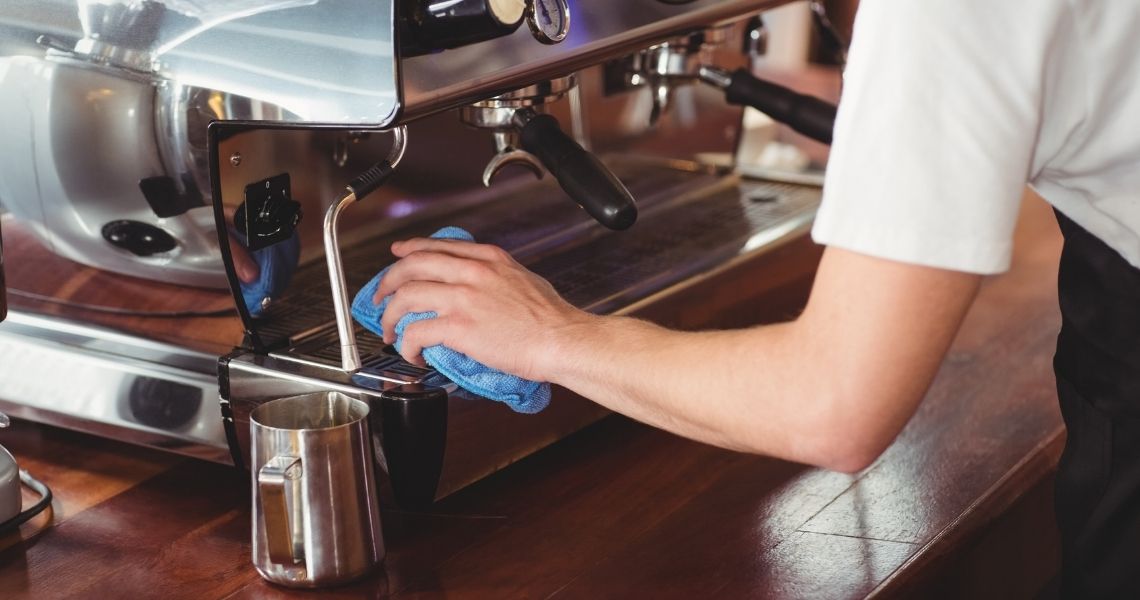
How to clean a coffee maker inside and out
Good cleaning starts by removing coffee residue and keeping the parts that are in contact with water or drink in good condition. For espresso machines, it is advisable to rinse the filter and filter holder after each use and clean the drip tray and water tank. In the case of super-automatic coffee makers, you should also pay attention to the brewing unit and the drip tray, according to the manufacturer’s instructions.
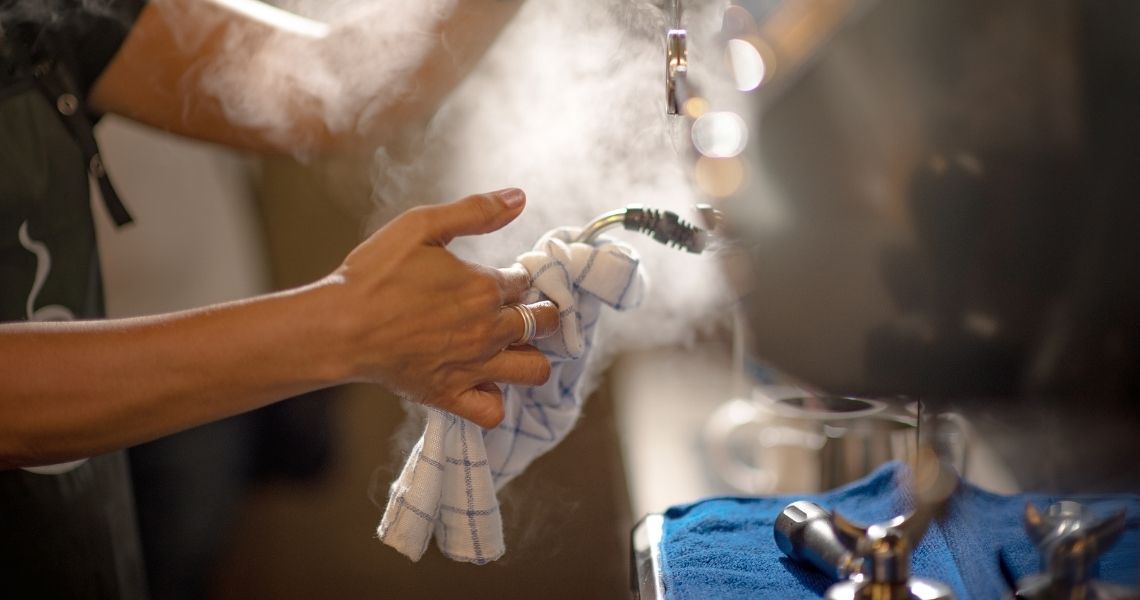
If the machine has a steamer or milk foam system, it is important to clean it and purge the nozzle after each use to prevent debris from accumulating. Removable parts, in general, should be washed as often as recommended. As for the exterior, a soft slightly damp cloth is enough, provided the coffee maker is turned off and cold. Of course, you are advised to avoid abrasive products or solvents that can damage surfaces.
A simple routine that can be followed is to remove the coffee residue after each use, periodically wash the removable parts and perform descaling when appropriate. If you use milk, clean and purge the system immediately afterwards.
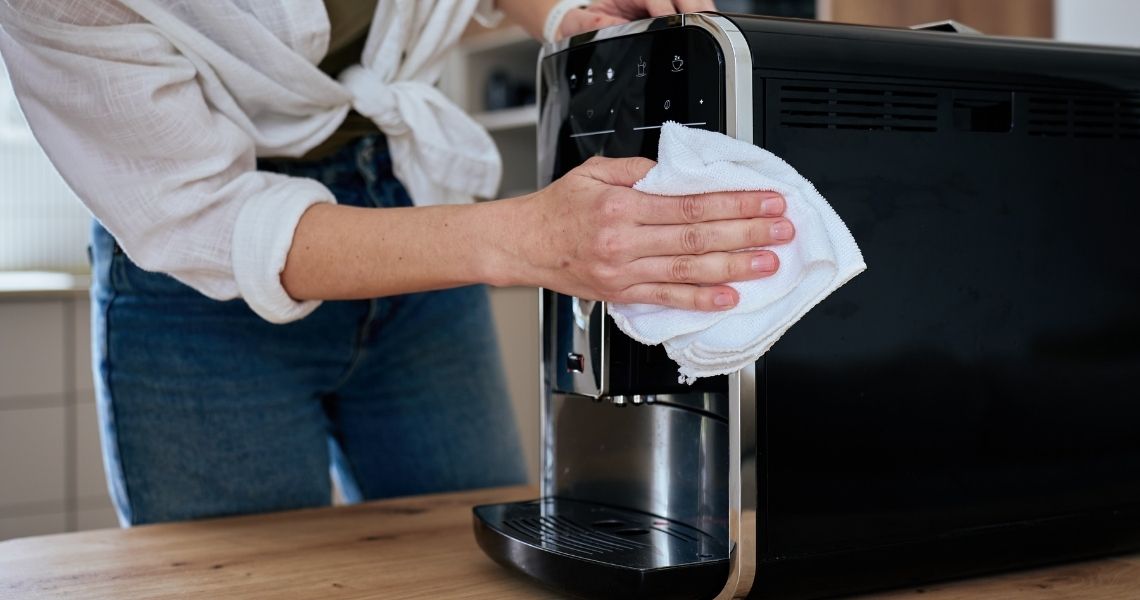
Steps to clean and purge a capsule or espresso machine
Although the procedure depends on the model, there is a common rule: after cleaning or descaling operations, the circuit should be rinsed with clean water.
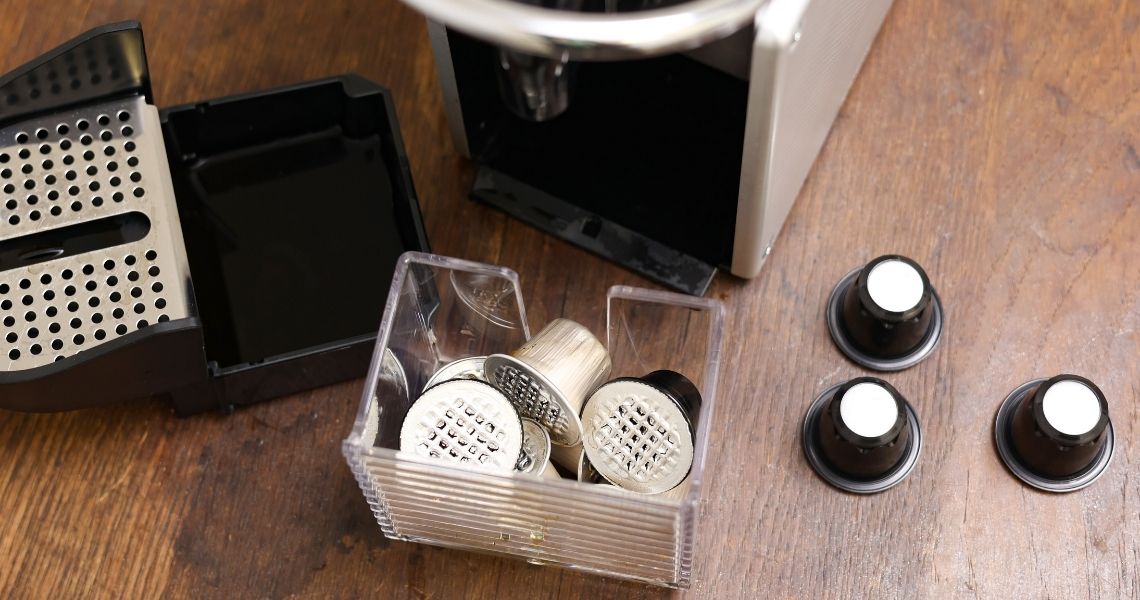
In a capsule coffee machine
Empty the capsule container and drip tray, clean the tank and capsule holder, and run a cycle with water and no coffee. When applicable, run the descaling program with the manufacturer’s recommended product and complete all the rinsing cycles. The Consumer Association, for example, advises running clean water several times to remove possible traces of the product.
In an espresso machine
Remove and rinse the filter holder and filter after each use, clean the coffee outlet and drip tray and, if it has a frother, purge the nozzle after preparing milk. Descaling must be carried out following the procedure and using the product indicated for each model.
In any case, if the coffee maker includes a specific cleaning or descaling program, it is preferable to use it, as quantities, products and cycles may vary between manufacturers.
The trick for cleaning with vinegar: is it safe for ducts?
Vinegar is often found among home remedies for limescale because its acetic acid helps dissolve mineral deposits. However, it is not suitable for all coffee makers. Some manufacturers admit its use in certain models, while others advise against it. The Consumer Association also warns of possible problems in some of its components, as well as the risk of traces of smells or taste if rinsing is not sufficient.
So, if you are wondering how to descale a coffee maker with vinegar, the safest answer is consult the manual first. if the manufacturer does not recommend it, use the compatible water softener indicated by the brand and respect the amounts and cycles laid down.
As you can see, a clean coffee maker is not a big challenge: it does its job and gives you that little moment of pleasure every morning in a freshly brewed coffee. And if a few minutes of maintenance help to continue doing so for longer, all the better!
What do you think about?
Share comments, opinions and tricks with the Community

Si tenéis mas truco estoy dispuesta en provar haber cual me fucion
Si tenéis mas truco estoy dispuesta en provar haber cual me fucion