

Gildas around Spain: our best offerings
Travel with your palate to the Valencian Community, Catalonia, Castilla-La Mancha, Andalusia and Murcia with our gildas inspired by their most typical products.

They say that fashions always come back, that styles and trends usually return every twenty or thirty years. But we didn't think that this would apply to food as well. And, if not, let them tell the gildas, the traditional aperitif born in a bar in San Sebastián in the forties and that, in the middle of 2026, seems to have become one of the most modern tapas of the moment.
It was a client who had the idea of combining an anchovy, an olive and a chili in vinegar, all strung on a stick. From there, the gilda quickly became popular, for its strong and acidic taste that perfectly complements any drink.
The curious thing is that it owes its name to the film Gilda, starring Rita Hayworth, a production released in the forties that was very controversial for the role of the actress, who represented a free woman who challenged the conservative and religious morality of the time. The gilda, they said, was “green, salty and a little spicy”, just like the protagonist of the film.
Gildas: what they are, types and ingredients that make them unique
Although traditional banderillas combine olives, piparras and anchovies, it is becoming easier to find more original and varied alternatives. For several years, the presence of this tapa has been increasing, not only in bars, but also in our homes. Gildas have become one of the most chic contemporary aperitifs, which has led to the appearance of venues that are entirely dedicated to their sale in different varieties.
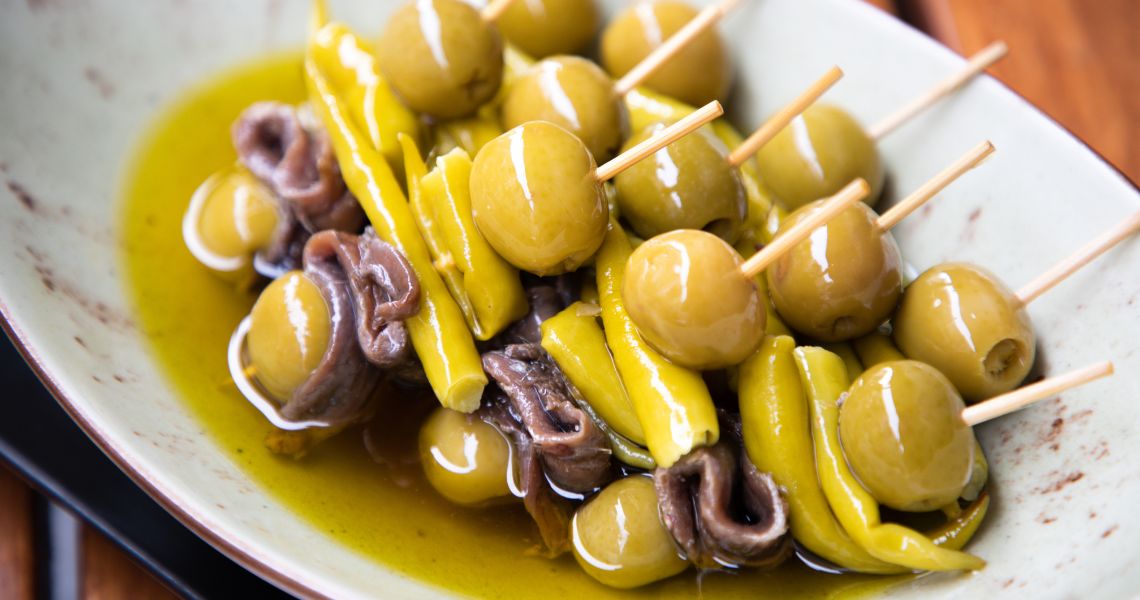
Creativity and the fusion of flavours are two of the fundamental elements of this tapa, so…
What would gildas be like if we were inspired by different autonomous communities?
Valencian Community:
- Gordal olives marinated with spices and a touch of orange (if it has the seal of Valencian quality, even better)
- Boquerón in vinegar
- Red pepper, grown in the Alicante area
- Piparras
- Hard-boiled egg
De categoria, xe!
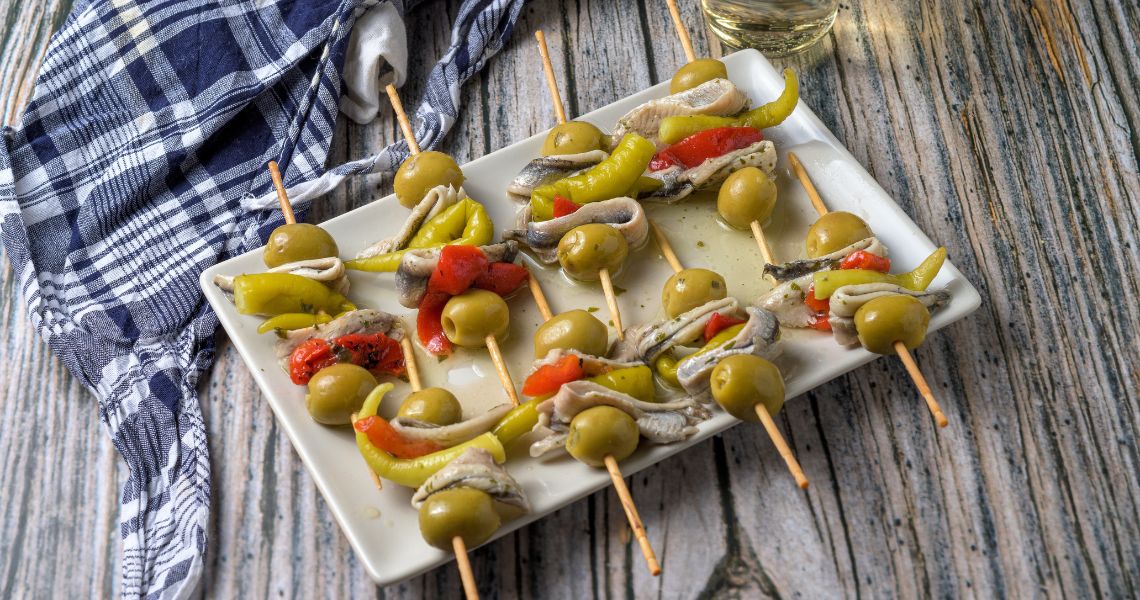
Castilla-La Mancha:
- Olives
- Chilli in vinegar
- Lomo de orza
- Manchego cheese DOP
- And, of course, accompanied by a good red wine
Odo, qué bien suena
Catalonia:
- Sliced olives
- The traditional fuet de Vic, from the region of Osona
- Aubergine
- Spring onions
- Piparras
- And of course, served on pa amb tomàquet (with tomàquet de penjar from El Vallès)
Mmm, boníssim!
Aragon:
- Black olive
- Tronchón cheese, best of Maestrazgo, in Teruel
- Longaniza de Pascua
- Caspe piparras
¡Maño, qué bueno está esto!
Andalusia:
- Sevillian olives rolled in Iberian ham
- A cube of soft cheese
- A piece of the classic quince of Puente Genil
- And a very cool rebujito to accompany this delicious
Canelita en rama, illo
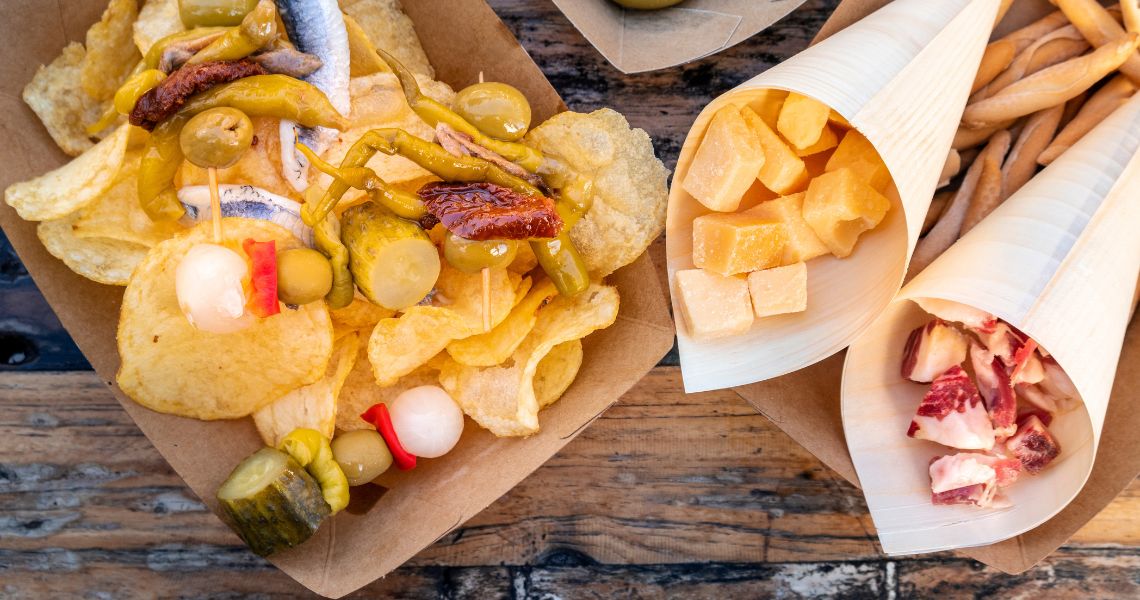
Murcia region:
- Caparrones from Murcia, especially those from Cartagena
- Gherkins in vinegar
- Sun-dried tomato
- Black olives
- And a very well-matched marriage (marinera, with anchovy, or marinero, with boquerón)
Acho, qué buena pinta
How can we store gildas at home?
- Store the banderillas in an airtight container, and always well covered with extra virgin olive oil.
- Keep them refrigerated, at about 7°C.
- Consume them in a maximum of five days to enjoy all their flavour.
- And, before enjoying them, leave them for a few minutes at room temperature so that the oil is tempered and the taste of the gildas is enhanced.
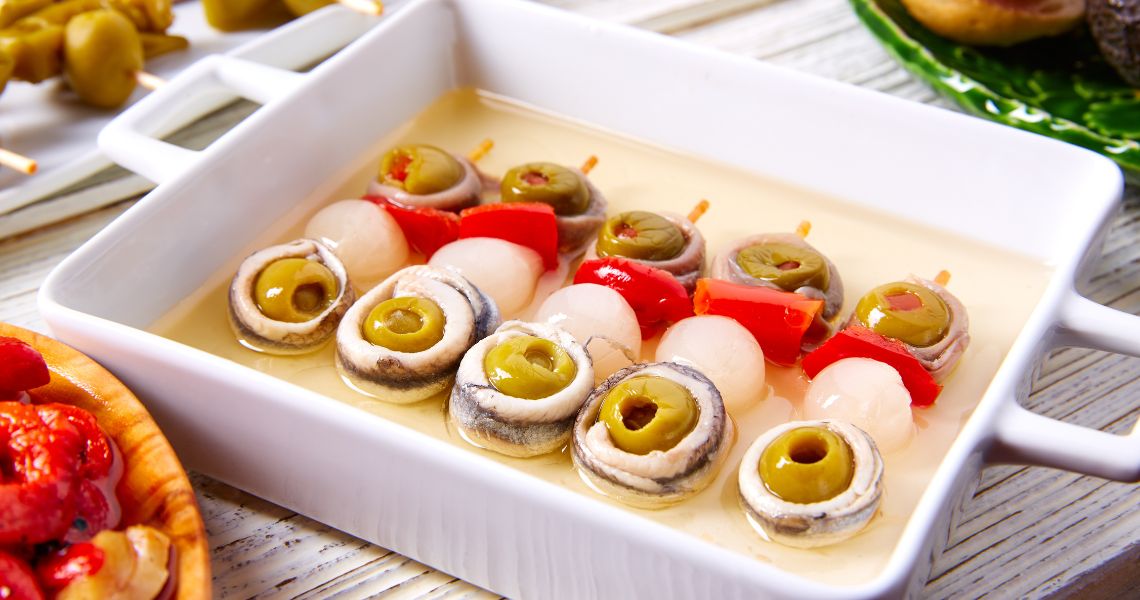
What do you think about?
Share comments, opinions and tricks with the Community