
Focaccia: benefits, easy recipe and how to combine it in your lunches and dinners
Find out the benefits of homemade focaccia. Learn to prepare it and discover the best ideas to accompany it in your lunches and dinners with Consum.

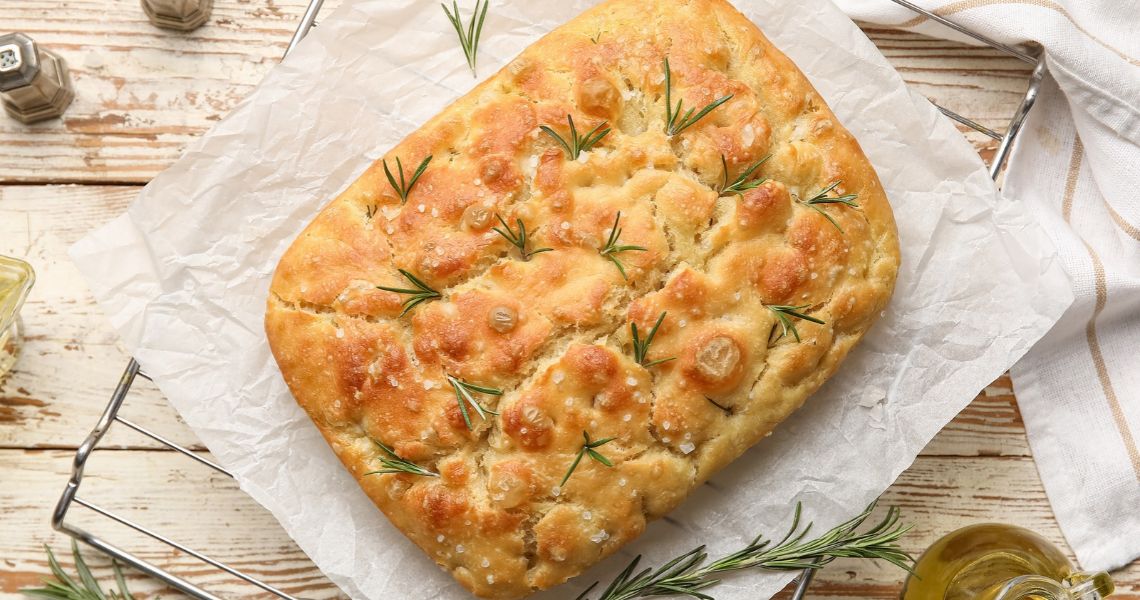
Crispy on the outside, tender on the inside and with a characteristic olive oil flavour that makes a serving never seem enough. Focaccia has gone from being an Italian classic to becoming an indispensable go-to in our cooking: it serves as an accompaniment, the basis for a quick dinner or even as the main feature of a snack or aperitif. As if that were not enough, preparing it at home is easier than it seems. Let’s see how!
Benefits of focaccia: the value of good fermentation and olive oil
As focaccia is made with olive oil (one of the key ingredients of the Mediterranean diet), it provides healthy fats which are beneficial for the heart. If it is made with prolonged fermentation, sourdough or even wholemeal flours, in general, it will be lighter and easier to digest. You should, of course, remember that, as is the case with many foods, it will always depend on what it is combined with and how often it is eaten. Like everything else, moderation is always the best strategy to take care of your health.
The recipe for homemade focaccia: the keys to a light and digestive dough
If you’re wondering how to make homemade focaccia, the key is sticking rigorously to the times. A simple formula that you can easily prepare at home only needs the following ingredients:
- 200 g strong flour
- 300 g common wheat flour
- 7 g baker’s dry yeast
- 350 g water
- 10 g sugar
- 10 g fine salt
- extra virgin olive oil
- Provençal herbs (to taste)
- salt (coarse)
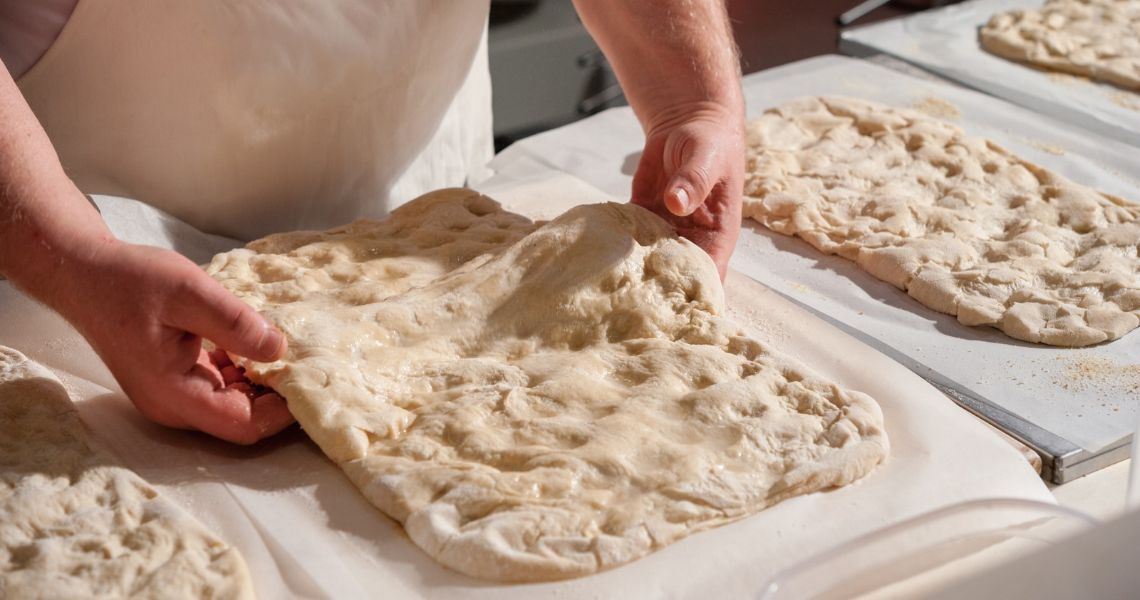
As for the focaccia recipe, you mustn’t be afraid of adding oil or getting a little dirty as the dough is very moist and soft. Having said that, let’s go!
- Put the flour and the salt in a bowl. Then, make a hole and pour in the water together with the sugar and yeast. Mix together until the dough looks smooth , cover with a cloth and wait for about 15 minutes.
- Then start kneading. As the dough (already mentioned above) is quite moist, you can use a mixer or a robot with a dough hook, although you can also use your hands. Grease you work surface first before laying the dough. It is widely suggested that you should spend the first few minutes making the folds in the dough using a scraper soaked in oil, or your own hands, with oil or moisturising them with water. You are recommended to knead for short periods and rest for 15 to 30 minutes.
- When the dough looks smooth and soft, cover with a damp cloth or cling film inside a greased container and allow it to double in size. It should take approximately an hour.
- Grease a rectangular tray (15 x 25 cm) and gently pour in the dough, spreading it without squashing it. Keep in mind that it will extend on its own, so it does not have to fit perfectly. Brush the entire surface with oil and let it rise for about 20 to 30 minutes.
- Preheat the oven to 250-240 ºC and gently roll out the dough again. Brush it with oil again and make a few holes in the dough (very characteristic of focaccia). Brush it again with oil and let it stand for 10 minutes. Scatter some Provençal herbs (rosemary works particularly well, but it is advisable not to overload it), add a little more oil and let it rest again for about 10 minutes.
- After adding another generous splash of olive oil, all that remains to add is some coarse salt and then place it in the oven for about 5 minutes. Lower the temperature to 220 ºC and leave it until it is well browned, which should happen after 20 minutes. As soon as you take the focaccia out of the oven, brush it will oil, wait 5 minutes and let it cool. Ready!
Stuffed focaccia: the gourmet alternative to solve your quick dinners
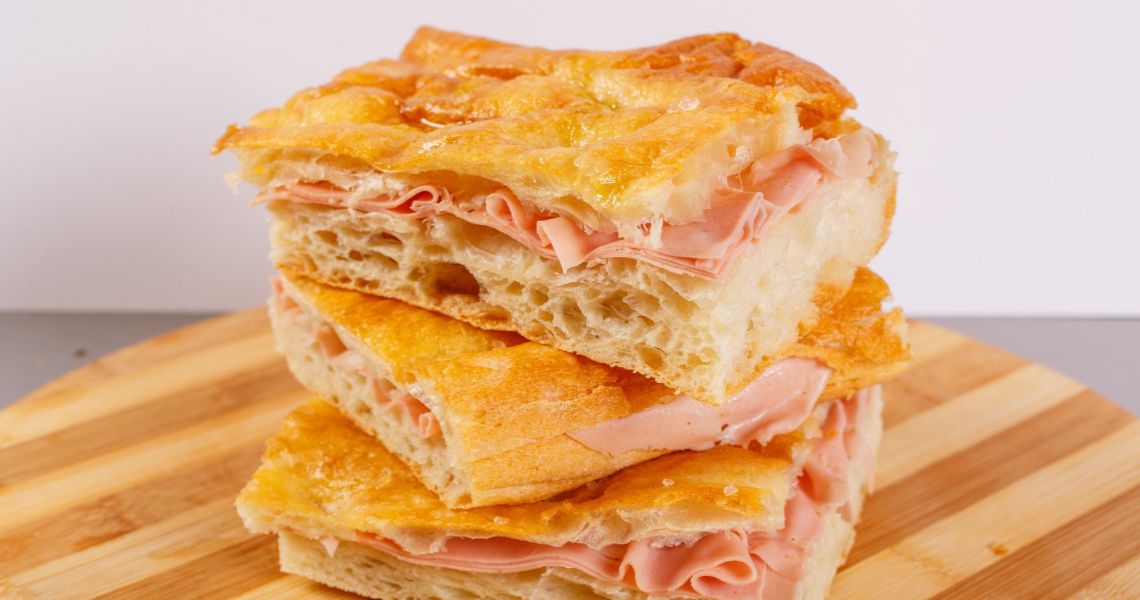
A freshly baked focaccia can turn into a high-end sandwich. The key to making it delicious is to combine ingredients that provide different textures and flavours: a creamy ingredient, like hummus or a soft cheese; another fresh one, like tomato or rocket, and, if you are looking for a more complete dinner, a source of protein, such as chicken, tuna or egg. You don’t need to include all of them: what is interesting is to find a balanced combination that is appetizing.
How to accompany your focaccia in meals: pairings with creams and salads
At the table, focaccia works especially well with preparations that provide freshness or creaminess. It is the perfect crunchy counterpart for a cream of courgette, pumpkin or roasted vegetables. It also combines really well with tomato, rocket, leafy greens, legumes or seasonal vegetables. If the focaccia provides carbohydrates and oil, you can complete the dish with vegetables and a source of protein. For example, a salad of chickpeas, tomato, roasted pepper and boiled egg, accompanied by a few portions of focaccia, is an excellent option for a meal.
Healthy toppings to enrich your bread: roasted vegetables, herbs and proteins
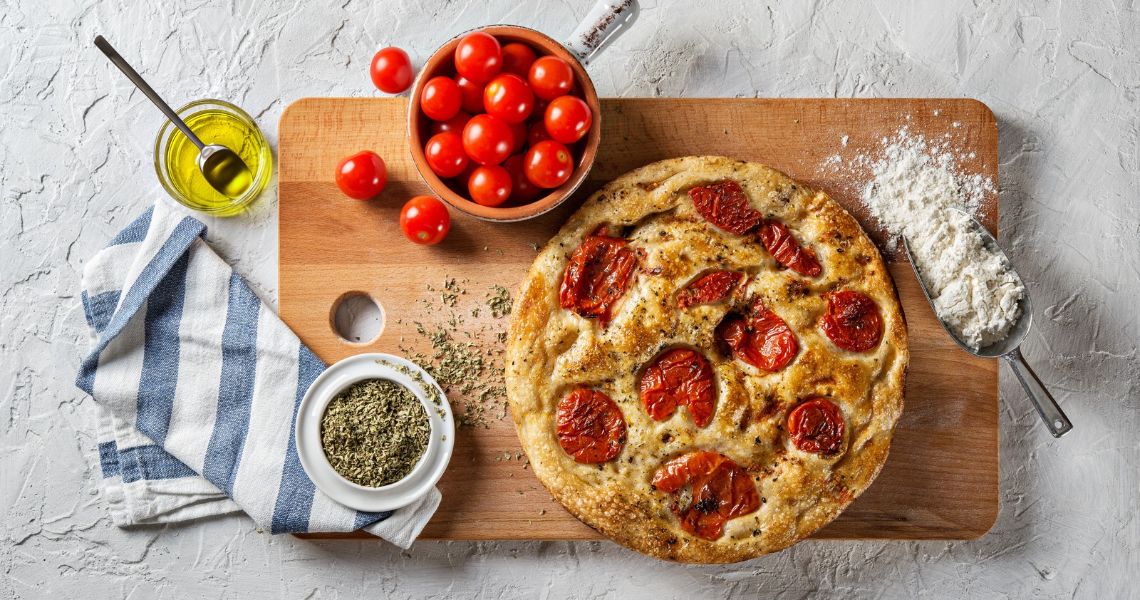
This is where the fun starts. Cherry tomatoes, onions, courgettes, aubergines or peppers add colour and flavour. To flavour, you can use rosemary, thyme, basil or oregano, all of which give it a delicious touch. If you wish to make it a more complete dish after baking it, remember that you can also add egg, tuna, chicken, fresh cheese, hummus or legumes. You can actually adapt the toppings to each meal without changing the dough, so use your imagination and enjoy!
Tips to keep your focaccia tender and fluffy all week long
The best focaccia is freshly made, but it can also be preserved relatively well. Once cold, store it in a sealed container to prevent it from losing moisture. For several days, the most practical option is to freeze it in portions and defrost only what you are going to eat. To recover its texture, a short time in the oven is the most appropriate method, as it will help recover part of its crispy crust and tender interior.
The appeal and possibilities of focaccia are clear. Now, all you have to do is decide on the version you wish to make today!
What do you think about?
Share comments, opinions and tricks with the Community