

Best glass cleaner: guide to choosing the most effective one
Find out the best glass cleaner to leave your windows and surfaces shiny without scratching them. Expert tips and recommendations.

Types of glass cleaners: which one is most effective?
The effectiveness of glass cleaner depends on how the product interacts with the type of dirt and the technique you use. A mixture of warm water and washing-up liquid is very effective, particularly if we use a professional rubber squeegee scraper, since they remove all the liquid in one go before it can dry and leave marks.
When we need to clean glass with a build-up of grease, such as on kitchen items, or when the dirt sets on the outside, products containing ammonia are a good choice, although we need to be careful with the vapour and bear in mind that it can damage certain materials.
For people who prefer an alternative without industrial chemicals, but just as effective, steam cleaning is the most efficient and environmentally friendly choice, since we only use hot water and no residue is left behind. Since no soap or other chemicals are used, there is no residue left behind on the glass, thereby avoiding any dust sticking to it and the windows will stay cleaner for longer.
If you want a sparkling shine with minimum effort, a mixture of alcohol and white vinegar will get good results. The alcohol speeds up the drying process, whereas the vinegar eliminates limescale stains. Whichever liquid you choose, using a quality microfibre cleaning cloth or newspaper is the key to avoid leaving fluff behind, thereby achieving the best results.
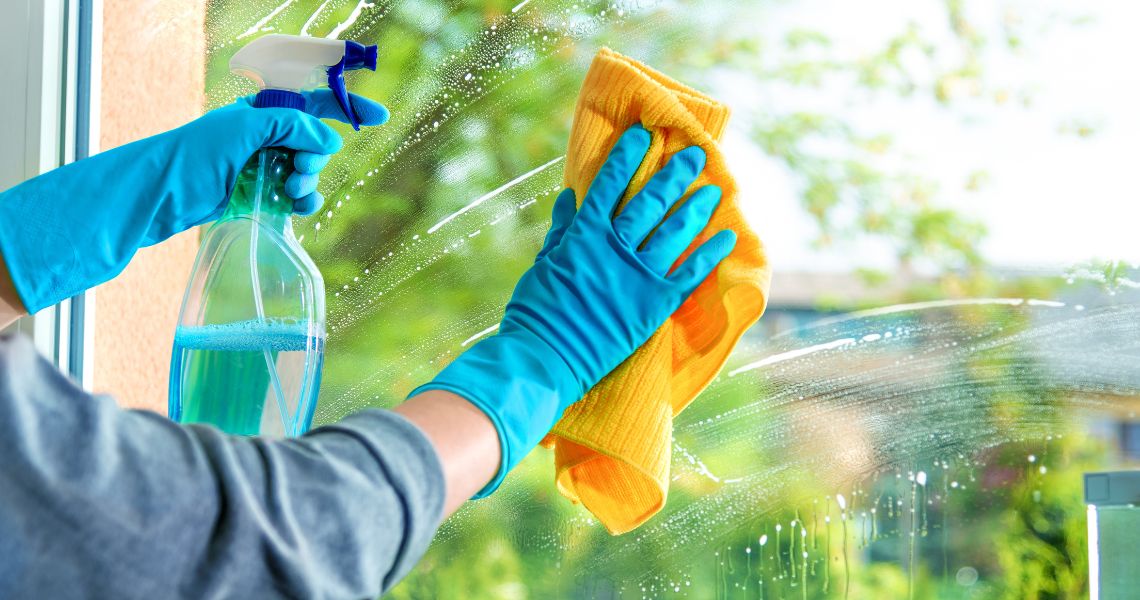
How to use glass cleaner for the best results. Avoid leaving marks!
- Prepare the area by removing any dust that may be on the frames or sills using a dry cloth or a vacuum cleaner. If you miss out this step, the cleaner will turn the dust into a type of sludge and it will dirty the glass and can even scratch it.
- On completing the first step, you should now apply the product strategically. If you are cleaning a small piece of glass, spray the cleaner directly onto the microfibre cleaning cloth to avoid any dripping. If you are cleaning a big window though, apply a light mist over the surface from the top to the bottom, making sure you do not use too much otherwise drying it will be harder. If you use a rubber squeegee, make sure you move it over the glass at an angle of 45º and dry the rubber blade with a cloth after each wipe. This will make cleaning more effective.
- Use firm, flowing movements, preferably describing an “S” or zigzag pattern to drag the dirt without leaving any behind. An important tip at this point is to clean the inside of the window using horizontal movements and the outside with vertical movements. This will allow you to immediately see on which side any persistent dirt has been missed.
- Finally, use a microfibre cleaning cloth or a piece of crumpled newspaper to wipe any areas where there is still some moisture in circular movements. Do this final step quickly before the window dries out, as natural drying is the main cause of marks being left behind on the glass.
You should clean your windows at a time of day when the sun is not shining directly on the panes, as the sun’s warmth speeds up evaporation and can spoil the final result.
What do you think about?
Share comments, opinions and tricks with the Community