


The summer sun is an invitation to enjoy its warmth and to show off our skin. If you are a tattoo lover, you have almost certainly wondered: what if I get a tattoo in summer? The answer is that tattoos require some extra care in the summer months, particularly if they are recent. Tattoos can be done in summer, but you need to bear in mind that the heat, exposure to the sun, sweating and contact with water can affect the healing process and the look of the tattoo in the long term. Adopting some habits to protect your skin and the ink designs is essential.
We are going to provide some guidelines about how to look after new tattoos in summer to ensure your skin stays healthy and the quality of the design does not suffer.
How to look after your tattoos in summer?
Looking after tattoos in summer is essentially the same as during any other period of the year, but paying special attention to factors such as the sun and humidity.
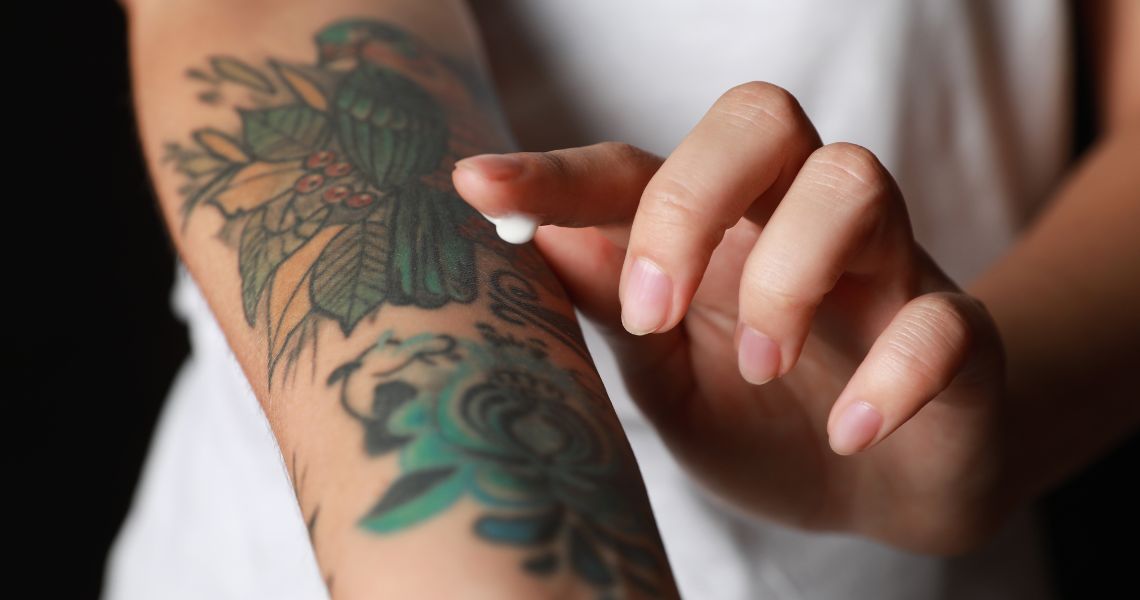
In the first few days tattoos are basically open wounds, and it is therefore important to keep the area clean and hydrated. We recommend washing the tattoo with lukewarm water and mild soap, drying it by dabbing (without rubbing) and applying specific healing cream or moisturising cream as recommended by the tattoo artist.
Moreover, it is important to avoid chafing with clothes, particularly if wearing tight garments or synthetic material which hinders transpiration. Choosing loose-fitting, cotton clothing can help to protect the area.
Sweating in summer can irritate tattooed skin, and it is therefore best to keep the area as dry as possible and over the first few days avoid any activities that make you sweat excessively.
Is getting a tattoo in summer recommended?
Despite many people thinking that summer is a good time of year to get a tattoo and show it off on the beach or at the pool, the truth is that it is not actually the best time of year for the healing process.
Exposure to the sun can damage the skin and fade the tattoo. Moreover, sweating can cause irritation and infection. Swimming in pools, rivers, lakes or the sea can also harm our skin due to exposure to chemicals such as chlorine and bacteria, thereby hindering the healing process, and consequently, getting tattoos while on holiday is not very practical.
Professionals therefor recommend seasons such as Autumn or Winter when it is easier to protect your skin and avoid exposure to the sun and having to avoid outdoor activities. Even so, if you do decide to get a tattoo in summer, you must take care and follow the tattoo artist's instructions to a tee.

How long should you wait before exposing your tattoo to the sun?
One of the most important aspects of looking after recent tattoos is to avoid direct exposure to sunlight during the healing process. As a general rule, we recommend not exposing tattoos to sunlight for at least 2 to 3 weeks, although that time may vary depending on the size of the tattoo and how quickly your skin heals.
Solar radiation can negatively affect new tattoos: it not only increases the risk of irritation or burns, but it can also alter the ink pigment, causing fading or changes to the colours.
Even after healing, protecting tattoos from the sun is advisable to make sure they keep their original look. Prolonged exposure without protection can fade the colours over time.
Can you go to the beach or pool with a recent tattoo?
The general recommendation is obviously not. Swimming in the sea or the pool is not recommended during the healing process. Although sea water is natural, it contains salt and micro-organisms that can irritate the skin or cause infections. In the case of swimming pools, chlorine and other chemicals can affect the sensitive skin in the area of the tattoo.
Moreover, keeping your tattoo underwater for prolonged periods of time can delay healing and affect the final result. It is therefore best to wait until the tattoo has healed completely, at least 2 to 4 weeks before taking up this type of activity again.
Which sun cream to use for tattoos?
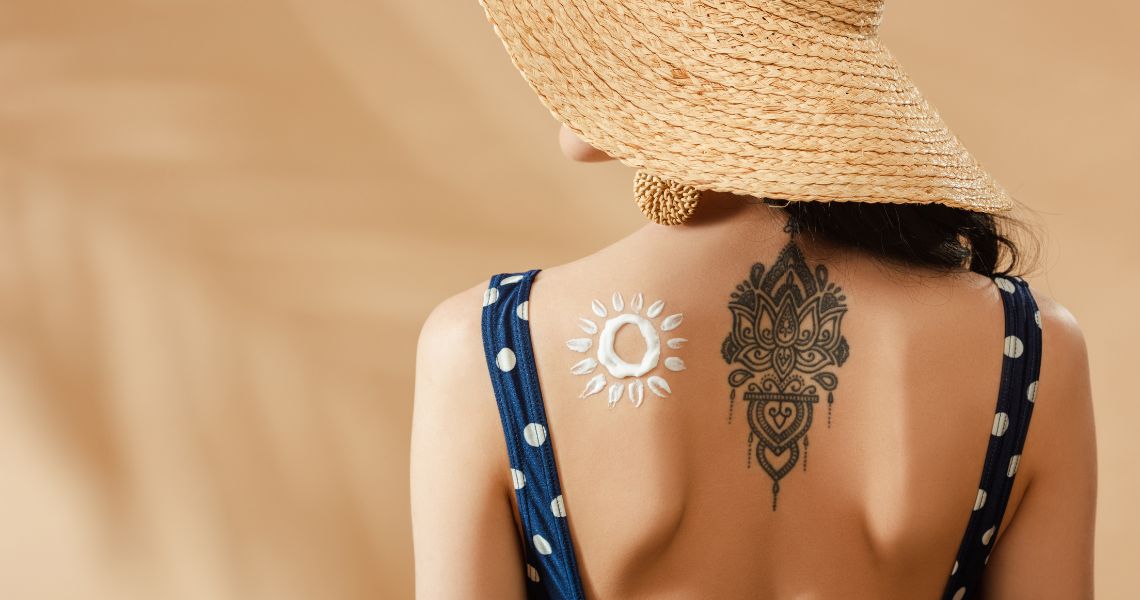
When the tattoo has healed, protecting it from the sun is still very important. There are specific products today to help protect tattooed skin and keep the brightness of the original colours.
The following are some general recommendations that tattooed skin needs:
- High sun protection factor (SPF). Choose high SPF sun cream, at least SPF 30, although we recommend using 50. This will create an effective barrier against UV rays.
- Water resistant. You will probably spend some time at the pool or on the beach in summer. Therefore, water-resistant sun cream will provide constant protection even after swimming.
- Fragrance-free and no strong chemicals. New tattoos can be sensitive, so choose fragrance-free hypoallergenic products to avoid irritation.
- Frequent application. Apply sun cream every two hours and after swimming or sweating. Don’t forget to cover the tattooed area completely.
Sun cream should never be applied to tattoos that have not completely healed as it can irritate the skin.
Basic tips for tattooed skin in summer
Other than the immediate care after having your tattoo done, there are some useful habits that will help keep your tattooed skin in good condition throughout the summer.
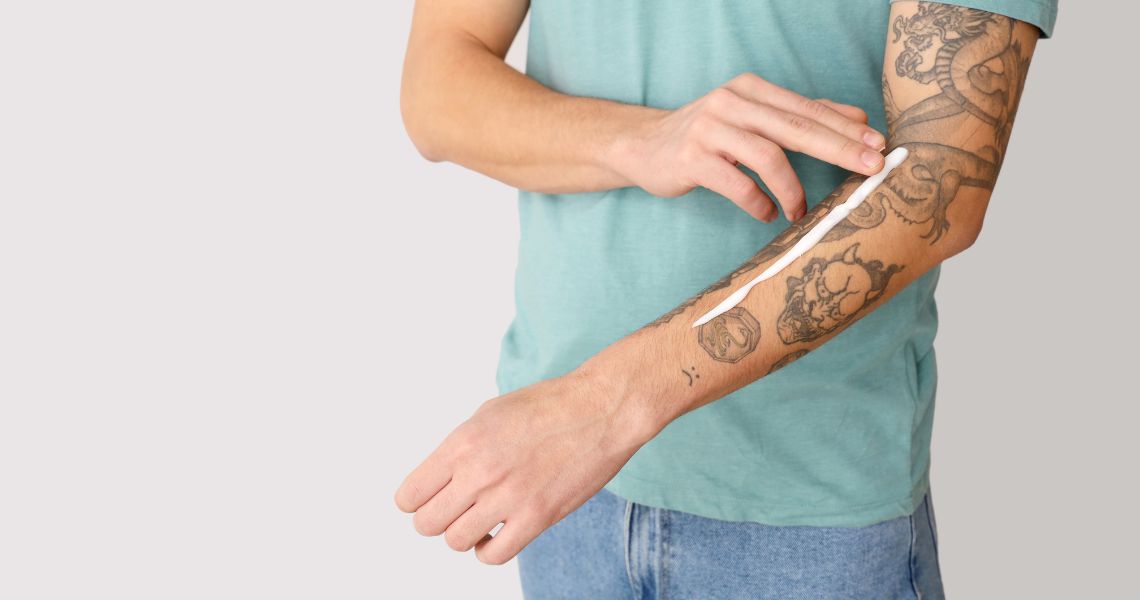
- Daily hydration. Apply some specific moisturising cream for tattoos, preferably fragrance free and without any colourants, to ensure your skin remains hydrated.
- Avoid prolonged exposure to the sun and extreme temperatures. Whenever possible keep in the shade or cover your tattoo with clothing. Avoid saunas and Jacuzzis, since heat can harm sensitive skin.
- Avoid saltwater and chlorine. Avoid submerging your tattoo in the sea or in swimming pools in the first few weeks after you get it. The salt and chlorine can irritate your skin and hinder healing.
- Use sun cream constantly. Use a high SPF sun cream and apply it frequently to protect the tattooed area, even on cloudy days or short exposure times.
- Avoid scratching. Your tattooed skin is likely to itch during the healing process, but scratching it can spoil the design.
- Follow the tattoo artist’s recommendations. Each tattoo may require specific care.