
A trip through Cantabria: the coastal towns you must visit
Enjoy northern Spain with this route through Cantabria, with the most beautiful coastal towns, their gastronomy and landscape for an unforgettable holiday.

The sound of the waves, the smell of the sea and the taste of a good meal will make places stay in your memory forever. The Bay of Biscay coast brings all this together in just a few kilometres, combining villas with centuries of history, spectacular beaches, cliffs and one of the best cuisines in northern Spain.
If you are thinking of doing a route through Cantabria, the coastal towns that we mention below are a safe bet to explore the area at a leisurely and very pleasant pace. In addition to strolling through its ports or getting lost in its charming streets, you can complete the trip with excursions and hiking trails that help you discover the wildest nature of Cantabria. Let’s go!
San Vicente de la Barquera: sea and mountains
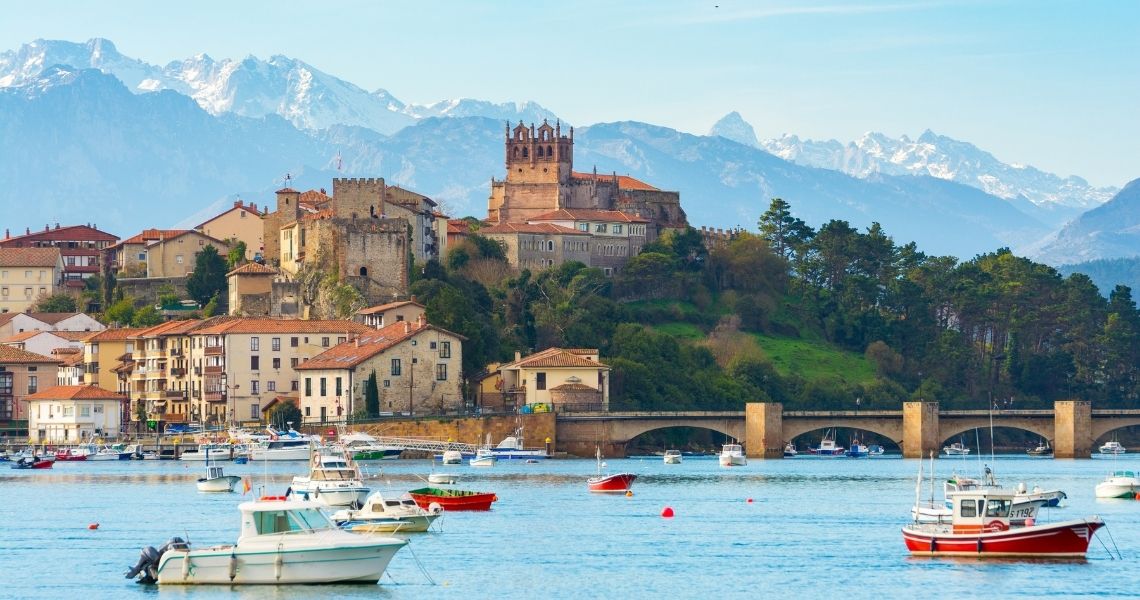
Few images represent Cantabria better than that of San Vicente de la Barquera, where the Bay of Biscay and the Picos de Europa seem to meet on the horizon. Located next to the Oyambre Natural Park, this historic fishing village preserves a valuable medieval heritage that includes the King’s castle, the church of Santa María de los Ángeles and the emblematic Maza bridge.
Its port is the heart of the municipality, with fishing boats that remind us of the town’s close relationship with the sea. Indeed the promenade affords some of the best panoramic views of the Cantabrian coast, especially at sunrise or sunset. You mustn’t miss it!
Anyone who enjoys nature will find here an excellent starting point for trekking routes in Cantabria. The paths that run through the Oyambre Natural Park lead to dunes, marshes, beaches and meadows with privileged views of both the coast and the inland mountains.
Comillas: modernist architecture on the coast
Comillas will surprise you with its unique personality. It is one of the towns where modernism left a more visible mark outside Catalonia, thanks to the impetus of the nobility at the end of the nineteenth century.
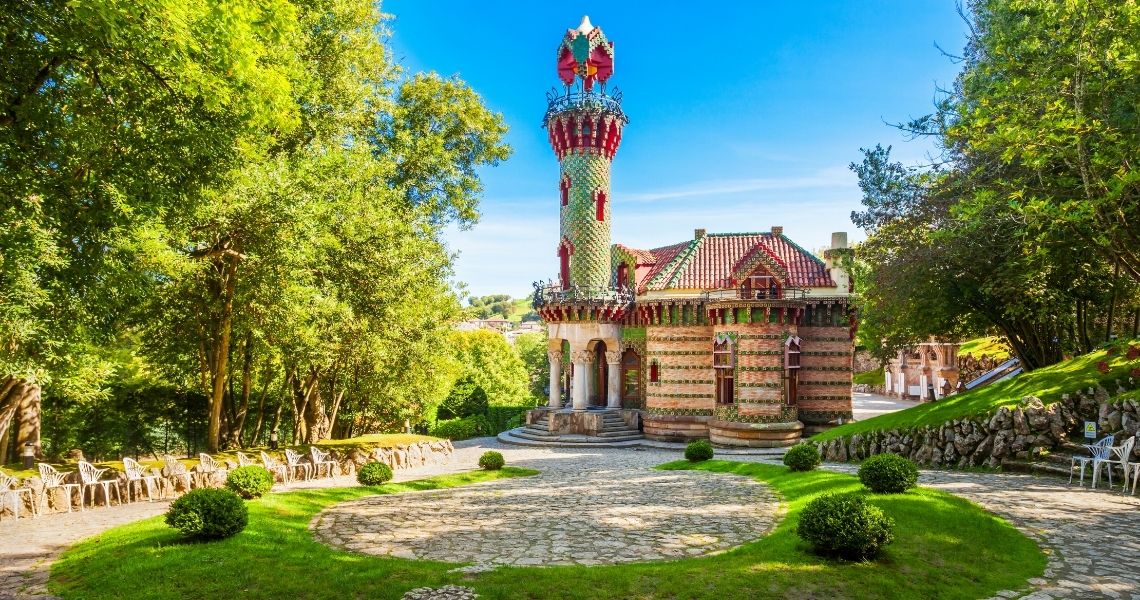
Its great symbol is El Capricho, one of the first works of Antoni Gaudí, known for its striking tower, covered in ceramic with sunflower motifs. A few steps away are the Sobrellano Palace and the Pontifical University, buildings that any stroll through the town turn into a journey through the history of Spanish architecture.
But Comillas also looks to the sea. Its beach, its small port and the viewpoints surrounding the town mean you can alternate cultural heritage with moments of rest in front of the Bay of Biscay. It is, for all these reasons, an essential stop in any route through Cantabria, especially for those looking to combine culture, landscape and tranquillity.
Suances and its spectacular beaches
If there is a destination associated with the summer in Cantabria, it is Suances. Every year, its beaches attract families, surfers and travellers who are looking to enjoy a varied coastline full of charming spots.
The beach of La Concha in Suances stands out for its size and family atmosphere, while, thanks to its waves, Los Locos has become one of the references for surfing in the north of Spain. From the Punta del Dichoso or the lighthouse, you can see some of the most spectacular landscape along the coast, especially when the sun is going down.
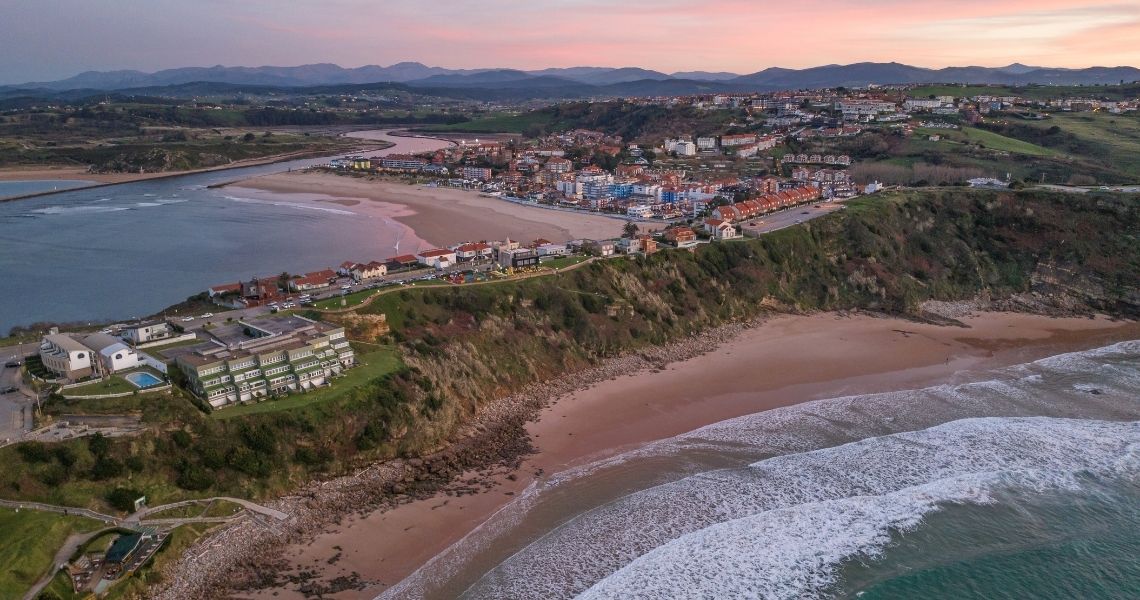
Besides its natural setting, Suances is an excellent starting point for excursions through Cantabria to nearby towns like Santillana del Mark, Comillas or the interior of the Autonomous Community. It also offers pleasant walks along coastal paths that help you discover cliffs, small coves and viewpoints overlooking the sea.
Santoña: the cradle of the anchovy
To talk about Santoña is to talk about the sea and the canning tradition. The town is internationally known for the quality of its anchovies, prepared following an artisanal process that has been passed down from generation to generation since the end of the nineteenth century. A visit to one of its canneries will help show you how these precious fillets, considered one of Cantabria’s great gastronomic products, are cleaned, cured and packaged.
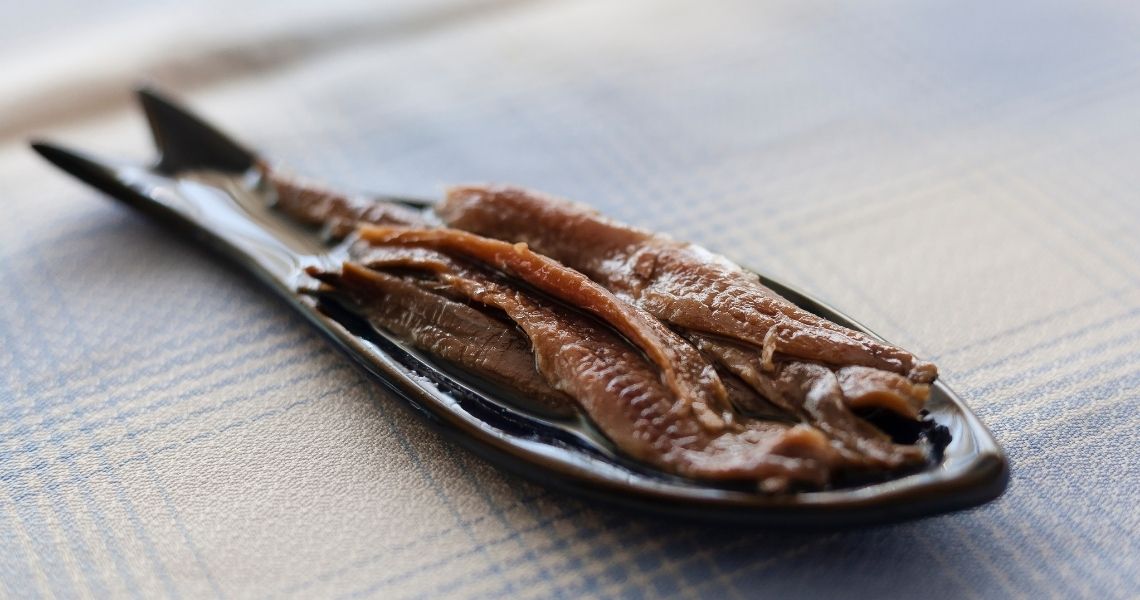
Apart for this, Santoña has an interesting natural heritage. The Natural Park of the Santoña, Victoria and Joyel Marshes is one of the most important wetlands in the north of the peninsula and a privileged place to observe migratory birds. For those looking for a hike with a reward, the climb to the Caballo lighthouse offers unforgettable views of the coast of Cantabria.
Cantabrian gastronomy to recharge your batteries
After travelling kilometres of coastline, what better than taking a break to enjoy Cantabria’s cuisine. Fish and seafood take centre stage on the table with specialties like the famous Santoña anchovies, clams from Pedreña, squid or marmita (also known as “sorropotún”), a traditional stew of tuna with potatoes, closely linked to the fishing villages.
However, Cantabria’s gastronomy takes in a lot more than the coast. Inland, recipes like the cocido lebaniego, typical of the Liébana region and with Potes as one of its most important references, stand out. Also noteworthy are the Tudanca beef, a highly appreciated native breed and traditional pork sausage along with an excellent selection of Cantabrian craft cheeses . And for the sweet finishing touch, there is nothing better than having some sabaos pasiegos or a quesada, two icons of regional confectionery.

Whether you are touring fishing villages, enjoying the beaches or discovering trails between the sea and the mountains, a route through Cantabria is the ideal plan for this time of year. The truth is that on Cantabria’s coast you don’t just visit places, you collect unforgettable memories.
What do you think about?
Share comments, opinions and tricks with the Community