

Cocido madrileño: home-made Madrid-style stew: step by step recipe
Enjoy authentic cocido madrileño with our traditional recipe. Ingredients, cooking times and top tips for enjoying this dish.

A cocido madrileño is much more than just a stew: it’s a symbol of the most Castilian cuisine, a ritual of flavours that unite tradition, history and warmth around the table. It is associated with family gatherings and is served at a slow pace, which is conducive to chatting and table-talk. It also reflects the no-waste cooking tradition: nothing is thrown away, and everything is used to add flavour. Along with tripe and calamari baguettes, it is one of the most emblematic dishes of the capital and, in turn, shares similarities with the Valencian pot, or puchero valenciano.
Preparing it at home demands time, care and respect for the ingredients. But we can assure you that the results will more than compensate your efforts. If you are wondering how to make a cocido madrileño that is both home-made and traditional, we’ll tell you what steps to take below. Get ready!
Ingredients for a traditional cocido madrileño
Before you get started on your cocido madrileño you will need to gather the ingredients. For six people, you will need the following:
- 300 g chickpeas
- 400 g beef shank
- 200 g salt pork
- 2 beef knee bones
- 3 salted pork backbone bones
- 3 marrow bones
- 2 fresh chorizo sausages
- 1 onion black pudding
- 150 g chicken
- 3 potatoes
- 2 carrots
- ½ cabbage
- 150 g noodles (thick or angel hair)
- salt (to taste)
How to make cocido madrileño: advice and tips
After having had a close look at the ingredients contained in the cocido madrileño, it’s finally time to make a start on this comforting recipe. The success of this dish lies in slow cooking, so patience is a virtue that you will need to practice while you cook.
With that said, let’s get started!
- Soak the chickpeas. The night before, soak the chickpeas in water to rehydrate them. This step also helps to improve their texture during cooking.
- Start cooking. Place the drained chickpeas in a large pot along with the meats (beef shank, ones, salted pork and chicken) and cold water. Start over a medium heat and skim off any foam that forms.
- Slow cook. The stew should simmer at a moderate heat for 2 to 3 hours, until the chickpeas are soft.
- Cook the sausages and cabbage separately. To prevent the fat from the sausages clouding the broth, cook the chorizos and the black pudding in a separate pan. Similarly, boil the cabbage separately to keep its texture.
- Cook the vegetables at the end. When the main stew is almost done, its time to add the peeled potatoes and carrots.
- Let it rest. Remove the meats so the stew can rest and the flavours settle. This step helps to deepen the flavour. If necessary, skim off any excess fat.
- Prepare the soup. Strain the broth, return it to the heat and add the noodles. Depending on the type chosen, they should be ready in just a few minutes.
- Adjust. Check the salt and skim off any remaining fat so that the soup is as clear and light as possible.
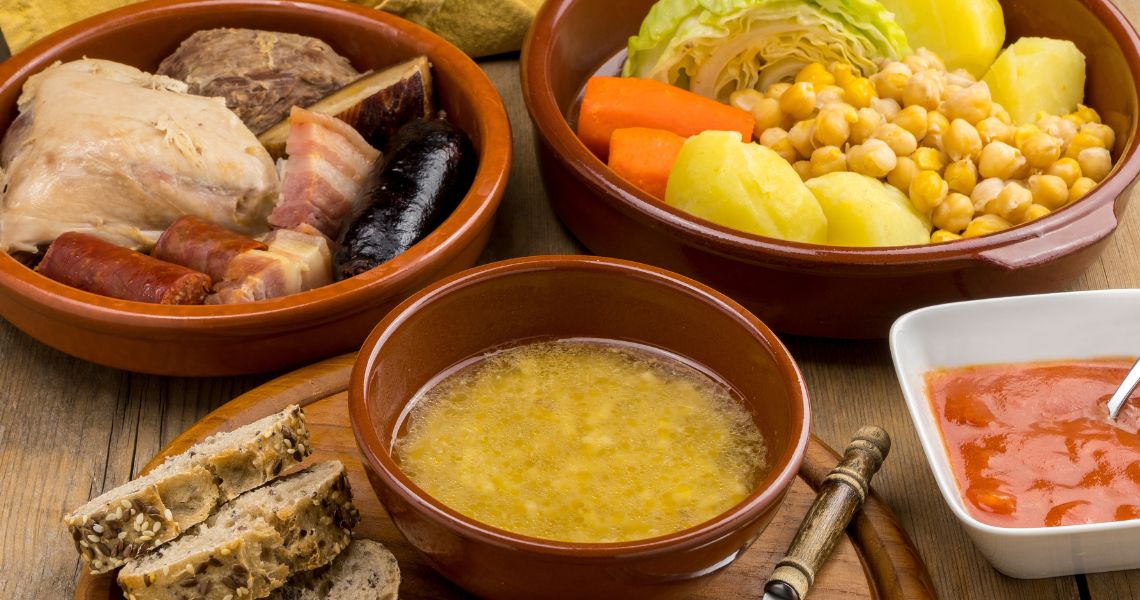
The secret of the three courses (tres vuelcos): how to serve it correctly
One of the most charming traditions of the cocido madrileño is the way it is served, which follows the traditional custom of three courses, a ritual that enhances the flavour and enjoyment of each course. The first course consists of the soup served with noodles, the second is the chickpeas and vegetables, and lastly, the meats and sausages. This traditional method not only honours the historical recipe but turns the meal into a relaxed, sociable and flavourful experience.
Garnishes for the cocido madrileño
Although the stew is already quite a complete dish, there are some traditional accompaniments that will enhance the experience and bring out its character.
- Extra virgin olive oil. A drizzle just before serving the chickpeas can highlight their shine and enhance their flavour even more.
- Chilli peppers or paprika. Especially for those who enjoy a slightly spicy or smoky touch.
- Crusty bread. Perfect for dipping into the soup.
- Mild digestif or Madrid red wine. A wine from the region or some cool water pair with it very well, especially after the three courses.
In the end, preparing a cocido madrileño at home is much more than simply following a recipe: it’s about reviving a culinary heritage that has endured over time because of its simplicity, deep flavour and its ability to gather people together around the table. A good cocido madrileño not only nourishes, but also embraces, gathers and leaves the house smelling like a perfect Sunday. Long live the cocido madrileño and its three courses!
What do you think about?
Share comments, opinions and tricks with the Community