

How to unblock a kitchen sink and prevent blockages
Blocked drains? We show you how to unblock the kitchen sink with home remedies such as vinegar and baking powder, or specific products.

The kitchen sink is one of the places that gets used the most in the home and, at the same time, the one that suffers most on a daily basis. As can also happen in the shower or bath, a blocked sink is one of the most common and inconvenient household problems. The problem isn’t just that the water doesn’t drain away, meaning you cannot continue with your chores, but if the problem is not resolved in time, it can lead to bad smells and problems of hygiene in the kitchen.
Spotting that something is wrong is simple: the water starts to drain away slowly, you hear a characteristic gurgling in the pipes or, in the worst case, a complete blockage occurs. Before panicking and dealing with an urgent unblocking job, it is worth understanding what has happened so you can tackle the root of the problem.
Why do sinks block?
Pipes don’t get blocked overnight; it is usually the result of a combination of daily habits and structural factors. Some of the main causes are as follows:
Dirt and build-up in the trap (food remains, oil, and soap)
The trap (that U-shaped or bottle-shaped pipe located just below the plughole) performs the crucial task of maintaining a water seal so that drain smells don’t enter the kitchen. However, its design makes it ground zero for blockages.
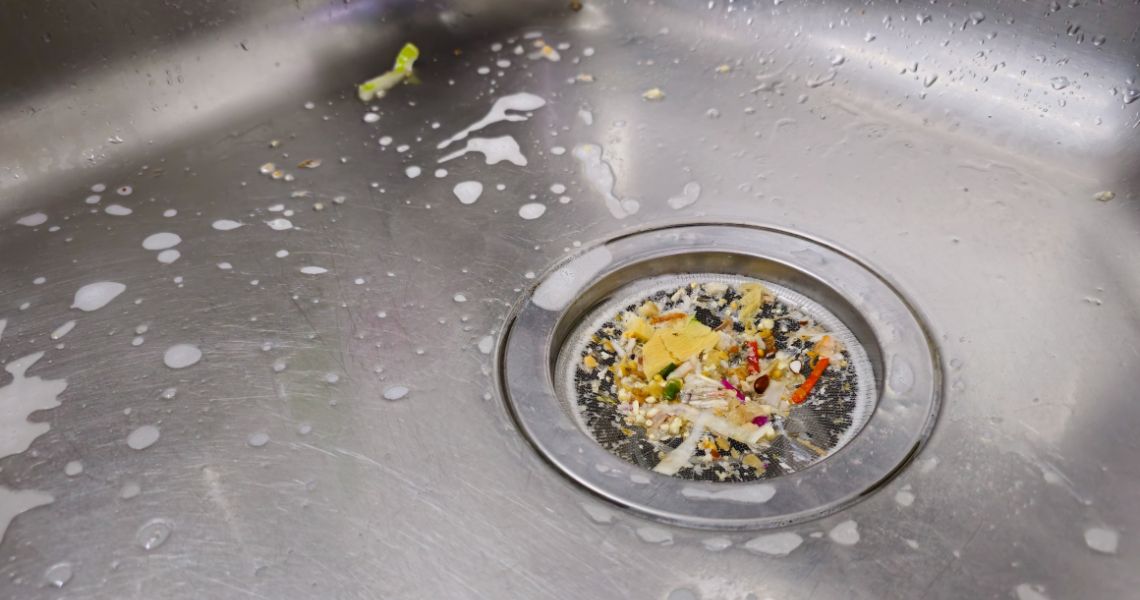
Food remains. These are among the most common causes of blockages. The small remains that are washed off while doing the dishes gradually build up at the bottom of the trap.
Oil and fat. Pouring oil down the sink is not advisable, as it can solidify on the pipe walls as it cools, favouring the build-up of residue.
Washing-up liquid. Soap and detergent residue can contribute to a greasy film forming inside the pipes. Bottle-shaped traps are especially prone to clogging from this combination of dirt as they are narrower.
Factors related to water type (limescale)
Geography also affects the condition of your pipes. In areas with “hard water” (water with a high concentration of minerals such as calcium and magnesium), limescale gradually builds up inside the pipes. This build-up reduces the pipe diameter, making it easier for any solid waste to become trapped.
Pipe installation defects (shallow gradient and old pipes)
Sometimes the problem stems from the original installation or simply the passing of time. As a general rule, waste pipes are usually installed with a gradient of around 2% to help carry waste away; a shallower gradient can encourage water and sediment to build up. Likewise, old or worn pipes lose their smooth inner surface, and become porous which slows down the flow of water and makes it easier for dirt to get trapped.
Effective methods for unblocking the sink without a plunger
When the water won’t drain, the first instinct is usually to reach for the classic rubber plunger. If you don’t have one at hand, there are some very effective mechanical and chemical alternatives for unblocking the kitchen sink without the need for heavy-duty tools.
Method 1: baking powder and vinegar (effervescent home remedy)
If you’re looking for an eco-friendly, budget option for a minor problem, unblocking the sink with baking powder and vinegar can be a useful option for everyday blockages of this kind. The combination of these two products triggers an acid-based chemical reaction that produces carbon dioxide, creating an effervescent action that can help dislodge small surface residues.
How to apply it: pour half a cup of bicarbonate of soda directly down the plughole. Then add a cup of white vinegar.
The process: you’ll see it start to foam. Put the plug in straightaway to make sure the pressure caused by the reaction is concentrated inside the pipe. Leave it to work for 20 to 30 minutes.
Cleaning: remove the plug and pour in a litre of boiling water (do this carefully if your pipes are made of soft PVC) to flush away the loosened residue.
Method 2: specific cleaning products
For more severe blockages where home remedies fall short, there are liquid or gel chemical drain unblockers on the market. Many commercial products are formulated to work on organic residue and usually state on the label whether they are compatible with PVC pipes. When using them, it is essential to follow the manufacturer’s instructions to the letter, observe the recommended contact time, and ventilate the kitchen well.
Method 3: caustic soda or sodium hydroxide
Caustic soda is a traditional high-strength option due to its extreme ability to break down organic matter. However, owing to its corrosive nature, manufacturers and specialists recommend taking extra precautions. It is a highly dangerous product that can cause severe burns to skin and eyes, as well as releasing toxic fumes. Moreover, improper use can make certain blockages worse, especially where there is a significant build-up of grease, worsening the sink blockage.
If you decide to use it, wear latex or nitrile gloves and protective goggles, and follow the manufacturer’s instructions to the letter. If the problem persists, stop applying further chemicals and consider cleaning the trap manually or calling in a plumber.
What do you think about?
Share comments, opinions and tricks with the Community