

How to read your cat’s body language to improve your relationship
Learn to read your cat’s body language: signals from the tail, ears, posture and eyes to understand how they feel and what they want.

For many cat lovers, understanding these felines is an art. Cats communicate and they do it a lot through their movements, postures and gazes. Learning to decode this silent language can strengthen your bond, reduce misunderstandings and help your four-legged companion feel safe and loved at home. This is the fascinating world of cat body language—let’s dive in!
Why it’s important to understand your cat’s body language
While dogs bark to make themselves understood, cats use much subtler signals. Feline communication relies on posture, tail movements, ear position and eye expression. Understanding these signals not only allows you to interpret their moods (from curiosity to fear or affection) but also to anticipate physical and emotional needs that often go unnoticed.
For example, a relaxed and content cat will have a loose body, ears pointing forward, and a calm tail, whereas a frightened cat will adopt a tenser or more defensive posture.
The tail: what is your cat trying to tell you?
A cat’s tail language is one of the most valuable indicators of its emotional state. The tail acts like an emotional traffic light:
- Held upright with the tip curved like a question mark, it signals confidence and a desire to play or socialise.
- Low or tucked between the legs, it reflects insecurity, fear or submission.
- Quick or twitching movements are usually a sign of irritation or that the cat needs some space.
- A puffed-up tail can indicate intense fear or a readiness to defend itself.
Knowing this will help you respond respectfully to your cat, avoiding situations that could undermine its trust.
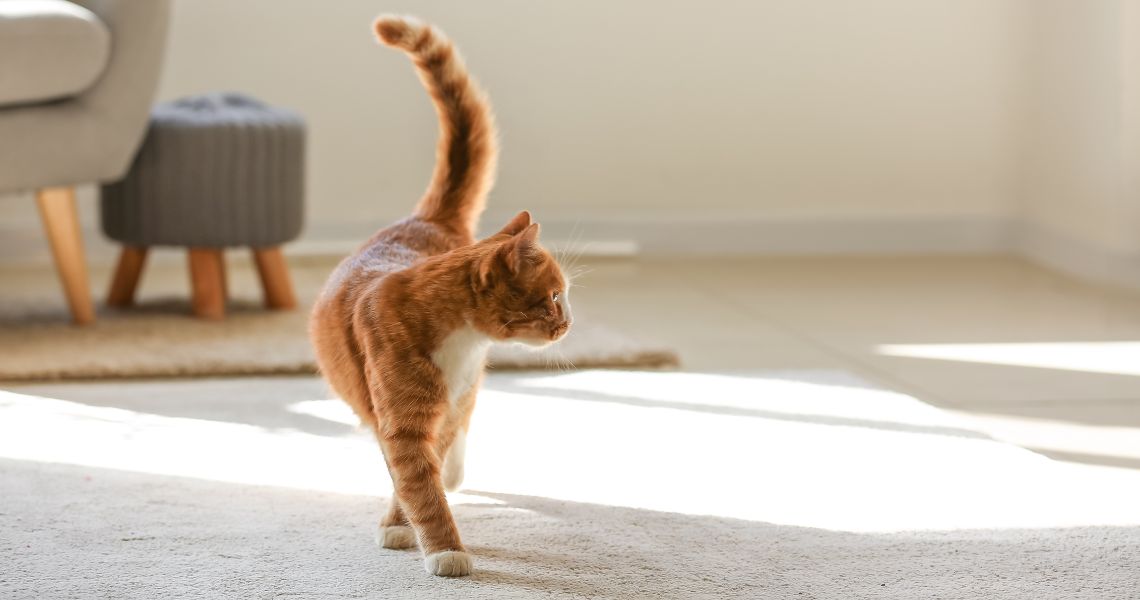
What it means when a cat’s ears are forward, backward or rotated, and how to interpret their gaze and pupils
A cat’s ear language also provides clear clues about its mood.
- Ears pointing forward and upright usually indicate curiosity and calm.
- Ears turned to the sides or rotated can indicate anxiety or alertness to an unfamiliar stimulus.
- Ears flattened back against the head are usually a sign of fear or aggression.
You should know that a cat’s eyes and pupils complement these signs. Very dilated pupils can be associated with either excitement or fear, depending on the context, while a soft gaze and slow blinking are generally signs of trust and affection.
Body posture: confidence, fear or aggression
In addition to the tail and ears, a cat’s overall posture reveals a lot about how it’s feeling.
- A relaxed, open body indicates comfort and a sense of safety.
- A crouched body with the legs tucked underneath can signal tension or alertness.
- An arched back with raised fur is a defensive posture, meant to make the cat appear larger when facing a threat.
Observing these signals together will help you tell whether your cat is enjoying the situation, feeling uncomfortable or even ready to act, depending on the context.
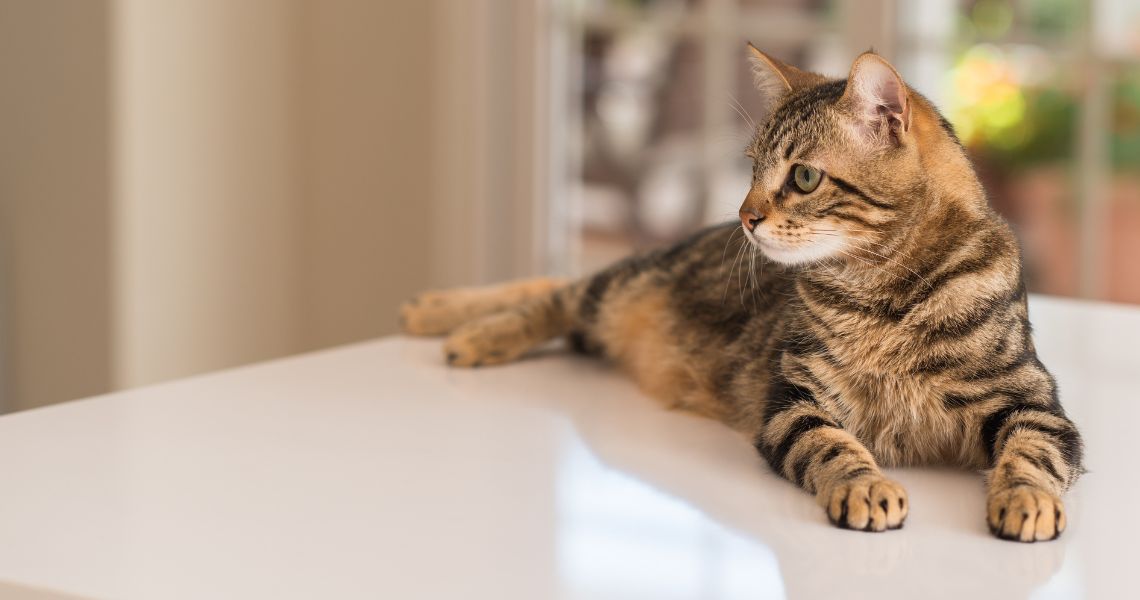
Signs of a relaxed, crouched or defensive cat
A relaxed cat will often be lying on its side, with a still tail and half-closed eyes. Its whiskers will be in a neutral position and it may even purr softly. By contrast, if a cat is crouched, with its tail low and ears slightly back, it’s likely assessing a new or uncertain situation. In a defensive posture, the cat makes itself look more imposing. Raised fur, an arched back and a puffed-up tail are clear signs that something is unsettling or stressing it.
Combined signals: how to interpret several gestures at once
As with any language, no single gesture tells the whole story. For example, a high tail combined with ears pointing forward and slow blinking is a strong sign of trust and affection. However, a low tail with ears flattened back and dilated pupils usually indicates fear or stress. Look at the signals holistically for an even more accurate interpretation.
Signs of affection and closeness you shouldn’t miss
Did you know that some gestures are the feline equivalent of a hug? If your cat wraps its tail around you or another cat, it’s showing affection and acceptance. Additionally, slow ‘blinks’ directed at you are considered by experts to be a form of cat kiss.
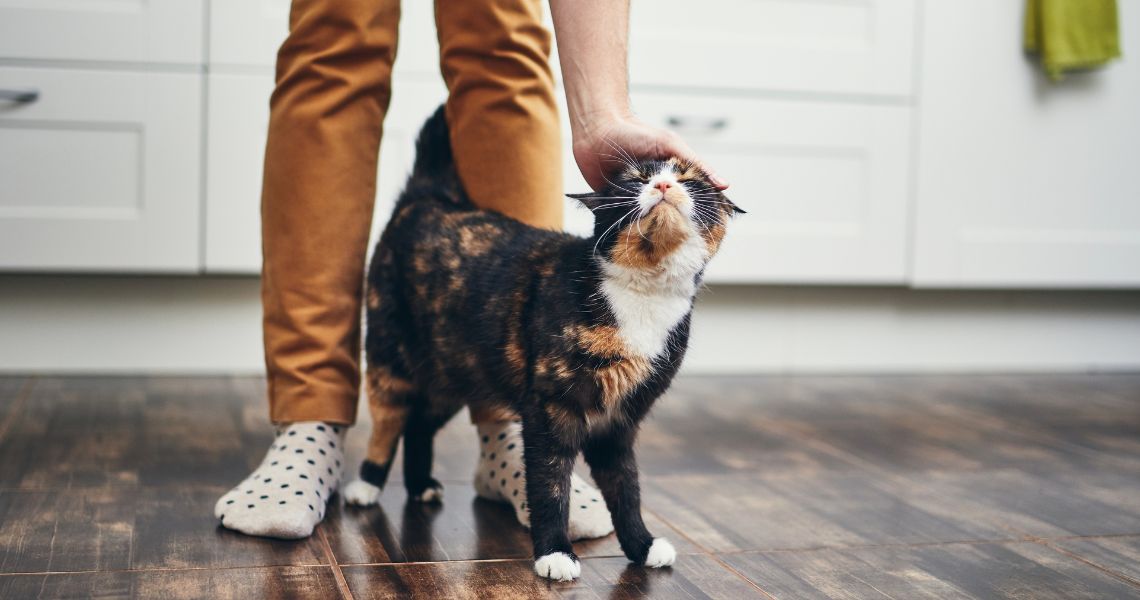
Common mistakes when interpreting cat body language
Humans tend to attribute human emotions to them based on our own experiences, which can lead to misunderstandings. For example:
- Interpreting a quick tail movement as happiness, when it is often a sign of irritation.
- Assuming that a cat showing its belly wants to be petted; sometimes it’s a sign of trust, but not always an invitation for contact.
The key to having a great relationship with your cat is to observe, learn and respect its space. With patience and by paying attention to its signals (tail, ears, eyes and posture), you’ll naturally strengthen your bond with your cat day by day!
What do you think about?
Share comments, opinions and tricks with the Community