

High-Fibre Foods: A Complete Guide with Recipes
High-fibre foods: discover their health benefits, what dietary fibre is for, and easy recipes using fibre-rich foods.

For years, fibre has been largely overlooked in our daily diet. However, scientific evidence continually reminds us that eating foods rich in fibre is key to maintaining digestive health, preventing illness and feeling better day to day. But do we really know what fibre is, what it does and how to easily include it in our meals?
High-fibre foods: what they are and why they matter
When we talk about a high-fibre food, we mean plant-based products that provide substances beneficial for digestion and gut health, and that the body processes differently from other nutrients. This is because fibre is not fully digested in the small intestine and reaches the colon, where it exerts its beneficial effects. Whole grains, fruits, vegetables, legumes, nuts, and seeds are among the best sources.
According to the World Health Organisation, the recommended daily intake of fibre is between 25 and 30 grams. However, various studies indicate that most people don’t meet this target. The result is frequent digestive problems (such as constipation, bloating and slow digestion), a higher risk of cardiovascular issues, fatigue, skin problems and poorer blood sugar regulation.
What dietary fibre is and how it works in your body
Dietary fibre is a type of carbohydrate found in plant foods that is not broken down during digestion and is mainly divided into two types: soluble and insoluble. Soluble fibre, found in foods such as oats, legumes and apples, forms a gel when mixed with water and helps regulate cholesterol and blood sugar levels. Insoluble fibre, which doesn’t dissolve, is abundant in vegetables, whole grains and nuts, and it helps keep the digestive system moving and prevents constipation.
Main health benefits of dietary fibre
At this point, it’s natural to ask what is dietary fibre good for? The benefits of a diet rich in fibre-containing foods are supported by decades of scientific research, with some of the most notable being:
- Improved gut health and prevention of constipation.
- Increased feelings of fullness, which helps with weight management.
- Reduction of LDL cholesterol (commonly known as ‘bad’ cholesterol).
- Better blood sugar control.
- Lower risk of cardiovascular disease and type 2 diabetes.
Additionally, a high-fibre diet supports a healthy gut microbiota, a factor increasingly linked to overall well-being and immune system function.
The best high-fibre foods to include in your diet
Including fibre in your diet isn’t difficult if you know where to find it. Some of the most recommended high-fibre foods include:
- Legumes: lentils, chickpeas or beans.
- Whole grains: oats, brown rice or wholemeal bread.
- Fruits: pear, apple, raspberries or kiwi.
- Vegetables: artichoke, broccoli, carrot or spinach.
- Nuts and seeds: almonds, walnuts, chia or flaxseed.
Ideally, it’s best to combine different foods throughout the day to benefit from all types of fibre.
High-fibre meal ideas: healthy breakfasts, lunches and dinners
Adding more fibre to your diet can be as simple as making small changes. We suggest adding the following to your diet – take note!
Breakfast
- Cooked whole oats with fresh fruit and chia seeds.
- Wholemeal toast with avocado and tomato.
Lunches
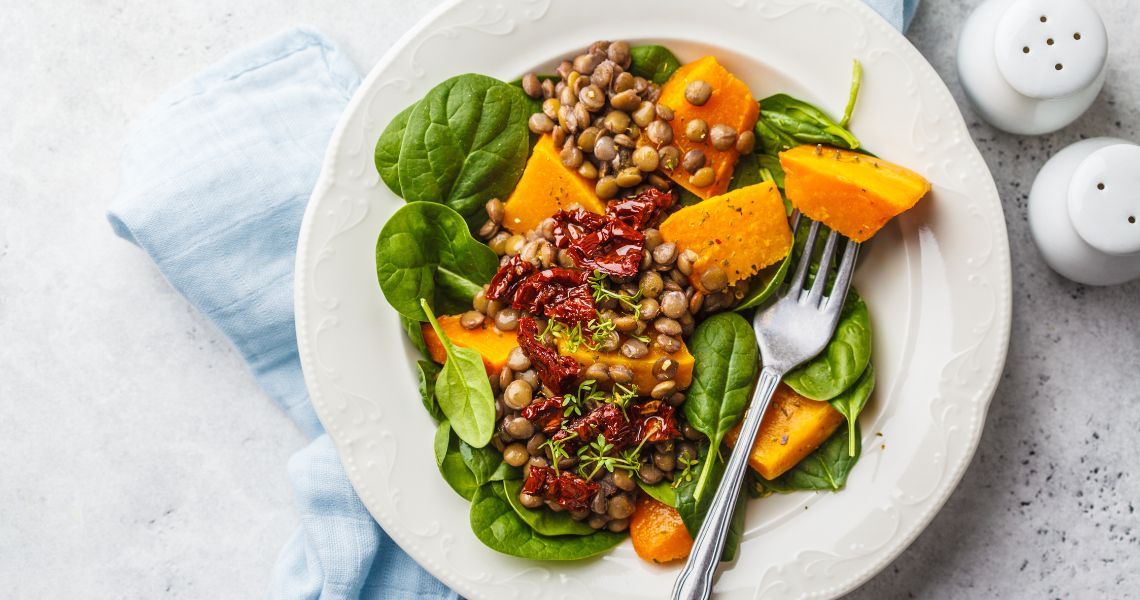
- Lentil salad with vegetables and extra virgin olive oil.
- Brown rice stir-fried with broccoli, carrot and chickpeas.
Dinners
- Vegetable soup with wholemeal bread.
- Stir-fried vegetables with quinoa and nuts.
These are easy, affordable recipes perfect for the whole family. What are you waiting for to give them a try?

Frequently asked questions about high-fibre foods and dietary fibre
It’s natural to have questions at this point. Is natural fibre better than supplements? Yes, experts recommend getting fibre directly from foods, as they also provide vitamins, minerals and antioxidants. Another common question is: can you consume too much fibre? A sudden excess can indeed cause digestive discomfort. It’s best to increase intake gradually and drink plenty of water. And last, but not least: are all wholegrain foods high in fibre? Not always. That’s why it’s so important to read the labels and check the actual fibre content per serving.
Including high-fibre foods in your diet is key for supporting digestion, regulating blood sugar and cholesterol, and helping you feel full for longer. As you can see, with small daily changes, improving your well-being can be as easy as it is tasty
What do you think about?
Share comments, opinions and tricks with the Community