

Plants at home: decoration or health?
Discover the benefits of having plants at home. They improve your physical and mental health, regulate sleep, purify the air and enhance your daily well-being.

For years, plants inside the home have been used as decorative and ornamental elements. It was during the 1960s that houseplants began to gain popularity in homes as decorative features.
This trend continued until the arrival of more minimalist interior design styles. However, in recent years it has changed again following numerous studies confirming the benefits of having plants at home. In addition to being decorative, they filter and purify the air and improve emotional well-being.
Plants that purify the air and protect your health
The quality of the air we breathe has a much greater impact on our health than we often realise. It affects how well we sleep, how focused we can be during the day and even our overall sense of well-being.
What is surprising is that, without realising it, we live every day with small particles and substances in the air that can be harmful.
These five plants can help purify the air in our homes:
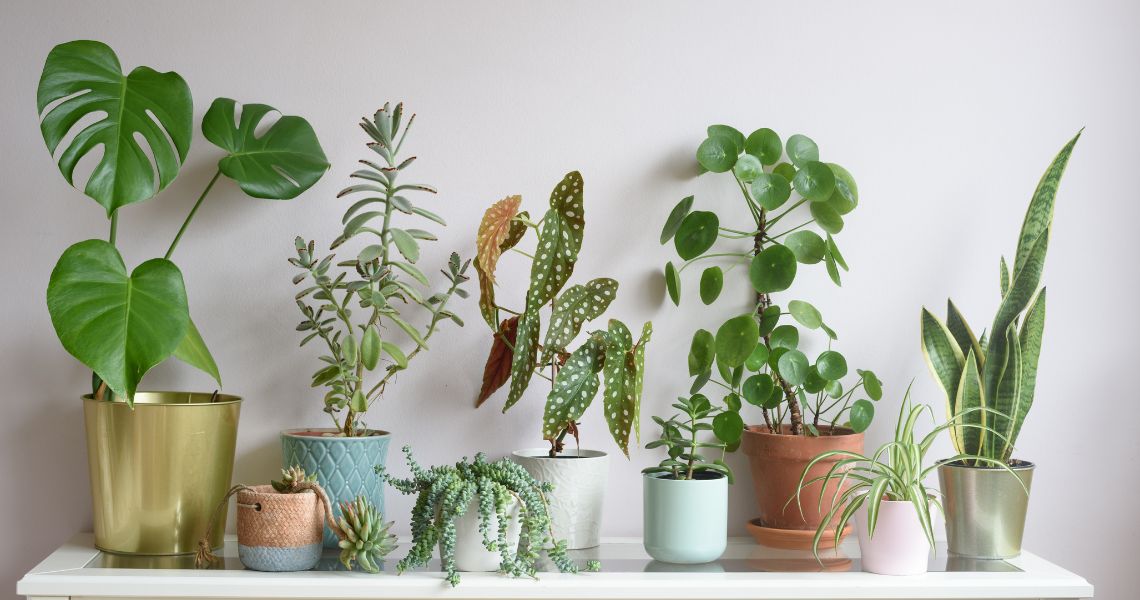
- Sansevieria: This is one of the most versatile houseplants you can find, as it doesn’t require much light to survive. It’s considered one of the best air-purifying plants for the bedroom, both because it filters toxins from the air and because of its remarkable ability to release oxygen at night.
- Pothos: This plant adapts very well to indoor spaces such as living rooms, hallways, offices and kitchens. It can grow as a climbing plant, but also as a hanging plant. Its leaves are capable of neutralising benzene, xylene and formaldehyde in the air, which are chemical substances that can form inside the home.
- Peace lily: Decorative and easy to care for, its white flowers bloom throughout the year. It needs light, although not necessarily direct exposure. One of its main benefits is its strong ability to absorb excess humidity in the home, helping prevent mould from forming on walls. It also acts as an air purifier.
- Ficus Robusta: This is one of the most effective plants for purifying the air. It’s also hardy and very easy to maintain. It enjoys light but can also thrive in partial shade. In addition to purifying the air, it can help people with allergies by removing harmful substances from cleaning products or adhesives in the home, reducing their allergenic effects.
- Fern: Ferns are also part of the group of air-purifying plants and have the added benefit of increasing humidity in the air, creating a fresher indoor environment. They are easy to care for, although they require indirect light and plenty of watering.
How plants improve your emotional well-being
People have an inherent need to connect with nature, and having plants in the home helps create that sense of connection,
promoting emotional well-being. In addition, keeping plants or flowers at home encourages the development of a care routine and a bond with them.
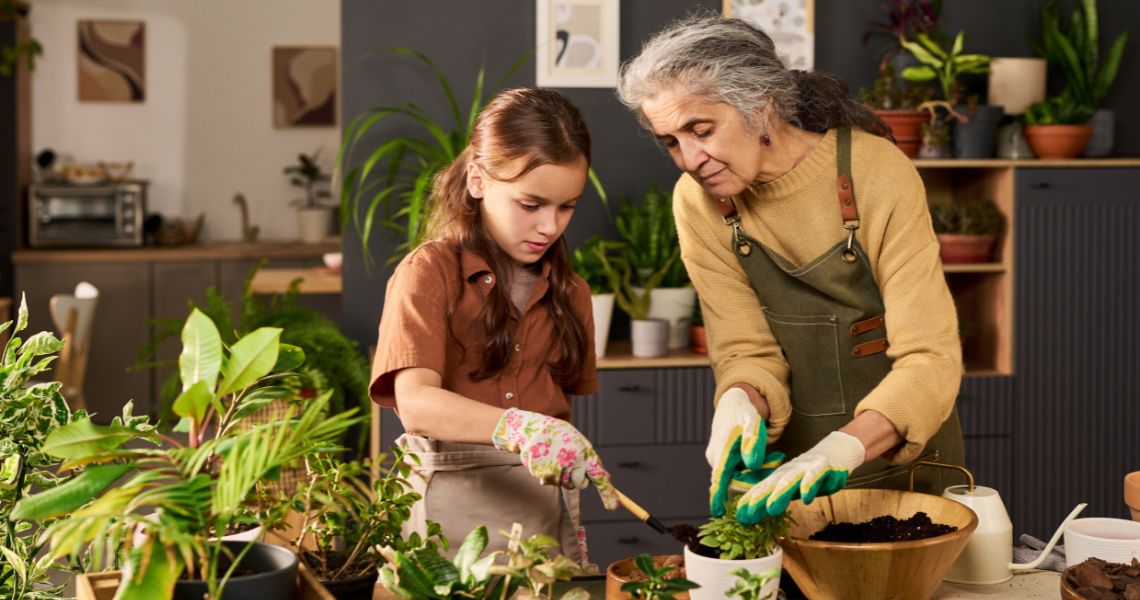
- They help you focus and learn to care: Having to establish a routine to care for plants helps us stay attentive to them. When we water them, prune them, clean their leaves or fertilise them, we focus on that task, which helps us concentrate and stay present in what we are doing without distractions.
- They reduce stress: simply seeing greenery in the home environment lowers cortisol levels and reduces stress.
- They improve mood: by purifying the air in the home, plants have a direct influence on our mood, promoting a more positive state of mind.
- They boost self-esteem: caring for a plant and seeing it flourish thanks to the attention we give it reinforces self-esteem and the sense of competence and usefulness.
What do you think about?
Share comments, opinions and tricks with the Community