

Why does air-conditioning smell bad and how to solve it?
Does the air-conditioning in your home or car smell bad? This article explains the possible causes, provides tips to get rid of bad smells and tells you about the best products to clean your air-conditioning.

Why does air-conditioning smell bad?
A lack of maintenance or continuous use of air-conditioning can lead to a build-up of moisture in the ducting of split air-conditioners or the air-conditioning in your car. This can lead to proliferation of bacteria and even fungi or mould. A lack of maintenance, failing to clean the filters, the evaporator or the drain can cause bad smells when using air-conditioning. On the other hand, if it has not been used for some time, you may notice some bad smells the first few times you turn it on.
How to get rid of the bad smell
Servicing the different components of air-conditioners, or even changing some parts, is the best way to avoid or get rid of bad smells. If the air-conditioner has not been used for some time, in many cases simply allowing it to run for a few minutes should be enough, and then repeating this a couple of times to get rid of the smell.
If that doesn’t work, some basic cleaning could be well worthwhile. First, turn off and disconnect the equipment. Clean the filters with water and neutral soap and allow them to completely dry out before refitting them. At the same time, clean the grills and housing with a damp cloth.
To complete the process, you can apply some specific disinfectant spray and turn on the device in fan mode for a few minutes to get rid of the moisture. Don’t forget to check the drain. In the case of air-conditioning in the car, use a disinfectant spray directly on the ducts.

Effective products
To get rid of bad smells from air-conditioning we can either resort to specific products or homemade remedies. Anti-bacteria sprays and cleaning foams are designed to work directly on bacteria and fungi, and are usually the most effective, long-lasting options, particularly in the case of recurring problems.
Among the household remedies, vinegar can be used occasionally for its disinfecting properties, although it should be applied sparingly to avoid damage or persistent smells. Baking powder on the other hand, helps to neutralise smells, but its effectiveness is more limited.
Get rid of bad smells according to system
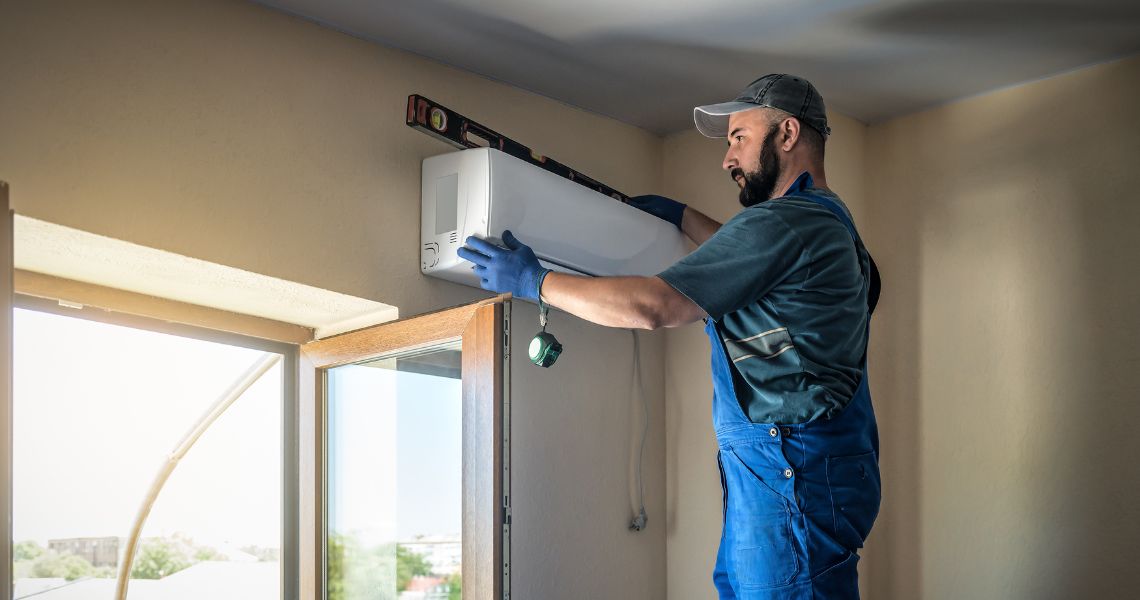
In split systems, the key is to periodically clean the filters and visible components, since the build-up of dust and moisture is the main cause of bad smells. If the smell remains after cleaning, the performance of the device is impaired, or it gives off a constant damp smell, it is best to call in a technician to clean the inside of the system or check for possible drainage problems.
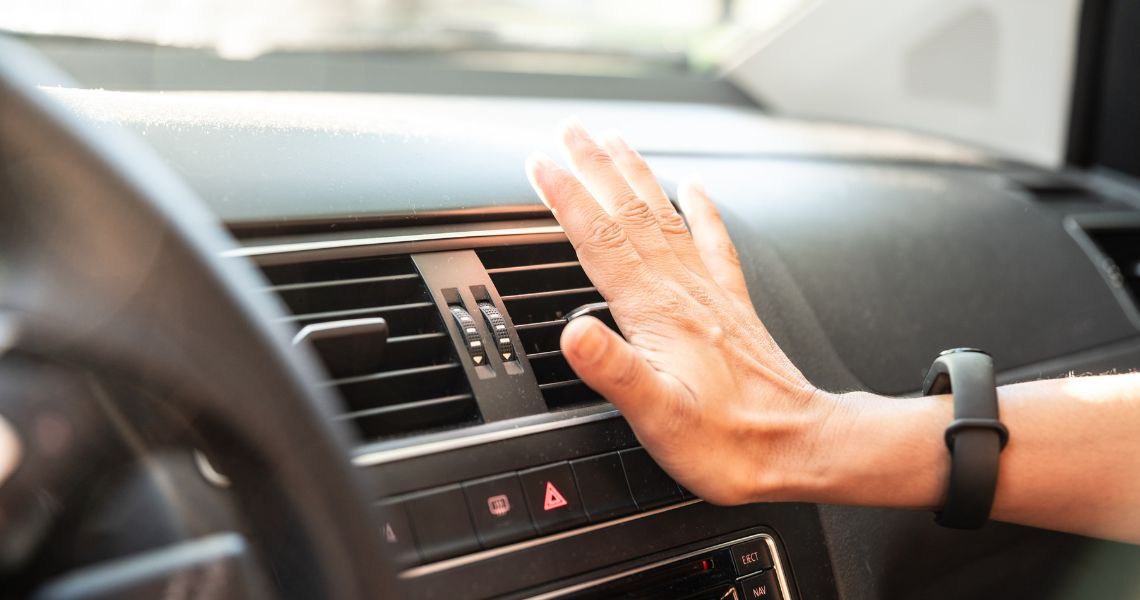
In the air-conditioning in the car, one of the first steps is to change the cockpit filter, since dirt and bacteria tend to build up in it. Moreover, cleaning the ducts with a specific product to prevent the bad smell from reappearing is advisable.
Tips to avoid bad smells
To avoid bad smells from reappearing, keeping to a basic maintenance routine of your air-conditioning is important. Cleaning the filters regularly will help to avoid dust, bacteria and damp from building up. Moreover, before turning off the device, it is a good idea to leave it running on fan only mode for a few minutes, as this will dry out the inside of the system and reduce the appearance of bad smells. Furthermore, we should learn to identify different signs.
Warning signs
There are some obvious signs that indicate that your air-conditioning requires some professional servicing. If the smell is persistent and does not disappear after cleaning, there could be a build-up of dirt and damp in the internal components. The smell of gas requires immediate attention, since there could be a leak entailing the consequential risk.
Other common signs are low efficiency, meaning that it cools less than normal, or takes longer to reach the required temperature and drips. This is usually related to drainage problems or an excess of moisture inside the device.
FAQ
- How often should you clean your air-conditioner?
Cleaning the filters every few weeks during the months of most use is recommended, and a complete service at least once a year
- Are bad smells from air-conditioning dangerous?
In some cases they can simply be caused by dirt, but if there is a strong, persisting smell, this could be due to bacteria or fungi, and therefore it is a good idea to resolve the problem as soon as possible.
- Does vinegar work to get rid of bad smells?
It can work occasionally as a disinfectant, but it is not a definitive solution, nor does it substitute proper cleaning or specific products.
- Why does the air-conditioning smell bad when it switches on?
This is usually due to a build-up of dirt and damp when the device has not been used for some time.
- How much does professional cleaning cost?
That will depend on the type of equipment and service, but it is usually well worth it if you have a recurring problem or if the device is several years old.
- When should the filters be changed?
When they are very deteriorated, if they cannot be cleaned properly or if the time recommended by the manufacturer has elapsed.
- Maintenance of the home in summer
Check the air-conditioning before the summer, clean the filters and avoid damp. All of this will help to improve comfort in the home, energy efficiency and will lengthen the life of the equipment.
What do you think about?
Share comments, opinions and tricks with the Community