

Calories in beer according to type
Find out how many calories are in beer according to the type: lager, stout, craft or light. Find out how to choose the best option for your diet and enjoyment.

Beer is one of the most popular drinks the world over. It is a refreshing, social beverage with many brewing styles to choose from, ranging from classical lager to more complex, craft beers and ale. If you are concerned about your health or diet, you are sure to have asked yourself how many calories are in each type of beer. There is no single answer: it depends on things such as the ingredients, alcohol content and brewing style.
Calories in lager, stout and craft beer
Calorie content in beer is fairly straightforward: it mainly comes from the alcohol (7 kcal per gram) and from the carbohydrates remaining after fermentation (approximately 4 kcal per gram). Therefore, the golden rule is the higher the alcohol content, the higher the calories.
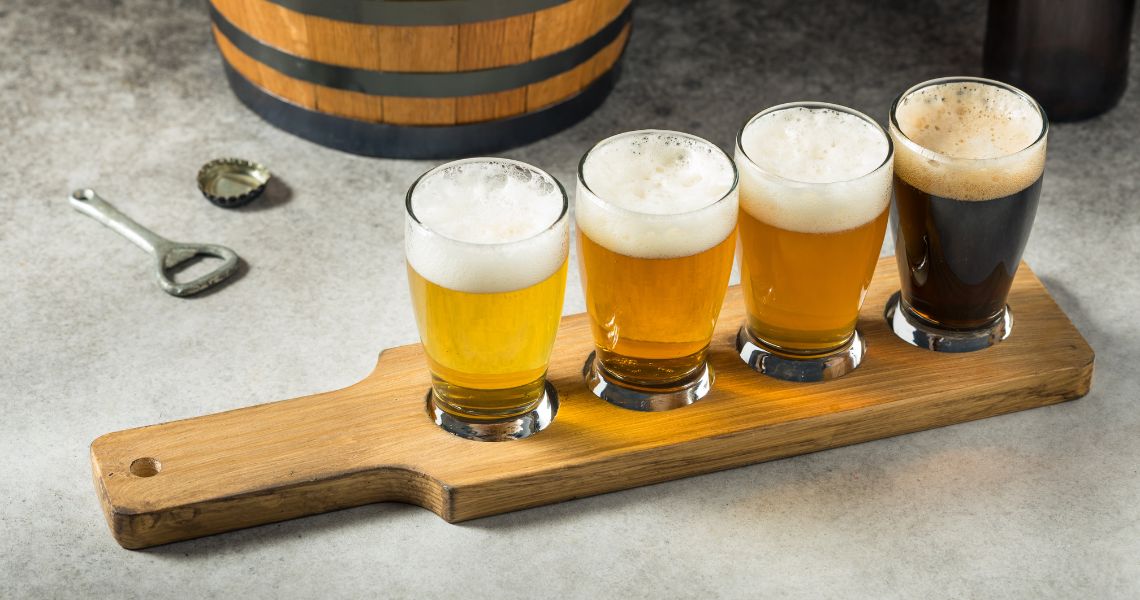
- Lager is usually the yardstick and it is one of the brewing styles with a more moderate calorie content. One can or typical bottle of lager (330 ml) has around 130-150 kcal, although in smaller glasses this can be between 90 and 110 kcal.
- Stout; the myth that “darker beers always have more calories” is not always true: some stouts have a similar calorie content to lager, depending on the alcohol content and residual sugar; whereas other, more full-bodied stouts can reach much higher figures. In beer with between 8º and 9º alcohol content the calorie count can be up to 250 kcal per bottle.
- Craft beer: this is a wide and varied class of its own. In general, the higher the alcohol content and unfermented sugar content (as in many IPA or special beers), the more calories they have. A bottle or glass of around 355 ml can have more than 200 kcal depending on the brewing style and ingredients.
This shows why there is no simple answer: calories vary according to brewing style, the raw materials and the brewing process.
How many calories are in alcohol-free beer?
Alcohol-free beer has become more and more popular. In addition to being able to enjoy the taste of beer without the effects of alcohol, they usually have less calories. One of the frequent questions among consumers and nutritionists is how many calories are in alcohol-free beer compared to other beers that do contain alcohol.
In general terms, alcohol-free beer contains less than half the calories of normal beer. A standard bottle (330 ml) of alcohol-free beer is equivalent to around 65 kcal, a far cry from the average of 150 for the same amount of beer containing alcohol.
What beer should you drink if you are dieting?
If you are looking to control the number of calories you ingest without doing away with beer occasionally, the trick is knowing which beer to choose.
- Light beer or lager is specifically designed to contain less calories.
- Among the beers with the lowest calorie count are the ones with lower alcohol content (ABV), particularly those that do not exceed 4%.
Therefore, if you want to keep to an active lifestyle and you are watching your waist, alcohol free and low ABV beers are a good alternative since they combine flavour with much fewer calories.
Low-calorie beer for your lifestyle
So now let's take a look at some specific beers that combine flavour with fewer calories, ideal to enjoy without spoiling your diet:
- Light lager: classical lights with between 90-110 kcal per standard glass, perfect for casual lunches.
- Alcohol-free beer: a standard glass containing just 40 kcal makes it the ideal choice for socialising without taking in too many calories.
- Session IPA or low ABV craft beer: they are true to their craft style but with lower calories than stronger versions.
The key is to read the labels, know about your own intolerance and balance your diet with physical activity. Beer will not define a diet, but it can become a part of your awareness if you choose well.
To sum up, knowing how many calories are in beer according to the type will help you enjoy it without nasty surprises. Whatever your choice, it is always a good idea to combine it with a healthy lifestyle.
What do you think about?
Share comments, opinions and tricks with the Community