
Bulgarian split squat: ultimate guide for strengthening legs and glutes
Learn how to do the Bulgarian split squat correctly. Learn about its benefits and the best exercises for your glutes and legs at home or at the gym.

Some exercises seem simple until you have to do the first repeat. The Bulgarian split squat is one of them: just rest the instep of one foot behind the other firmly on the ground and bend your knee to discover that your legs have a lot to say. This unilateral move, which has become a classic of strength training, allows you to work each leg separately and combine strength, balance and control. Do you want to find out more about it?
What is the Bulgarian squat and what muscles does it work?
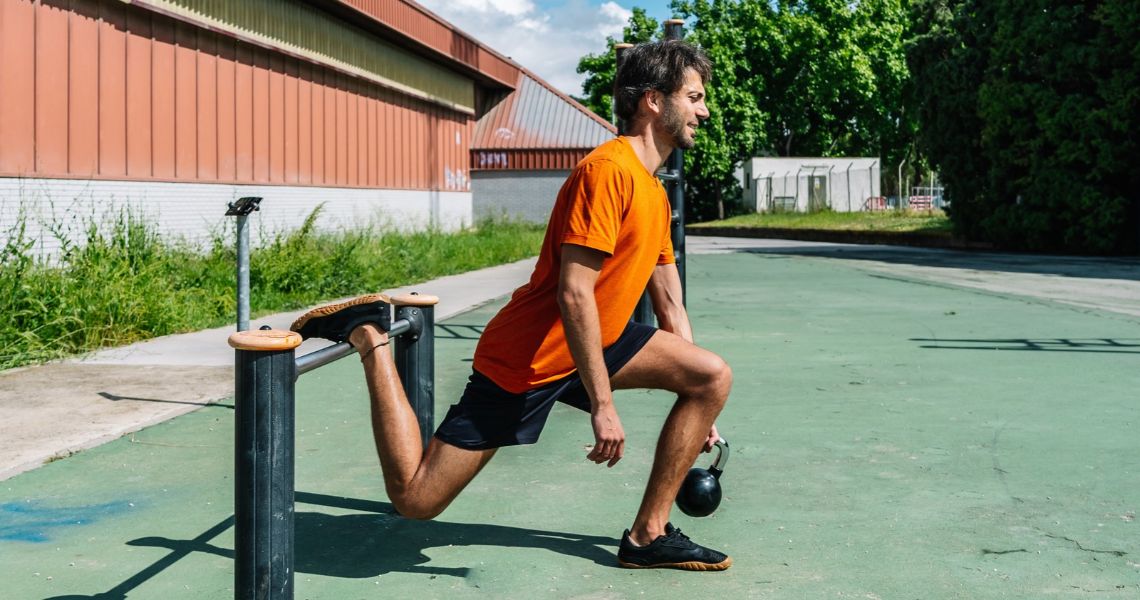
The Bulgarian split squat is a unilateral squat variant in which one leg remains forward and the other rests behind on a raised surface such as bench or stable box. Although both legs are involved in the movement, most of the work falls on the forward leg, which is responsible for propelling the body during the descent and ascent.
It is an especially interesting exercise to work the lower body. The quadriceps, glutes and hamstrings are some of the main muscles involved, while the muscles of the hip and trunk contribute to maintaining a controlled posture during execution. This combination of unilateral strength work and postural control can make the Bulgarian split squat demanding even when performed without large external loads.
Benefits of including this unilateral exercise in your routine
Among the main benefits of the Bulgarian split squat are the following:
- It strengthens legs and glutes, as it demands a great effort from the forward leg.
- It improves control and stability as the body must maintain balance throughout the movement.
- It works unilaterally, something useful so that you don’t depend only on the stronger leg.
- It adapts to different levels: it can be done with one’s own weight, with dumbbells or using machines.
In addition, there is no need to carry a lot of weight to make it challenging. In fact, in strength training, technique and progression are often more important than aiming for a certain load.
Step-by-step technique: how to do it without injury
Before adding weight, it is advisable to master the movement with your own body. Start with the following:
- Place a bench or stable surface behind you and place the instep of one leg on it.
- Move the other one forward until you find a comfortable and stable position.
- Keep your trunk under control and your eyes straight ahead.
- Slowly bend the knee of your forwarded leg and lower yourself in a controlled manner
- Lower yourself as far as you can and maintain a stable, pain-free posture.
- Push the floor with your front foot to return to the starting position.
- Complete the reps and switch sides.
When the movement has been mastered, you can try the dumbbell Bulgarian split squat, by holding one or two dumbbells. Another possibility is the multipower Bulgarian split squat, using gym equipment with a bar that moves along some guides and allows you to add weight progressively.
If you feel pain, you are advised to stop and review the technique or consult a professional, especially if there is a prior injury.
Common mistakes to avoid when bending your knee
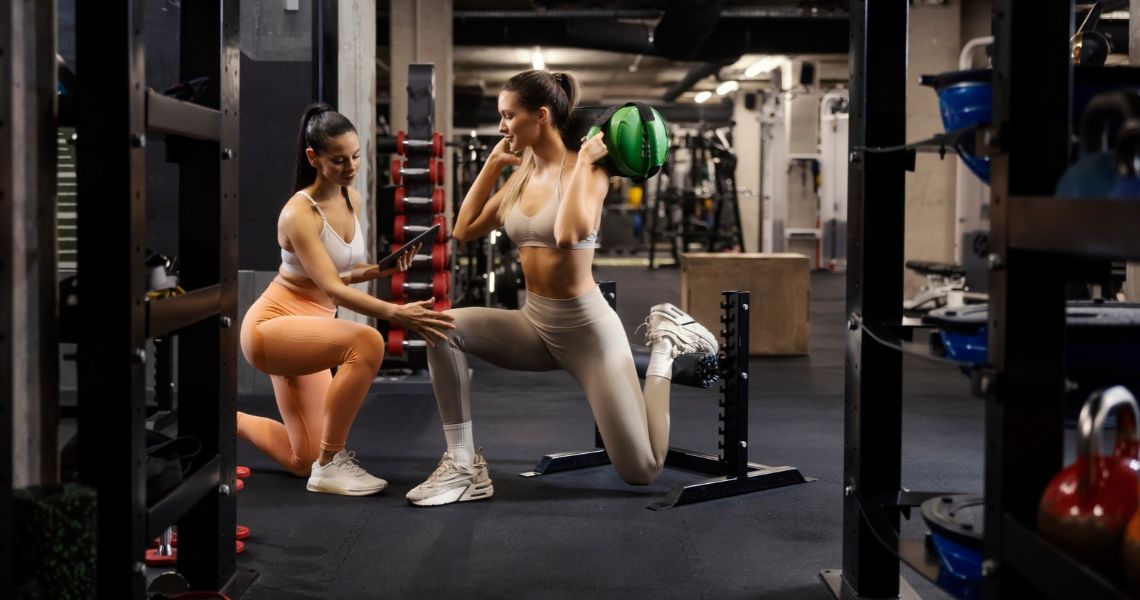
One of the most common mistakes is turning the rep into a race downwards, as lowering yourself too quickly can make it difficult to maintain a proper alignment of the knee, ankle and trunk.
You are also advised to avoid doing the following:
- Placing the forward foot too close or too far away without reaching a stable position.
- Letting your knee move inward during the descent.
- Pushing with the rear foot.
- Using more weight than a good technique can maintain.
- Seeking depth at any cost.
The simplest rule is also the most useful: if you lose control trying to complete a repetition, you have to lower the difficulty.
Complementary routine: the best exercises for glutes
The Bulgarian split squat can be part of a more complete session of glute exercises that combine movements focused on hip extension with others in which each leg is worked independently.
A simple routine for glute exercises can include, for example:
- Bulgarian split squat: 3 series of 8-12 repetitions per leg.
- Hip thrust: 3 series of 8-12.
- Squat: 2-3 series of 8-12.
- Romanian deadlift: 2-3 series of 8-12.
However, these figures are a guideline reference, not an immovable rule. The volume, load and number of repetitions must be adapted to each individual’s level and goal.
Post-workout nutrition: help your muscles to recover the healthy way
After training, muscles need nutrients. A meal that combines protein and carbohydrates, in addition to adequate hydration, will help recovery after exercise: proteins provide the necessary amino acids for muscle repair and carbohydrates help replenish glycogen stores. Yoghourt with fruit, eggs with wholemeal bread, legumes with cereals or a turkey sandwich are simple options that fit into a balanced diet.
As you can see, the Bulgarian split squat does not require a lot for it to become a great ally: a stable surface, a good technique and a little consistency can put your legs and glutes to work. If the stairs seem a little higher than usual the next day, you will know that the workout has done its job.
What do you think about?
Share comments, opinions and tricks with the Community