

Blackheads vs. sebaceous filaments: learn how to tell them apart and get rid of them
Do you know the difference between blackheads and sebaceous filaments? Find out why they appear on the nose and the best facial routine to get rid of them, with Consum.

Blackheads and serbaceous filaments look similar, but their origin and the way they should be cared for are different. Identifying them correctly is the first step towards improving the appearance of pores without irritating or damaging the skin.
What are blackheads and why are they dark?
Blackheads appear when a pore gets blocked with a mixture of sebum and dead skin cells. As the pore is open, this content comes into contact with the air and oxidises, taking on its characteristic dark colour.
They mainly appear on the areas of the face that produce more oil, such as the nose, forehead or chin. Excessive or overly aggressive cleansing will not make them disappear any faster. It can disrupt the skin's protective barrier, cause irritation and increase oil production as a defence mechanism.

Sebaceous filaments: the false nose blackheads
Sebaceous filaments are part of the skin's natural structure. Their function is to carry sebum from the sebaceous glands to the surface, helping to keep it protected and hydrated. That is why they are not a flaw or a problem linked to a lack of hygiene.
They appear as small, flat, greyish, whitish or yellowish spots. They tend to be concentrated on the nose, forehead and chin, and are distributed fairly evenly. If squeezed, a thin, waxy-looking substance may come out. However, the filaments always return, as they serve a necessary function. Trying to remove them permanently can only cause irritation, marks or skin damage.
How can you tell exactly what you have on your face?
It is worth looking at their appearance and distribution. Blackheads tend to be darker, more defined and irregular. Sebaceous filaments, on the other hand, are lighter, smaller and more uniform. Furthermore, a blackhead is a blocked pore, whereas a sebaceous filament is a natural structure that helps carry oil. It is not always possible to tell them apart with the naked eye.
Facial routine for deep pore cleansing
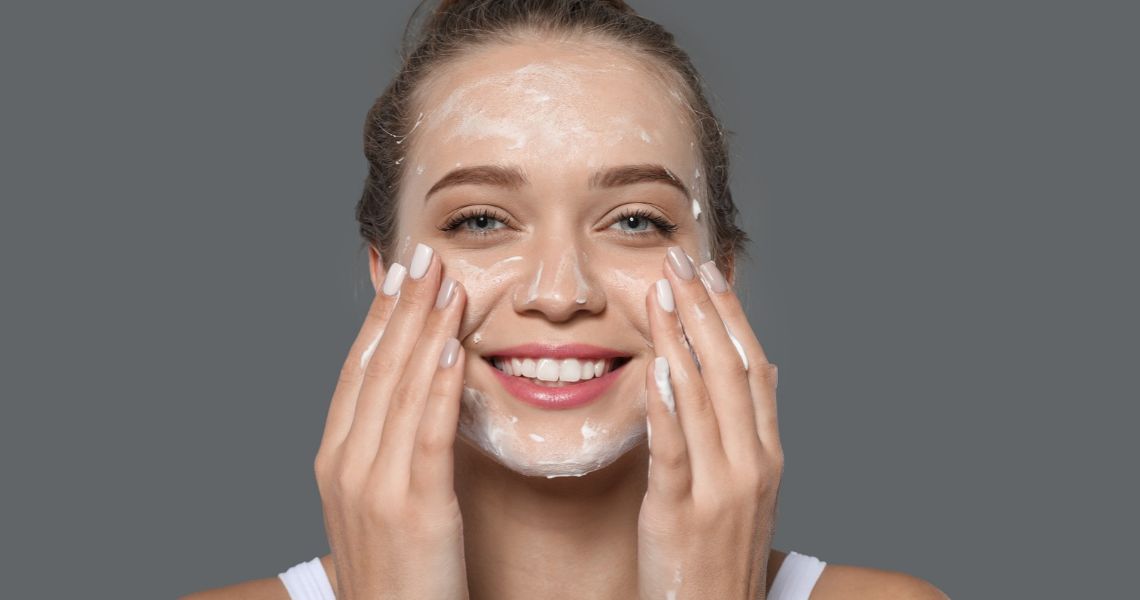
A consistent, gentle routine is more effective than any quick fix. In the morning, start with a mild cleanser suitable for your skin type. Then apply a light moisturiser and finish with sun cream.
At night, clean your face again to remove any excess oil and impurities that have built up during the day. If you have been wearing make-up or water-resistant sun cream, you can opt for double cleansing: first an oil-based cleanser, then a water-based one.
Moisturising is also important for oily skin. Skipping it can cause tightness and throw the skin barrier out of balance. Choose light, non-comedogenic formulas, meaning those that are designed not to encourage pore blockages.

Salicylic acid, a key ingredient
Salicylic acid is one of the most widely used ingredients for caring for skin with blocked pores and blackheads. It helps remove built-up dead skin cells and keep the pore clean.
It should be introduced gradually, following the product instructions and watching how your skin reacts. Using too much, or combining several exfoliants, can cause dryness, sensitivity and irritation. Consistency and moderation matter more than applying lots of products at the same time.
Home remedies that can damage the skin
Applying lemon, baking powder, alcohol or toothpaste to the face is not a safe alternative. Those remedies can disrupt the skin's natural balance and cause irritation, burns or marks.
It is also best to avoid squeezing pores with your nails, overusing adhesive strips or using exfoliants with very harsh particles. Although those products may give an immediate feeling of cleanliness, they do not address the root cause of the problem and can make the area more sensitive.
The goal should not be to achieve pore-free skin, since pores are part of its structure, but rather to keep it clean, balanced and healthy. If persistent, painful or inflamed lesions appear, it is best to consult a professional dermatologist.
Frequently asked questions
Do blackheads come back after you remove them? Yes. Even after you remove them, they can form again because the pore keeps producing oil naturally.
Why do I get more blackheads on my nose than on other areas of my face? Because it is an area with more sebaceous glands, which encourages oil to build up in the pores.
Is it a good idea to squeeze blackheads at home? It is generally not advisable, as it can irritate the skin or leave marks if not done properly.
Do nose strips actually work? Yes, they help remove surface impurities, but they should only be used on an occasional basis, and they do not stop blackheads coming back.
When should you see a dermatologist? If blackheads are persistent, appear alongside other types of acne, cause inflammation or do not improve with a suitable skincare routine, it is advisable to see a dermatologist. It is also worth consulting a specialist if there is any doubt about the diagnosis, or if you are looking for more specific, personalised treatment for your skin type.
What do you think about?
Share comments, opinions and tricks with the Community