

How cycling improves your physical and mental health
Discover how cycling improves your physical and mental health. Learn about its main benefits, advice on getting started and reasons for practicing this sport.

Cycling is much more than just a sport or a means of transport: it is a powerful tool for looking after both your body and mind. Each turn of the pedals provides benefits for your physical health, reducing stress and helping to build sustainable habits. In an ever increasingly frantic world, getting on your bike becomes an accessible act of healthy and environmentally-friendly self-care. Let’s explore why cycling can transform your wellbeing from the inside out.
Advantages of cycling for your physical health
The benefits of cycling for your physical health are well documented. Regular pedalling strengthens the cardiovascular system: it raises the heart rate, improves circulation and lowers blood pressure, which helps to reduce the risk of disorders such as heart disease.
As a low-impact activity, it also protects joints, such as the knees and ankles, while it works on muscle groups like the legs, glutes, the core and lower back. With regular practice, it also helps with weight management (efficiently burning calories) and, due to its aerobic nature, it improves lung capacity.
The benefits of cycling are also clear from a mental health perspective. For example, it releases endorphins which help to reduce stress and anxiety. It has also been shown to improve concentration and cognitive function, as regular pedalling promotes blood flow to the brain, which enhances memory and creativity. Many studies also show that sleep quality is improved in those who cycle for exercise.
Economic and environmental benefits of cycling
Apart from health, cycling also offers significant economic and environmental advantages. On the one hand, it is an extremely economical means of transport: cycle maintenance costs are very low when compared to cars or public transport.
In environmental terms, cycling is a major ally: choosing a bike for daily commuting reduces pollutant emissions and contributes to more sustainable mobility. This not only makes the cyclist someone who is committed to their own wellbeing, but also an active agent in the fight against climate change. Cycling and environmentalism go hand in hand.
Types of cycling: modalities and styles
When we talk about types of cycling, there isn’t just one type of bicycle or only one way to pedal. Among the main modalities you will find:
- Urban or commuter cycling, ideal for everyday journeys: riding a bike to work or to run errands is a practical way of including exercise in your routine.
- Road cycling with lightweight bikes designed for long-distance and speed: perfect for those seeking a challenge, endurance and intense cardiovascular exercise.
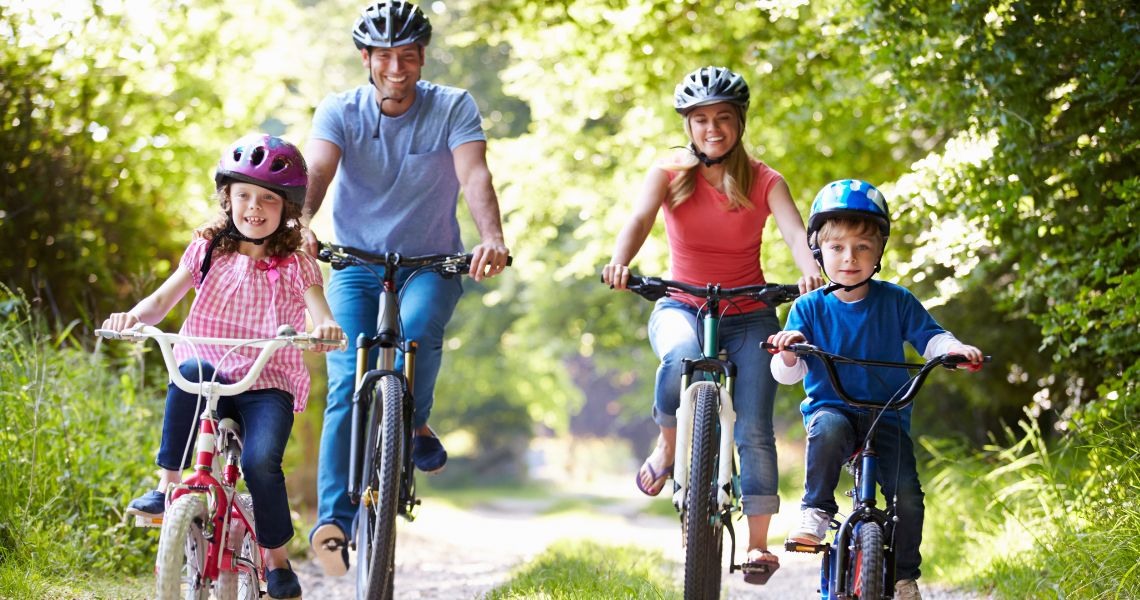
- Family cycling: bicycles adapted for children, tandems or trailers designed so that all the family can ride together.
Each modality allows cycling to be adapted to your interests, physical condition and lifestyle, whether for training, leisure or as sustainable transport.
As for the bicycle, there are also different types:
- Mountain bike (MTB): for mountain or trail adventures, it offers extra technical capabilities and a connection with nature.
- Electric bike (e-bike): makes it easier to climb hills or cover long distances, which makes it a very accessible option.
- Cruiser or urban bike: comfortable, ideal for relaxed rides and for enjoying your surroundings without rushing.
If you are thinking about starting to cycle, the key is to start gradually. Cycling experts recommend choosing a bike that is properly adjusted to your size, to begin with short, flat routes and to progressively increase the distance to avoid injuries. Planning trips in safe areas or using bike lanes, particularly during the first few weeks, also helps to build up your confidence.
Why cycling is ideal for all the family
Family cycling is a fun and healthy way to spend time together, and it promotes active habits from an early age. A bike trip with children not only strengthens family bonds but also transmits value such as perseverance and cooperation.
Also, cycling doesn’t require high-impact effort, which makes it safe and suitable for people of different ages and physical abilities: children can grow up pedalling, adults can stay in shape, and older adults can enjoy a form of exercise that is gentle on the joints. As we have seen, with options like adapted bike, trailers or tandems, the whole family can take part without giving up on fun or wellbeing.
In short, cycling is not just an exercise: it’s a way of life that combines physical health, mental wellbeing, sustainability and affordability. Because of its many advantages, it can fit into the everyday life of different profiles: from families looking for some active trips to those who want to get around the town without having to rely on the car.
Put on our helmet and… start pedalling!
What do you think about?
Share comments, opinions and tricks with the Community