

Care for your body this summer: 3 anti-inflammatory recipes
Discover a summer anti-inflammatory menu with three fresh and light meals made with seasonal foods that help to reduce inflammation.

Today, it is common to hear the word inflammation to refer to a sensation of fullness or heaviness or a visible increase in the size of the abdomen. This inflammation is caused by the accumulation of gases in the digestive tract, often due to the action of the microbiota or to the ingestion of air. It is generally a functional and temporary process. Although it may be uncomfortable, this phenomenon does not correspond to inflammation in the medical sense of the term.
Real inflammation is a natural response from the immune system. It occurs when the body detects an infection, an injury or an agent that may be harmful. In these cases, the body sets various mechanisms in motion to repair the affected tissue and eliminate the problem. This response is usually temporary and disappears when the cause is resolved.
However, various scientific studies have shown that there can also be another type of quieter inflammation: The so-called “chronic low-grade inflammation”. Unlike acute inflammation, it is active for long periods of time, even for years, without producing obvious symptoms. Although not always directly perceived, this inflammatory state has been linked to many of the most common diseases of the present day, such as type 2 diabetes, obesity or cardiovascular diseases.

Other lifestyle factors that influence the inflammatory state of the body:
- Chronic stress: this can alter the regulation of the immune system and affect both the microbiota and metabolic processes.
- Lack of sleep.
- Sedentary lifestyle.
Moderate and regular physical exercise, such as walking, swimming, cycling or strength exercises, contributes to improving insulin sensitivity, promotes the balance of the gut microbiota and helps reduce certain inflammatory markers.
Discover our anti-inflammation menu with easy and tasty recipes that promote your well-being. Delicious options so you feel less inflamed every day.
Salad of avocado, edamame, quinoa and roasted tomato
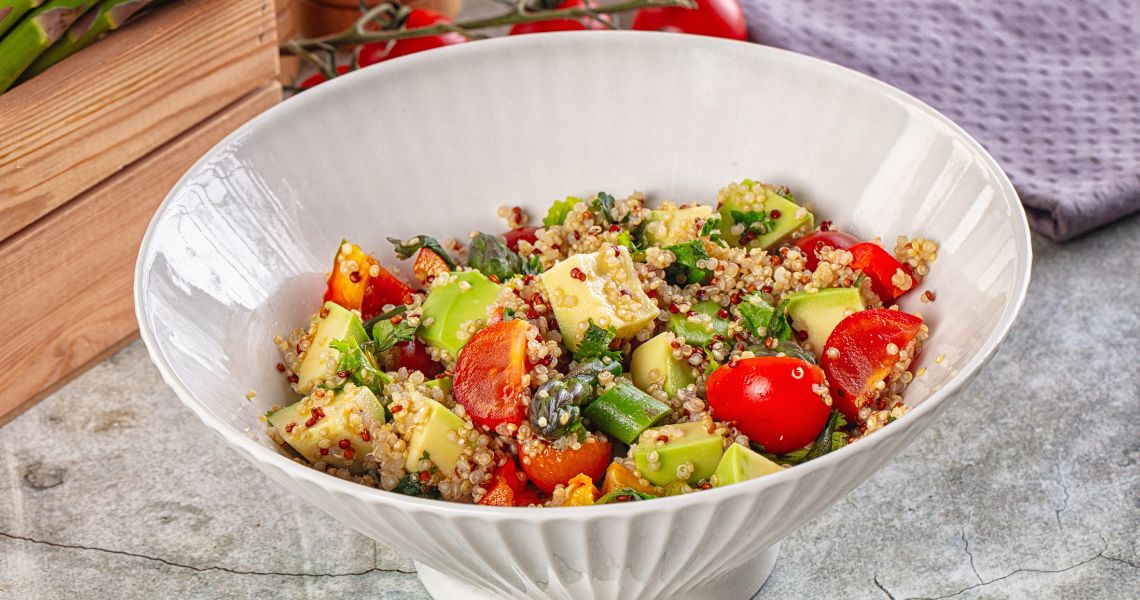
Time: 30 minutes
Ingredients (4 persons):
- 300 g cherry tomatoes
- 200 g ripe avocado, cut into slices
- 150 g fresh or frozen edamame
- 100 g uncooked quinoa
- 40 ml virgin olive oil
- 2 teaspoons chopped dill leaves
- 1 teaspoon poppy seeds
- ½ teaspoon of sea salt
Preparation:
- Preheat the oven to 180 ºC. Spread the tomatoes out on an oven tray and spray them with the oil. Season them and cook them for 8-10 minutes until the skin opens up.
- Meanwhile, prepare the quinoa. Bring 200 ml of salted water to the boil, add the quinoa, cook it for 12 minutes and, halfway through the cooking, add the edamame. Drain it and place it in a large bowl.
- Carefully use a spoon to add most of the hot tomatoes. Add the avocado and dill. Sprinkle with salt.
- Serve the warm salad in a large bowl with tomatoes and poppy seeds on top.
Energy: 260 kcal
Carbohydrates: 28.08 g
Proteins: 3.91 g
Fats: 14.63 g
Mono. F.: 10.4 g
Poly. F.: 1.6 g
Saturated F.: 2.24 g
Cholesterol: 0 mg
Fibre: 2.5 g
Simple sugars: 4.75 g
Roasted carrots, lentils and feta cheese
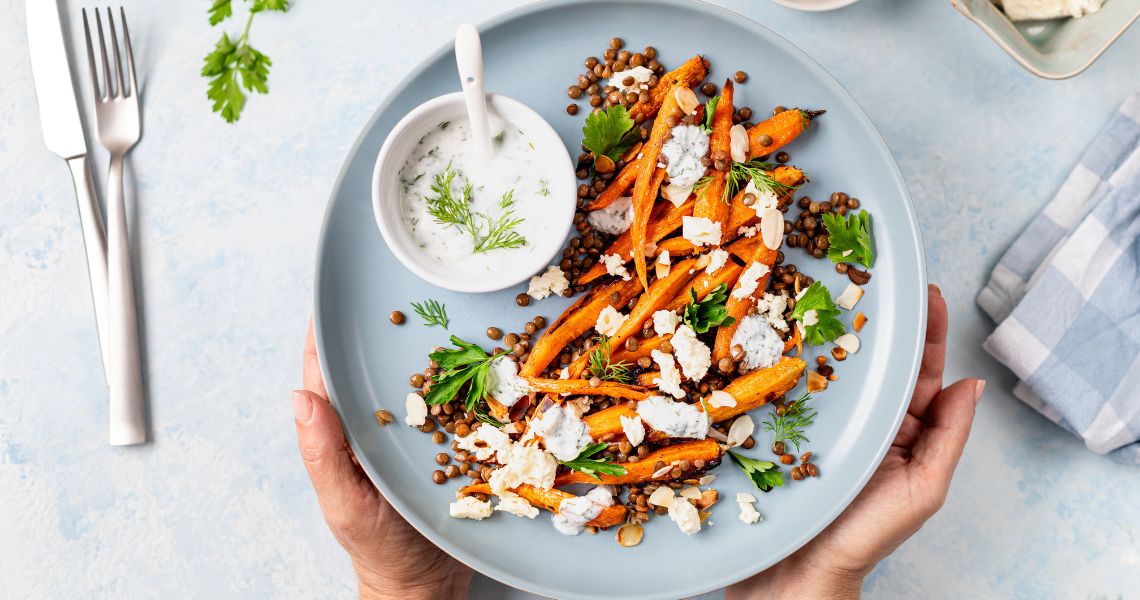
Time: 40 minutes
Ingredients (4 persons):
- 400 g tinned cooked lentils, drained
- 300 g clean and rinsed carrots, cut into strips of 4-5 cm diagonally
- 300 g baby carrots, clean and rinsed
- 200 g of feta cheese, crumbled into large pieces
- 40 ml virgin olive oil
- Juice of ½ lemon
- 4 tablespoons of chopped coriander leaves
- 1 teaspoon coriander seeds
- 1 teaspoon cumin seeds
- 1 handful of thyme
- Salt and freshly ground black pepper
Preparation:
- Preheat the oven to 180 ºC. Place the carrots, half the oil, the coriander and cumin seeds and thyme in a large oven dish.
Slice it and bake it for 15 minutes. - Remove the dish from the oven and distribute the pieces of feta cheese over the carrots. Spray it with a little more oil and add more pepper. Put the tray back in the oven and bake for another 20-25 minutes, or until the carrots are brown and the cheese is soft.
- Towards the end of cooking, heat the lentils in a small saucepan over a moderate heat. Add the rest of the oil, lemon juice and coriander. Season to taste.
- Place the lentils on a serving plate and distribute over the carrots and feta cheese.
Energy: 560 kcal
Carbohydrates: 63.7 g
Proteins: 31.5 g
Fats: 20 g
Mono. F.: 8.9 g
Poly. F.: 2.3 g
Saturated F.: 7.2 g
Cholesterol: 25 mg
Fibre: 15.3 g
Simple sugars: 11.2 g
Crumble de ciruela al tomillo
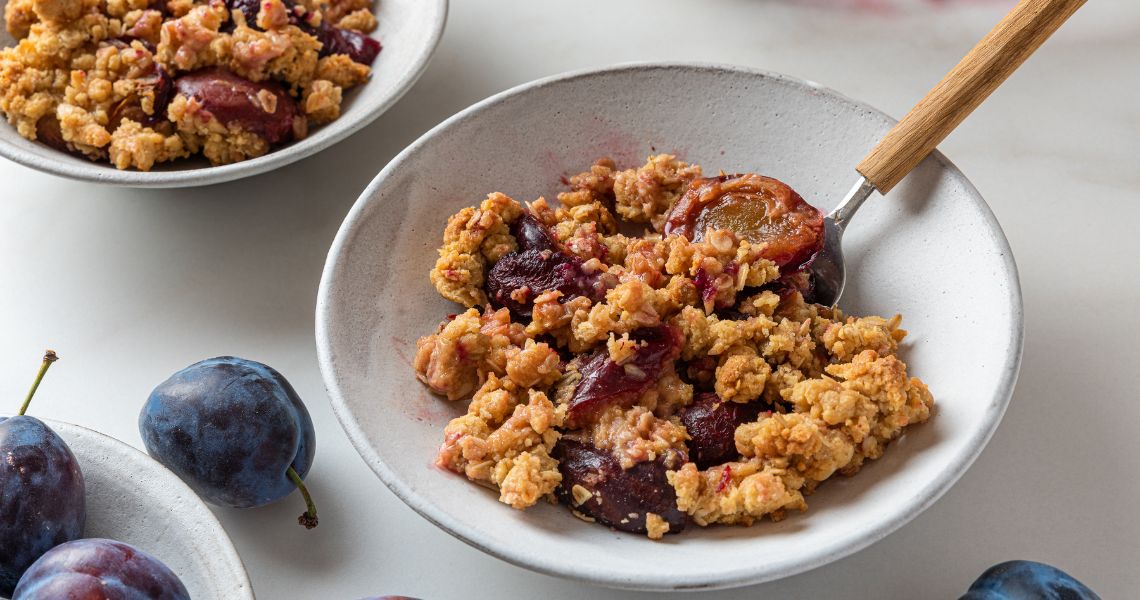
Tiempo: 40 minutos
Ingredientes: (4 personas)
- 600 g de ciruelas
- 150 g de pan especiado
- 30 g de azúcar de coco
- 10 g de mantequilla
- 30 cl de agua
- 2 o 3 ramitas de tomillo
- 3 pizcas de cardamomo
- 3 pizcas de pimienta
- 1 palo de regaliz
- 1 lima en zumo
Preparación:
- Lleva a ebullición a fuego lento el palo de regaliz en agua durante 10 minutos y, a continuación, retíralo. Deberás obtener una infusión de 15 a 20 cc.
- Enciende el horno a 180 ºC. Selecciona y lava las ciruelas. Sécalas. Desmenuza el tomillo.
- Unta con mantequilla una bandeja para tarta de porcelana de unos 23 cm de diámetro. Distribuye las ciruelas en ella. Reparte el tomillo, las especias, el azúcar de coco, el zumo de la lima y la infusión de regaliz.
- Mientras tanto, pasa el pan de especias por la batidora hasta obtener una sémola.
- Retira el molde del horno, enciende el grill y extiende la sémola sobre la fruta. Coloca la mantequilla en láminas finas y hornéalo hasta que se dore.
Energía: 193 kcal
Hidratos de carbono: 38 g
Proteínas: 3,6 g
Grasas: 3 g
G. mono: 0,7 g
G. poli: 0,25 g
G. saturadas: 1,4 g
Colesterol: 7 mg
Fibra: 5,65 g
Azúcares simples: 21,6 g
What do you think about?
Share comments, opinions and tricks with the Community