
Alcohol-free beer and pregnancy
Is alcohol-free beer safe during pregnancy? We explain if it is safe so there is no risk for your baby, and which 0.0 beers you can choose safely.

Many questions are raised during pregnancy about which foods and drinks can still be part of your routine and which are best cut out altogether. One of the most common questions is whether alcohol-free beer and pregnancy are compatible, or whether there is also some risk for the baby.
The answer is not as straightforward as it might seem. Although for years it was thought that some alcohol-free beers could be drunk with complete peace of mind, current recommendations are much clearer: during pregnancy, the safest option is to avoid any drink that might contain alcohol, even if it is only in very small amounts.
Is alcohol-free beer safe during pregnancy?
The short answer is no. Not all beers labelled “alcohol-free” are exactly the same. Some may contain small residual amounts of alcohol, while others contain none at all.
Precisely because of this distinction, the Ministry of Health recommends avoiding both “alcohol-free” and 0.0 beers during pregnancy, and rather to choose drinks that leave no doubt whatsoever about their alcohol content. It is worth remembering that alcohol can be very harmful for babies, as it quickly crosses through the placenta and reaches the foetus, whose body does not yet have the mechanisms needed to metabolise it properly. Consequently, health authorities insist that you should not drink any alcohol at all during pregnancy.
The difference between “alcohol-free” beer and 0.0 beer
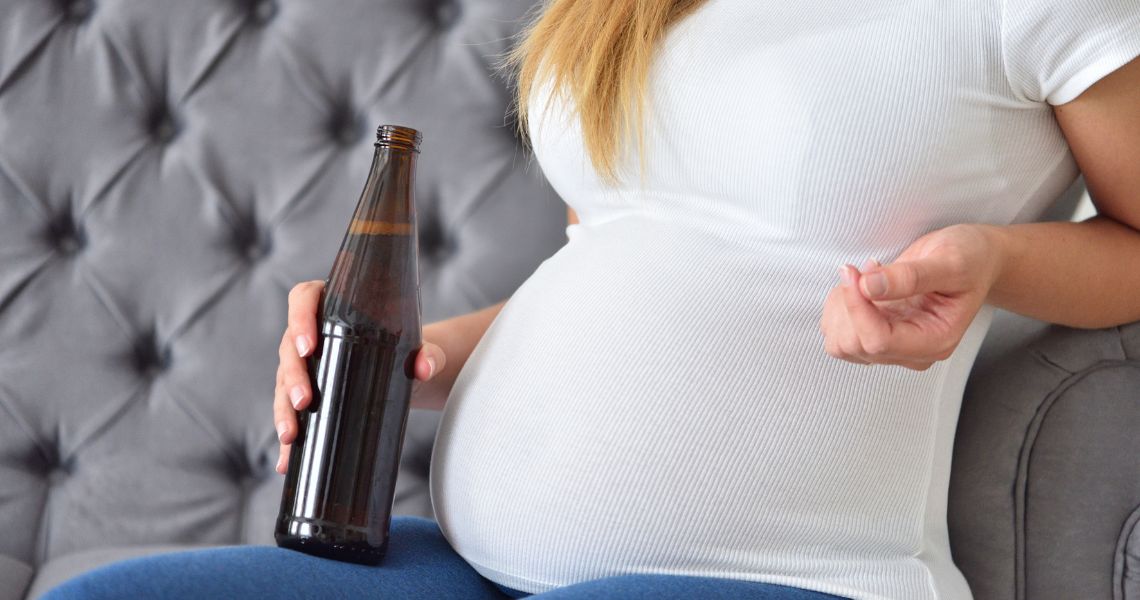
It is common to think that these two terms are one and the same, but that is not the case. “Alcohol-free” beer may contain a small amount of alcohol, as legislation allows drinks with a very low alcohol content to be sold under this name. 0.0 beer, on the other hand, is brewed so that its alcohol content is virtually non-existent, through specific dealcoholisation processes applied to fermentation, although the Ministry of Health warns that it could still contain up to 0.04%, as the said processes are not one-hundred percent perfect.
So, while a 0.0 beer affords greater guarantees than an “alcohol-free” beer, the official recommendation remains the same: it is better to choose other, safer drinks.
Benefits of alcohol-free beer during pregnancy
For years it was stressed that alcohol-free beer was a source of B vitamins, along with some minerals and small amounts of folic acid from the malt and yeast. It has also been noted that it tends to have fewer calories than a conventional beer, and it is often considered a refreshing drink, especially in summer.
However, these possible nutritional contributions are fairly negligible and do not justify its consumption during pregnancy, since all those nutrients can easily be obtained through a balanced diet and, if necessary, supplements prescribed by a healthcare professional.
In addition, the main priority during pregnancy remains minimising any exposure to alcohol, however small. For this reason, public health bodies insist that there are more advisable alternatives, such as water, herbal teas suitable for pregnancy, or soft drinks that are alcohol-free and low in sugar.
Recommended alcohol-free beers for pregnant women
If you do occasionally choose an alcohol-free beer, experts advise checking the label carefully and making sure it is a 0.0 beer, since, as we have seen, this offers greater guarantees than “alcohol-free” beer. There are many options available on the market: 0.0 lager; 0.0.0 beer for coeliacs; 0.0.0 toasted beer; 0.0 radler beer; 0.0% toasted beer, 0.0 unfiltered beer; or probiotic toasted beer.
Ultimately, when we talk about alcohol-free beer and pregnancy, the message from health experts is clear: the safest way to protect your baby is to avoid alcohol consumption completely throughout pregnancy. If you have any specific questions about food or permitted drinks, it is best to consult the appropriate healthcare expert, who will be able to provide more personalised guidance.
What do you think about?
Share comments, opinions and tricks with the Community



La cerveza SIN tiene alcohol (poco, pero tiene).
La cerveza SIN tiene alcohol (poco, pero tiene).