
Preventing and treating head lice: practical tips for parents in difficulty
Dealing with lice can be a stressful experience, but with the right care and measures it is possible to eliminate the problem and prevent future 'occupations'. The key is to be constant and careful in the application of treatments and, above all, to remain calm.

What are lice and how do they spread??
Head lice are small insects that live on the scalp and feed on blood. They measure between 2 and 3 mm and usually spread quickly by direct contact between heads, a common occurrence in schools, kindergartens and during group activities. They can't fly or jump, so transmission occurs when heads are close. Head lice can live up to 30 days on the scalp. Outside the scalp they die within 1 to 2 days, as they depend on blood to survive.
How to prevent lice
- Do not share personal items: prevent them from sharing combs, brushes, caps, headbands, towels, or helmets. While transmission of lice through objects is less common, it is still a possible source of contagion.
- Updos: Wearing your hair in plaits or ponytails can help reduce exposure to lice.
- Periodic checks: check the child’s head once a week at home. Look behind the ears and at the nape of the neck, where lice or nits are most common.
- Avoid overuse of preventive products: Although there are products that promise to prevent lice, their effectiveness is not always guaranteed and, in some cases, their excessive use can cause irritation to the scalp.
Treatment of lice
1. Use an anti-lice treatment
There are several types of lice removal products, including anti-lice shampoos and lotions. It is advisable to choose approved products that are specific for children. Follow the application instructions to the letter and avoid using more than is recommended. Excess can irritate the scalp without being more effective.
2. Remove the nits
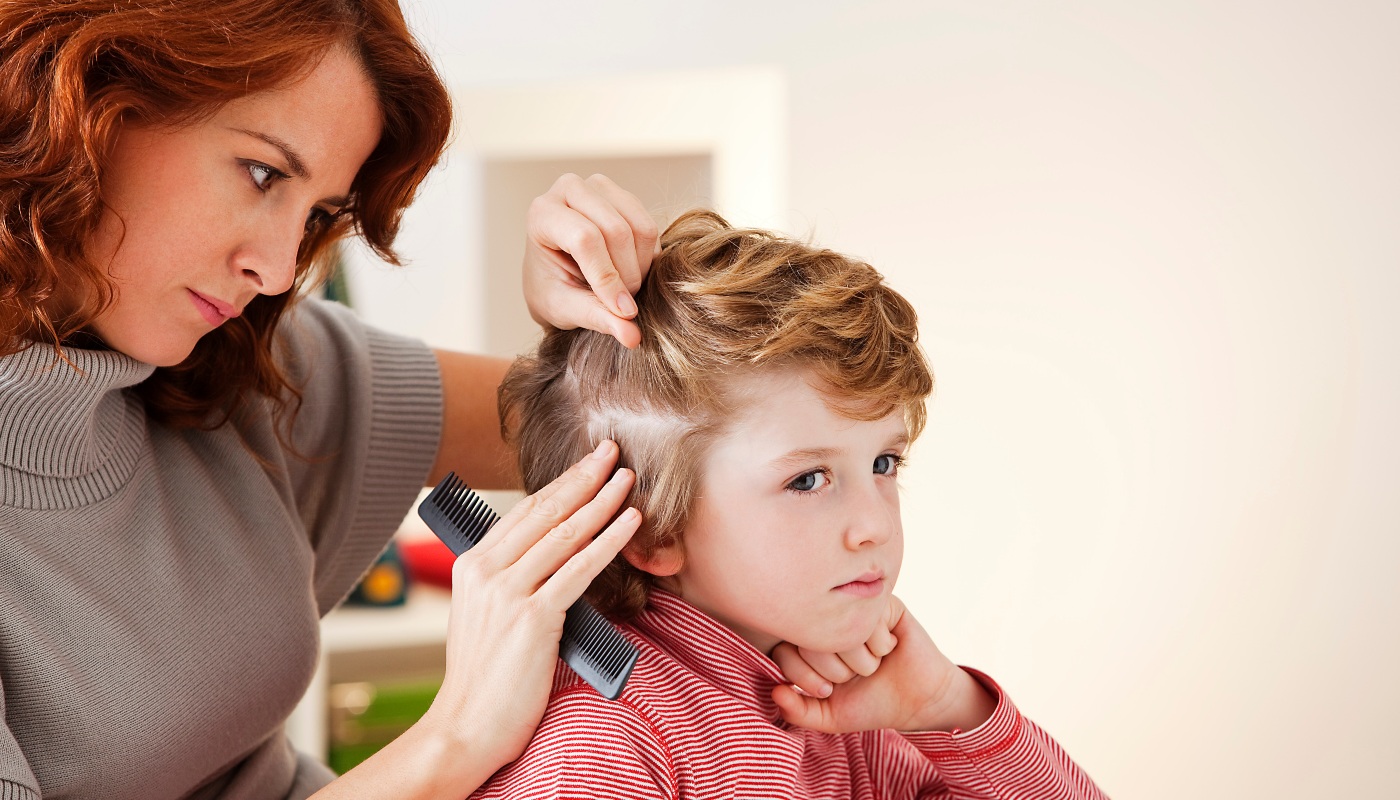
The nit comb is essential to remove the nits. After applying the treatment, separate the hair into sections and run the nit comb from root to tip to ensure that there is little residue. Doing this in a well-lit spot can help you spot lice and nits more easily.
3. Repeat the treatment as directed
Most treatments require a second application 7 to 10 days after the first. This helps to eliminate any lice that may have hatched after the first application.
4. Wash clothes, bedding, and accessories
Although lice survive for a short time outside the scalp, It is advisable to wash bedding, caps, towels, stuffed animals and any object that has been in contact with the child's head. Use hot water (over 60°C) for effectiveness.
5. Use complementary natural methods
Essential oils such as tea tree, lavender or eucalyptus oil are commonly used as a complementary aid. These oils have mild insecticidal properties and can be used diluted in water. Their effectiveness is limited and they work well as a supplement.
Common myths about head lice
- Animals do not spread lice: They only live in humans, so there's no need to worry about pets in the house.
- Personal hygiene has no influence: it has nothing to do with personal hygiene. They can thrive in both clean and dirty hair.
- Vinegar is not an effective treatment: it is not proven to be effective in eliminating them.
What do you think about?
Share comments, opinions and tricks with the Community