

Tips for winter skincare
Discover how to protect and hydrate your skin in winter and learn how to keep it healthy against the cold

How to protect your skin from the cold?
Knowing all the effects that cold can have on our skin, it’s time to take precautionary measures. That’s why there are several key points to consider in order to protect it this winter.
Protecting from the nose to the chin: It’s essential to protect these areas of the face, which are particularly affected by the cold. The best option for doing so is cotton clothing, as this fabric is less irritating to the skin than others, such as wool.
Moisturise your hands and lips twice a day: It’s essential in our daily routine to prevent these areas from drying out and suffering further.
Avoiding very hot showers and moisturising the body: This helps prevent skin dryness, increased itching and even the onset of dermatitis. Therefore, in winter, the best way to take care of your skin is to opt for warm showers.
Protect yourself from the winter sun: although it may not seem like it, the winter sun can also damage the skin, which is why it’s important to protect it on a daily basis. The UVB rays from the sun can burn and damage the skin throughout the year, especially at high altitudes and on reflective
surfaces such as snow or ice, where the sun’s ultraviolet light is reflected. Sunscreens are therefore also recommended.
Follow a healthy diet: last but not least, take good care of your diet. It’s recommended to eliminate foods that deplete the vitamins and minerals necessary for cellular renewal. Dairy products, flours and refined sugars, trans fats or processed foods.
How to moisturise skin in winter step-by-step
Deep hydration: In particular, deep moisturise the complexion. It is recommended to use a moisturising cream rich in ingredients such as hyaluronic acid, glycerine, shea butter and ceramides, and to apply it after bathing. It is also important to moisturise the lips and hands.
Constant sunscreen: It’s advisable to use a sunscreen with a sun protection factor of at least 30 on all sun-exposed areas, including the face, and repeat the process throughout the day as often as necessary.
Gentle cleansingless often: Harsh cleansers can strip away the natural oils that protect the skin, leading to increased become more pronounced. For this reason,mild, sulphate-free cleansers should be used.
Use of moisturisers emollients in the bath: Hot baths can dry out the skin, so it’s recommended to add these products to the water to keep your skin hydrated.
Additional for hans and lips: Apply a nourishing and protective hand cream after washing your hands, as well as lip balms containing ingredients such as shea butter, beeswax and natural oils to prevent chapped lips.
What happens to the skin in winter?
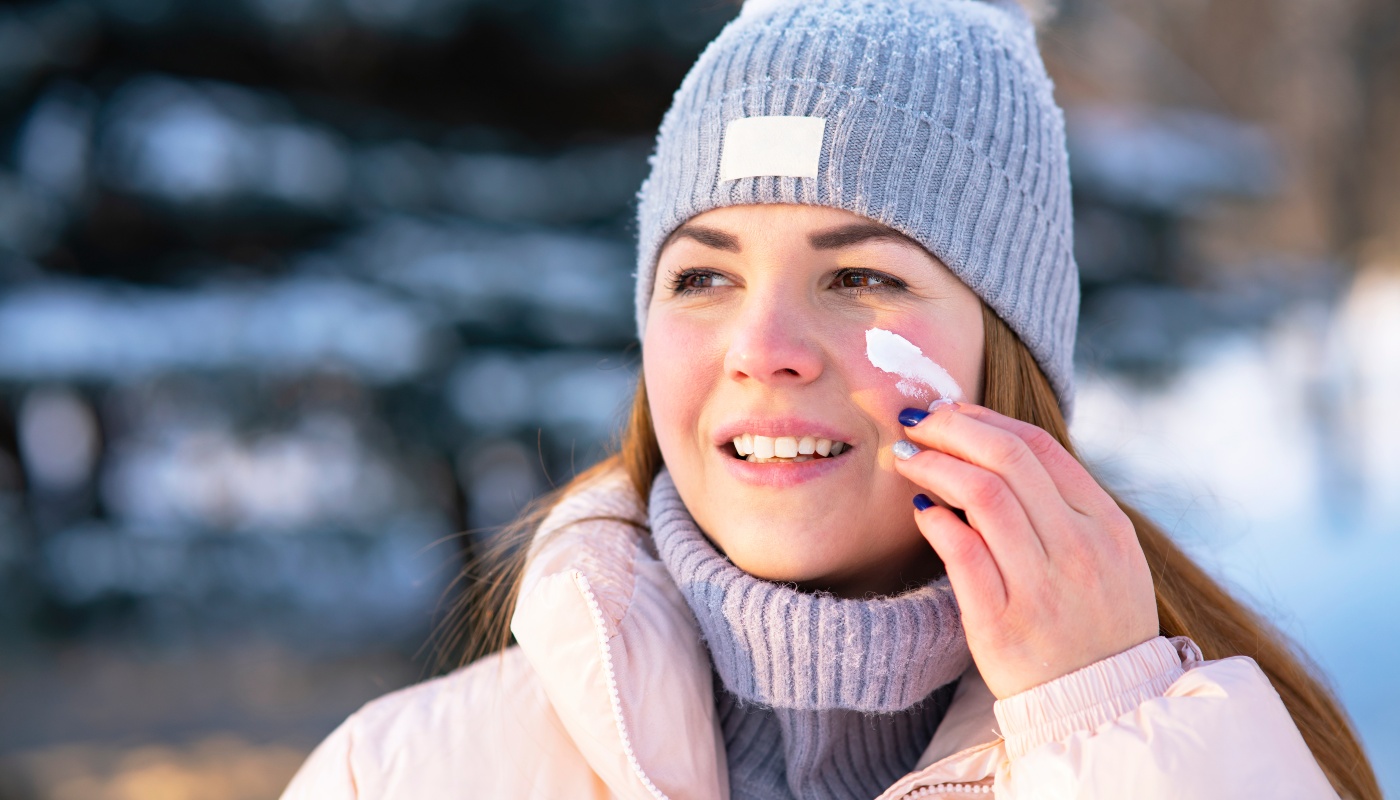
With the arrival of this season, a series of changes in our environment occur that have a significant impact on our skin. Now that temperatures are dropping and the air is becoming drier, our skin often experiences dryness, flaking and redness. In addition, it tends to become thinner, tighter, dull and lack luster, with barely visible pores and prone to cracking, all as a result of the low temperatures.
- Capillary vessels constrict: cold causes vasoconstriction in the capillaries of the skin, which are decreases blood flow, which causes insufficient oxygen and nutrients to reach the dermis.
- The cell renewal cycle is delayed: compared to other times of the year, a greater number of dead cells accumulate, preventing the skin's natural sebum secretion from reaching the surface to lubricate and nourish the epidermis, leaving the skin dry and sensitive. Ultimately, this leads to a feeling of discomfort.
- Redness and sensitivity: Extreme cold can cause redness in the skin, especially on the cheeks and nose. Additionally, the skin may become more sensitive and prone to irritation.
What do you think about?
Share comments, opinions and tricks with the Community