

Seasonal mushrooms and where to find them
Discover the best seasonal mushrooms in Spain. Learn when and where to find them

When does the mushroom season begin and end?
The mushroom season in Spain varies depending on the climatic conditions of each region, but typically, the appearance of the first mushrooms coincides with the first autumn rains. In higher altitude or wetter areas, such as the Pyrenees or the Cantabrian coast, it’s possible to find mushrooms as early as late August, provided there has been enough rainfall.
Temperature also plays an important role in the appearance of mushrooms. In some areas, particularly in warmer regions or with favourable microclimates, the season can extend into January or even February.
When do mushrooms come out?
Generally, after a week of rain, if the
temperatures remain around 10-20 ºC, the first mushrooms begin to appear. It’s important to remember, however, that not all species appear at the same time. For example, boletus and chanterelles are usually among the first to appear, while other species, such as oyster mushrooms, may appear later.
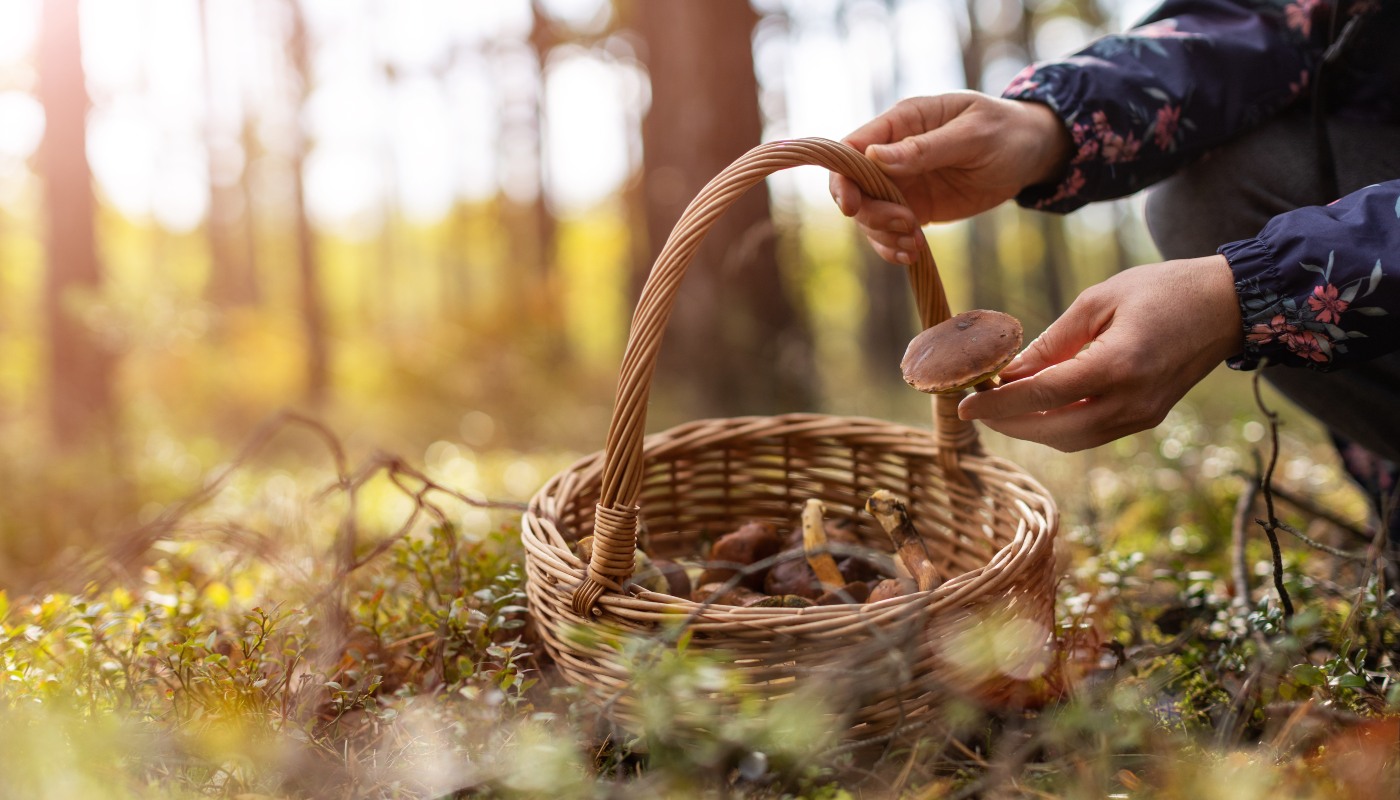
Where to find mushrooms in Spain? Best places
Spain boasts a great diversity of environments ideal for mushroom picking, thanks to the country’s rich climatic and geographical variety. Here, we’ll tell you about the most popular locations and the mushroom species commonly found there.
- Basque Country: known for its rich mycological tradition, this territory offers mixed forests where Boletus edulis and oyster mushrooms abound. One of the most special places in this area is the Gorbeia Natural Park.
- Navarre: if you are looking for a unique experience, we recommend a visit to the Ultzama mycological park. Here you can pick one of the most beloved mushrooms, the Amanita caesarea, also known as the king’s egg.
- Sierra de Madrid: the pine and holm oak forests of the Community of Madrid, especially those found in the Sierra de Guadarrama, are an excellent place for collecting mushrooms. The níscalo, also known as robellón or rebollón, the Boletus edulis, and the cardoon mushroom are the most famous species in the area.
- Andalusia: the Sierra de Aracena in Huelva is home to a wide variety of mushrooms, including oyster mushrooms and boletus. Sierra Nevada is also a good place to collect a variety of species.
- Catalonia: in the region of El Berguedà, also known as the ‘capital of chanterelles’, mushrooms are a real treasure. Other areas of great abundance of mushrooms in Catalonia are the natural park of Montseny and the Montnegre and Corredor. In addition to níscalo, in this community, you can find chanterelles and the famous horn of plenty – some of the tastiest mushrooms.
- Teruel: the Sierra de Albarracín is perfect for mycology enthusiasts. Here, you will be able to find a wide variety of mushrooms, such as níscalos, aceiteros and cardoon mushrooms. All of them delicious and perfect for a risotto.
Seasonal mushrooms in December
December may seem late for mushroom foraging,
but in many regions, it’s still possible to find a wide variety of species. Among the most common mushrooms in December are:
- The níscalo: one of the most prized mushrooms in Spanish cuisine, is highly resistant to cold and can be found in pine forests until the end of the year.
- The seta de cardo: this mushroom, which grows in grasslands and farmland, continues to appear even in winter under favourable conditions.
- The horn of plenty: despite its name, this dark-coloured mushroom is a culinary delight and is found in damp forests throughout the autumn and winter.
- The black truffle: although not technically a mushroom, the black truffle is an underground fungus harvested primarily in December and January, especially in the regions of Aragón and Castilla y León.
What do you think about?
Share comments, opinions and tricks with the Community