

How to clean old and antique books step by step
Learn how to clean old, antique or mouldy books step by step: remove dust, treat yellow stains and care for leather, fabric and other covers.

Some books that more than just books; copies we have kept since childhood, editions we have inherited or volumes we are particularly fond of. Over the years however, dust, damp or the natural ageing of the paper leave an inevitable mark that can threaten to erase that bond. That is why knowing how to clean old books is key to keeping them in good condition for a long time. Let’s see how to do it!
Why it is important to clean books
Regular cleaning helps remove dust and other residue that, over time, can contribute to the deterioration of the paper and covers. When we talk about how to clean books, we are not talking about something that is purely aesthetic. Dust can accumulate particles that stain the materials and can also encourage problems such as mould.
Humidity, light and temperature also need to be observed. An overly damp environment also encourages mould growth and can warp books. Prolonged exposure to strong light, on the other hand, speeds up the deterioration of certain materials and fades covers.
Safe materials for cleaning books without damaging the paper or covers
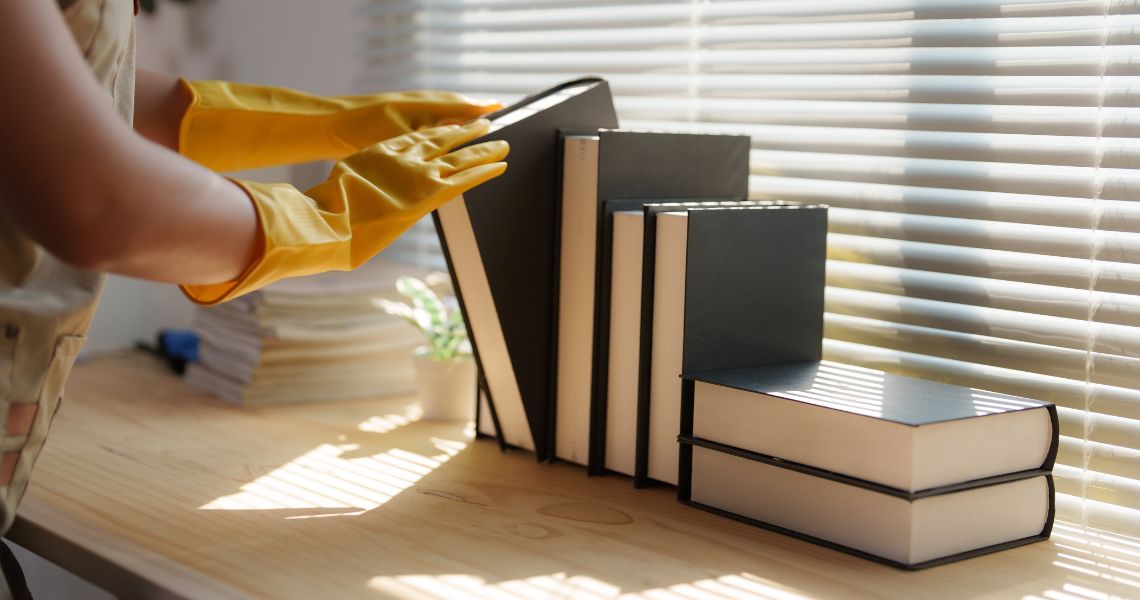
For basic household cleaning, less is more. It is best to have the following at hand:
- A clean brush with soft bristles.
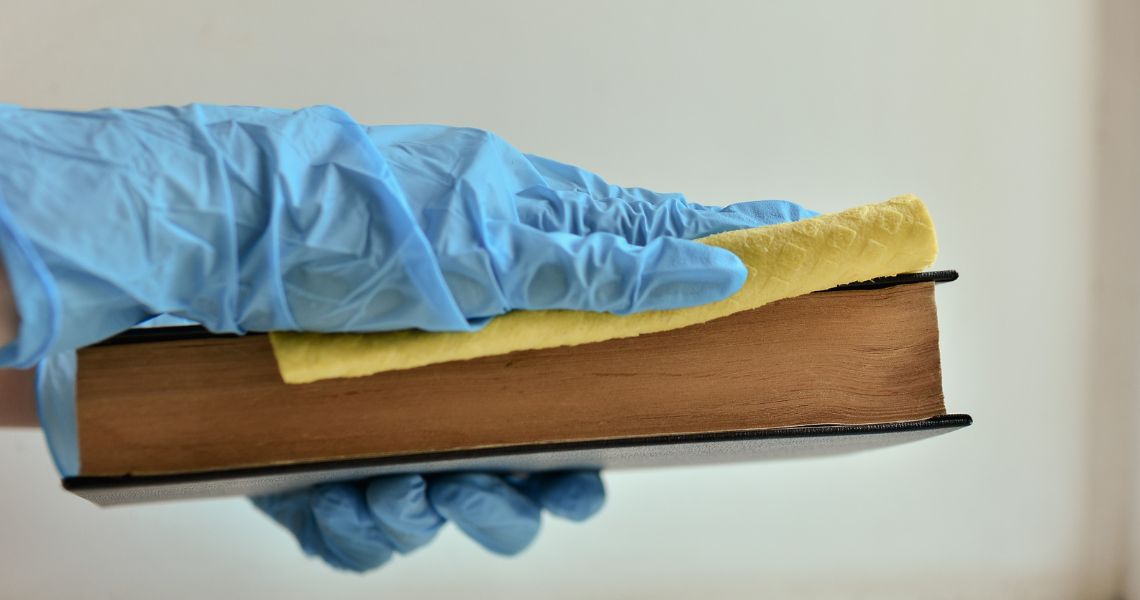
- A microfibre cloth, clean and dry, for certain covers.
- A magnetic feather duster, free from fragrances or chemicals.
- A vacuum cleaner with a soft brush attachment and adjustable power, for removing dust in a controlled manner.
Avoid household cleaning products, alcohol, bleach and homemade solutions on paper. Applying oils or waxes to leather bindings is not a good idea either: this is no longer considered good practice for preserving leather-bound books.
How to clean old and antique books
Before you start, examine the book. Check for loose pages, brittle paper, damp stains, insects or signs of mould. If it is an antique, rare book, or one with significant financial or sentimental value, it is worth taking extra care, as aggressive cleaning can cause irreversible damage.
The basic rule for cleaning antique books is simple: work dry, with gentle movements, and without forcing the binding. Place the book on a clean, stable surface and handle it with clean hands; gloves are not always recommended for turning pages, as they reduce your sense of touch and can increase the risk of snagging or tearing.
Only open the book as far as its binding allows and remove surface dirt little by little. Do not try to scrape off stains or peel off stuck-on labels. For a particularly valuable copy, the wisest course of action is to stop and consult a professional book restorer.
How to remove dust from books
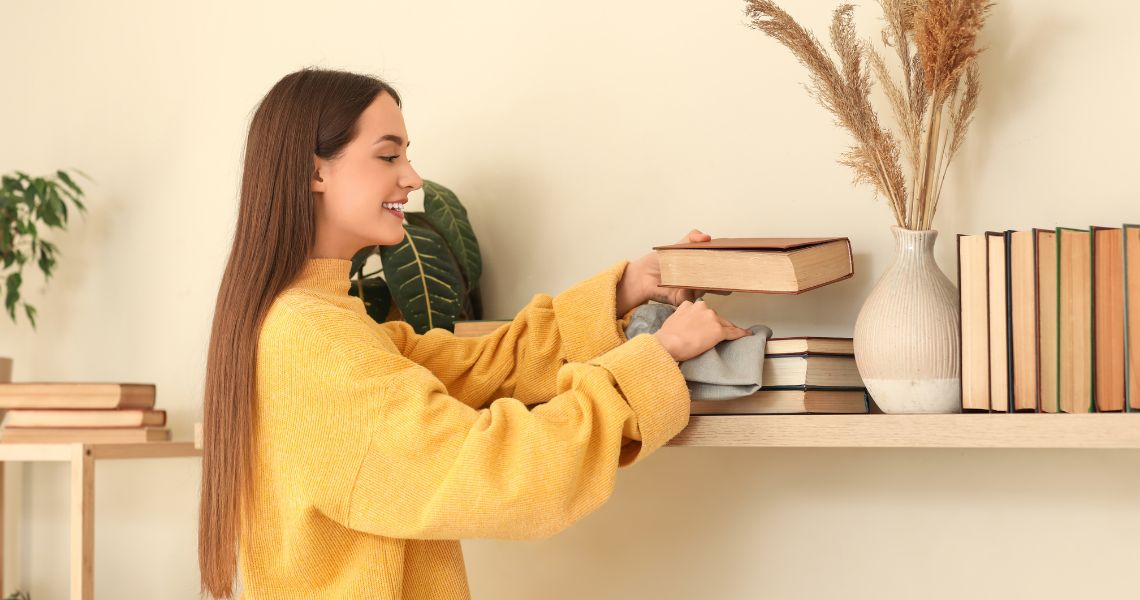
If you are wondering how to clean the dust off books, always start with the shelf. Remove the books and clean the shelves before putting the books back.
Then work through the books one by one. Run a magnetic duster or a soft brush over the edges, cover and spine, avoiding sudden movements. The dust should come off the book, rather than being forced further into the pages.
On sturdy copies, you can use a vacuum cleaner with a soft brush attachment on low power, always keeping it under control. For very fragile or antique books, or those with loose items, it is best to stick to gentle manual cleaning.
How to clean mouldy books
An important distinction needs to be made here. Mould on books is not a conventional stain and can pose a health risk. If the mould is growing actively (damp, fuzzy or clearly spreading), it should not be brushed off at home.
The first step is to remove the book from the shelf and keep it separate from the other books, especially those that were next to it. It is also worth checking and cleaning the shelf itself to make sure there is no mould left behind on it. Next, check the conditions of the place where the books were stored: high humidity encourages fungal growth, so it is important to ventilate and reduce humidity in that area before putting the books back.
If the mould is growing significantly or the book has special value, the safest option is not to attempt to clean it yourself and to consult a professional restorer instead. In the case of a small amount of mould that is already completely dry and inactive, it may be possible to carefully remove it. To do this, professionals use vacuum systems with HEPA filters, which help prevent the spores from being released back into the air.
So, if you are wondering how to clean mouldy books, you should know that this is not something to experiment with using household products; it is more serious than you might think.
How to remove yellow stains from books
Yellowed pages are common in antique books and do not always mean they are dirty. The natural ageing of paper causes colour changes, and light can speed up this deterioration process.
Therefore, if you want to know how to clean yellowed books, this does not necessarily mean trying to restore their original whiteness. Applying bleach, hydrogen peroxide or other whitening agents can weaken the paper, alter the inks or leave the book in worse condition than it was previously.
If the yellowing is even and is age-related, it is best to leave the book as it is. If there are specific stains, especially on an antique or valuable copy, a restorer will be able to determine whether it is worth taking action. Sometimes preserving the integrity of the document matters more than making it look new.
Preservation tips: how to stop your books deteriorating on the shelf
Now that you are clear on how to clean books, the most important part comes next: stopping them from deteriorating again or further. Store them somewhere cool, stable and dry, away from radiators, windows in direct sunlight, kitchens, bathrooms, garages, storage rooms and attics. It is also advisable to keep relative humidity stable, ideally below 55%, since above 60% the risk of warping and appearance of mould growth increases.
Do not pack them too tightly on the shelf or leave them leaning for long periods. Keep the space clean and check the least-used copies from time to time. Prevention — that is, good storage, stable environmental conditions and careful handling — is always the best way to extend the life of a home library.
Above all, remember one last rule: an antique book does not have to look new to be well preserved. Sometimes its yellowed pages, worn cover or even small marks are part of its history. Cleaning it should protect that history, not erase it.
What do you think about?
Share comments, opinions and tricks with the Community