

How to get your skin ready for makeup
Find out how to get your skin ready for makeup step by step: cleansing, tonic, hydration and the best products for a perfect makeover.

Makeup transforms our face, enhances our features and confers brightness, but the end result largely depends on the previous step, which we often skip: getting our skin ready. An appropriate makeup routine includes keeping your skin well nurtured. Understanding its needs and applying the right products is key to achieving a uniform, natural, healthy finish.
To do this, we need to take our skin type into account. We are going to give you some tips as follows. Remember: perseverance is the most important factor.
The importance of getting your skin ready for makeup
The purpose of makeup is to enhance our skin to make it look healthier, highlighting the features that we like the most. The trick to ensure makeup looks good is not just using certain cosmetic products, but sticking to a complete facial routine.
Skin that has been properly prepared will let the products blend better, avoiding the foundation building up in expression lines or dry areas. Moreover, it helps the makeup to last longer without the need to be constantly touching it up.
Another fundamental aspect is skin health. Prior preparation is not just about aesthetics, but also about protection: clean, hydrated skin performs better when exposed to cosmetics and it is less likely to get irritated.
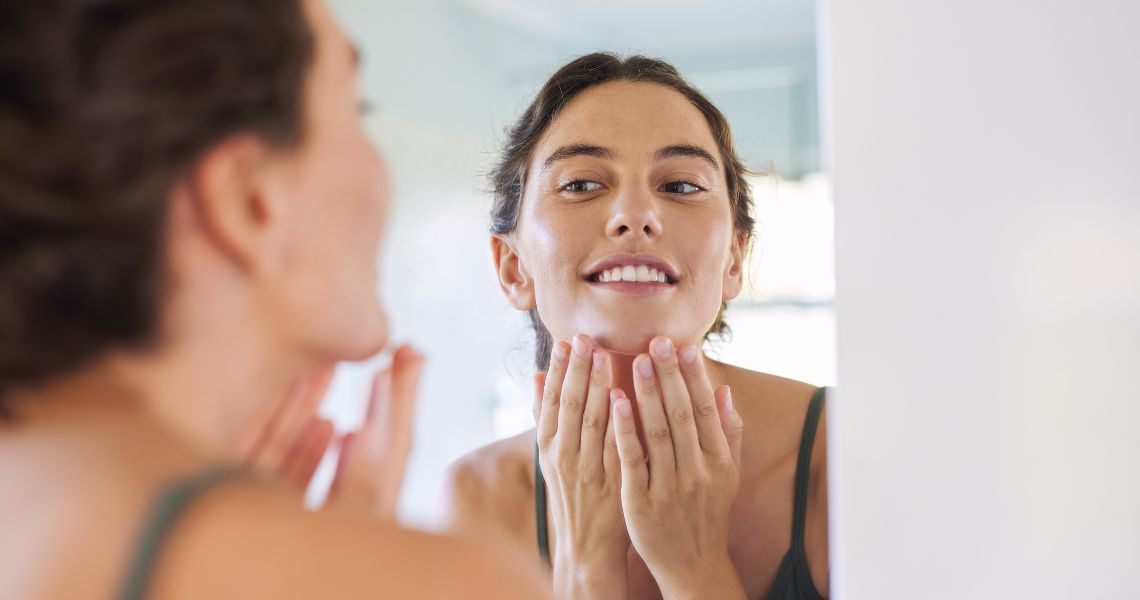
Getting your skin ready for makeup, step by step
Knowing how to get your skin ready for makeup properly is the key. During this process, cleansing and hydration are the main factors, both during the day and at night.
- Facial cleansing. The first step must always be cleansing to get rid of any impurities, remains of oil or residue that build up during the night or day before. How can we do it? Dual cleansing is a good choice. This method consists of first cleaning our face using an oil cleansing product to “drag” the dirt and makeup remains off our face, and then a soapy product to finish up the cleaning.
- Toning. Facial tonic helps to balance our skin’s pH and get it ready for moisturising. Moreover, it can confer extra freshness and improve the texture of our face.
- Hydration. Moisturising cream is a key step. It works to confer elasticity and smoothness, avoiding makeup settling in dry zones or where the skin texture is irregular. There are lots of moisturising creams, each one with an active ingredient adapted to our age and our needs. We do need to differentiate between night face cream and day face cream though.
- Eye cream. The area around our eyes is particularly delicate. Applying a specific product helps to hydrate, prevent wrinkles and soften that area, making it easier to apply concealer.
- Sun cream. Although it is not usually included in makeup routines, sun cream is fundamental. Furthermore, there are light formulae that are absorbed quickly and do not interfere with makeup.
- Primer. The last step before applying makeup is the primer. It helps smoothen out our skin, minimise pores and improve how long the foundation lasts.
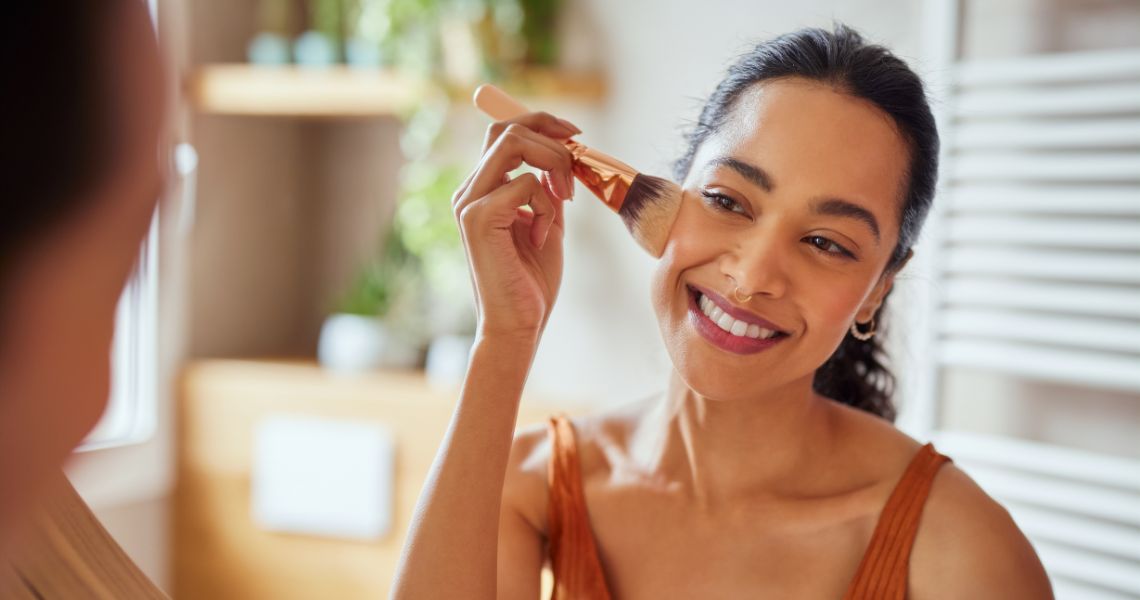
How to get dry skin ready for makeup to avoid tightness
Dry skin requires special attention before applying makeup, since it tends to flake, cause tightness and often has a dull finish. In this context, it is important to know how to get dry skin ready for makeup.
First of all, hydration must be intense. Using nourishing creams with ingredients such as hyaluronic acid, ceramides and vegetable oils that help retain moisture is recommended.
It is also important to avoid aggressive cleansers, as they can dry our skin out even more. Creamy or milky cleansers are usually the most suitable.
Furthermore, applying a moisturising primer is key, as it confers an extra amount of comfort. The foundation will then spread a lot easier, making sure the dry zones are not emphasised.
An additional tip is to allow each product to be absorbed properly before applying the next one. This will avoid patches and the makeup building up in some parts.
Oily skin and makeup: how to control shine
Oily skin is characterised by an excessive production of sebum, particularly in the T-zone (forehead, nose and chin). This can make our makeup come off more quickly which is why knowing how to get oily skin ready for makeup is key.
In these cases, proper cleansing will help to reduce excesses of oil without drying out our skin. It is important to make sure that cleansing is not too excessive so as not to completely get rid of hydration.
Light, gel-texture creams are recommended as they supply water without an oily feeling. Moreover, matte primer will help to counter shine for longer.
Another important aspect is the choice of non-comedogenic products that do not block pores. When applying makeup, translucent powder can be a big help to set the foundation and keep the matte finish.
Mixed skin: how to balance the T-zone before applying makeup
Mixed skin combines oily areas with dryer areas, making it one of the most difficult skin types when preparing our face to apply makeup.
The T-zone usually has more shine, whereas the cheeks can be dry or more sensitive. Therefore, if you are wondering how to get mixed skin ready for makeup, you need to know that balance is an essential factor.
The ideal way is to use light products all over your skin, but applying specific treatment according to each zone. For example, a more moisturising cream on the cheeks and a matte effect product on the T-zone.
Primer can also be applied strategically, using different types according to the needs of each area of your face. The aim is to achieve uniform-looking skin, without any visible imbalances that could affect the end result of the makeup.
Best products to use before applying makeup
All told, when choosing how to get your skin ready for makeup, it is not to do with using lots of different products, but more to do with choosing the right ones according to your skin type.
The following are some of the most recommended products:
- Mild cleansers, that respect the natural balance of your skin.
- Hydrating or balancing tonic, that prepares your skin without causing irritation.
- Moisturising creams adapted to each skin type, whether light or nourishing.
- Eye cream, particularly useful to smoothen the area before applying concealer.
- Light sun cream, fundamental for daily care.
- Primer to help improve the texture and ensure makeup stays in place longer.
Apart from brands and formats, the important thing is perseverance. A well-established routine will guarantee that your skin is in the best possible condition before applying any makeup products.

What do you think about?
Share comments, opinions and tricks with the Community