

Antiparasitic collar or pipettes: which is best for you dog?
You’re not sure whether to buy an antiparasitic collar or a pipette for your dog? We analyse the differences and the one providing greater protection against sandflies.

Fleas, ticks, mosquitoes… A walk in the outdoors can bring one or other unwanted visitor at any time of the year. This is why choosing a good antiparasitic product for dogs is so important, as adequate protection can help prevent infestations and diseases transmitted by certain insects.
But which is better? A collar or a pipette? The answer depends on the specific product and the animal’s needs. Not all of them offer protection against the same parasites or for the same length of time.
How antiparasitic collars work and how long they last
Antiparasitic collars for dogs incorporate active ingredients that are progressively distributed over the surface of the animal and offer long-term protection. One of their main advantages is precisely their duration. It must be said that this varies depending on the active ingredient and the product, as some collars offer several months of protection and others have different indications. That is why it is advisable to always consult the leaflet and not assume they all last the same length of time.
However, some animals find it uncomfortable to wear all day. It is visible and so less attractive and, although it prevents parasites, it does not eradicate them once the animal has already been bitten or infected.

Advantages of pipettes for dogs and how to apply them
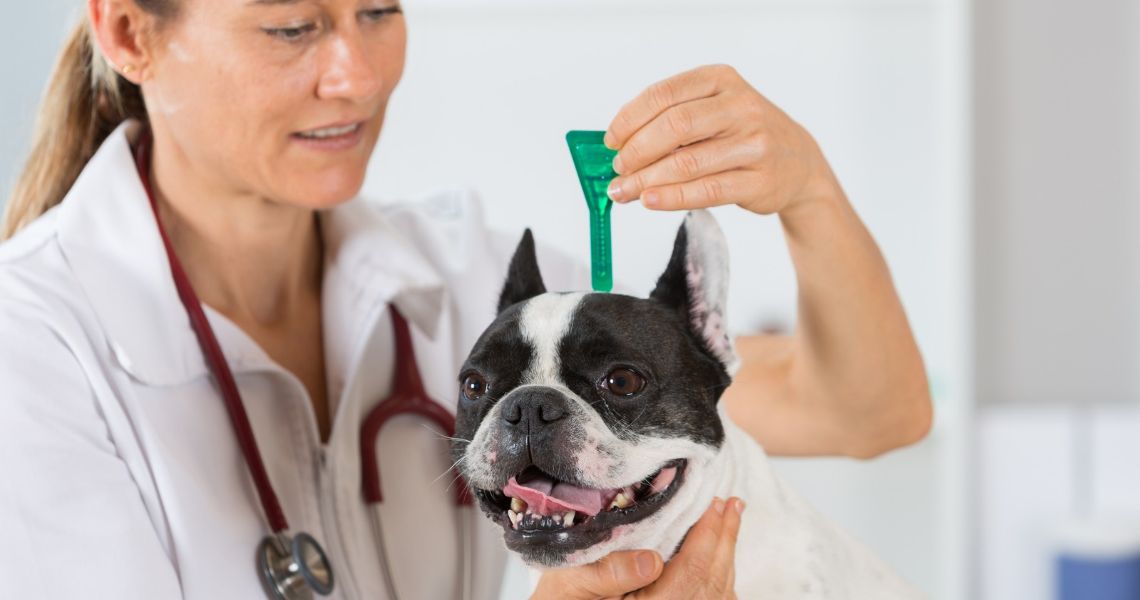
Pipettes, also known as spot on treatments, are applied directly to the skin, usually at one or more points in the dorsal area. They usually offer protection for a few weeks and are effective immediately. As soon as they are applied, contact with water should be avoided for 48 hours. Not only do they act as a protective barrier, but also as a cure once the parasites have attacked.
However, it is important that the dog does not lick the contents of the pipette as it is toxic. What’s more, in dogs with a lot of fur, it is difficult to apply, as it has to be applied directly onto the animal’s skin.
Can both methods be used at the same time in summer?
It is not advisable to use both a collar and a pipette as a system. More antiparasitic products do not automatically mean more protection and combining the two can increase the risk of adverse reactions or lead to unnecessary duplication of active ingredients. In any case, it is advisable to consult the vet to clarify any doubts.
The sandfly mosquito (leishmaniasis) and total protection
Canine leishmaniasis is a serious parasitic disease and can be fatal in dogs. It is transmitted through the sandfly, an insect that transmits the Leishmania parasite. To reduce the risk of exposure to this small insect, it is essential you use the appropriate protective measures to help keep it away.
Some collars and certain pipettes contain sandfly repellent substances, so they can help reduce bites and the risk of transmission. However, not all products contain them: it is important to check that the chosen antiparasitic is specifically indicated to repel this parasite as well as to follow to the letter the instructions for use.
Prevention can be reinforced by combining different measures. Vaccination, for example, can help reduce the risk of developing the disease, but it is not a substitute for measures aimed at preventing bites. So, especially in the case of dogs with greater exposure, it is best to consult with the vet to decide on the best strategy and carry it out.
Which format to choose according to size, breed and lifestyle
Rather than the breed, the important thing is to assess weight, age, state of health, habits and level of exposure. A dog that bathes frequently, for example, may require a different solution from one that has little contact with water. You should also consider if you live in an area with sandflies, ticks and other parasites.
As a rule of thumb, the antiparasitic dog collar may be convenient for those looking for long, continuous protection, while the pipette offers periodic application and other possibilities. In any case, it is always advisable to buy products that are authorised and suitable for dogs, fully respect the dose and application interval and consult the vet if in doubt.
In short, there is no universal winner between the collar and the pipette. The best defence is not the one that promises the most advantages but the one that best suits each dog.
What do you think about?
Share comments, opinions and tricks with the Community

¿Cómo actúa el collar Scalibor?
El ingrediente activo del collar Scalibor® es la deltametrina, que se distribuye por la piel de tu perro a través de la capa lipídica. Esto asegura una liberación constante y efectiva del principio activo durante toda la vida útil del collar, garantizando que tu perro esté protegido frente a los parásitos de manera continua y sin interrupciones.
¿Cómo actúa el collar Scalibor?
El ingrediente activo del collar Scalibor® es la deltametrina, que se distribuye por la piel de tu perro a través de la capa lipídica. Esto asegura una liberación constante y efectiva del principio activo durante toda la vida útil del collar, garantizando que tu perro esté protegido frente a los parásitos de manera continua y sin interrupciones.